Ripple proposes the introduction of sidechains to ensure that Smart Contract adjacents are enabled on the XRP ledger (XRPL).
This proposal was influenced by the rapid development of Defi in recent years.
The crypto ecosystem is fast advancing, moving the industry to an era of technological innovations. The industry has seen the introduction of Decentralized Applications (DApps) and Decentralized Finance (Defi) which seem to have attracted huge demand in the market. To catch up with the fast advancing industry, the Chief Technology Officer of Ripple Labs, David Schwartz has proposed the introduction of sidechains to ensure that smart contract adjacents are enabled on the XRP ledger (XRPL).
He also cited the rise in demand from users for smart contract implementation as part of his reason. This is contrary to their long-standing advocacy against features that may compromise XRP Ledger’s focus on highly efficient payment.
Today I introduced my vision for adding federated sidechains to the XRP Ledger which means a lot of things but essentially that anyone who wants to, can run a sidechain to the XRPL.
With this implementation, one or more sidechains would be connected to the main network of the XRPL using a software called “Federator”. The sidechains could push Ripple’s vision to a new class of crypto followers. Any interested user can run the sidechains and also implement DeFi, smart contracts, and other features. Most importantly, it can run its own ledger and operate with its own native currency. Schwartz mentioned that sidechains can have their own reserve system, their own fee system, and their own transaction capacity.
This concept would allow each sidechain to have its own ledger and transactions, as well as a federation system that allows XRP and issued tokens (BTC, fiat, anything really) to move from one chain to another. 3/6
— David ”JoelKatz” Schwartz (@JoelKatz) June 7, 2021
Federated assets imported onto the XRPL would trade on the XRPL’s integrated Decentralized Exchange (DEX). When XRPs are imported onto the sidechains, they would also be used for liquidity on their integrated DEX. Each sidechain will have a “Trust” account on the XRPL mainnet to hold assets on behalf of users of the sidechains.
Sidechains won’t alter XRPL functionality
Schwartz is most optimistic about this considering the rapid development of Defi in recent years. Since 2019, Defi developers have increased by 110 percent. This is expected to surge more this year, forcing companies to explore the ecosystem. Schwartz also mentioned that a lot of work will have to be done to see the full implementation. They will have to build the sidechain itself and add more features to the XRPL server software.
According to him, they are relying on feedback from the developer community to make their proposal better.
On top of that, as it’s still in its infancy, we’re soliciting feedback from the developer community to make this proposal better and more feasible. We asked the community to ask questions, give feedback, and participate in the discussion.
As it stands, the existing functions of the XRPL will not change with the implementation of the sidechains. This stems from the difficulties in moving XRP and other tokens between the mainnet and the sidechains.
Litecoin founder Charlie Lee is detailing two key upgrades coming soon to the 13th largest cryptocurrency.
In an interview with crypto analyst Scott Melker, Lee highlights why Litecoin’s upcoming update, which will add more fungibility and privacy to the digital token, is crucial to sound money principles.
“Fungibility is something that is missing, or, not as good in Bitcoin and Litecoin today…In terms of properties of good sound money, BTC and LTC have everything except fungibility.”
By fungibility, Lee means that every coin is the same as every other coin. Fungibility allows users to interchange goods or assets with another good or asset of the same type because they are identical and have equal value.
Even though one Bitcoin can be traded for another Bitcoin, with both having equal value, blockchain transactions inherently provide additional information. For example, one specific Bitcoin may be held in a wallet that is worth millions while another Bitcoin may be held in a wallet worth $10.
Lee continues,
“For money, you want it to be fungible. Any $20 bill you spend should be indistinguishable from any other ones…And it’s not true today for Bitcoin and Litecoin. If you really look into it, when you’re spending coins, you should pick and choose which coin you spend so that it doesn’t reveal any private information you don’t want to reveal.
So if you got paid $10,000 as a salary, if you use those coins to buy a coffee, then the recipient will see that you have $10,000 in your bank account worth of Bitcoin.
That’s the kind of information that you wanna keep private, even if you have nothing to hide. Financial privacy is important.”
To tackle this privacy concern, Lee and his team are planning to implement new technology, dubbed “MWEB”.
“What I’m working on is getting a technology called MimbleWimble onto Litecoin as extension blocks. The project’s called MWEB, which stands for MimbleWimble Extension Blocks. That would add more privacy and more fungibility to Litecoin, and I think that’s gonna help it become a better form of money.”
l Don’t Miss a Beat – Subscribe to get crypto email alerts delivered directly to your inbox
Disclaimer: Opinions expressed at The Daily Hodl are not investment advice. Investors should do their due diligence before making any high-risk investments in Bitcoin, cryptocurrency or digital assets. Please be advised that your transfers and trades are at your own risk, and any loses you may incur are your responsibility. The Daily Hodl does not recommend the buying or selling of any cryptocurrencies or digital assets, nor is The Daily Hodl an investment advisor. Please note that The Daily Hodl participates in affiliate marketing.
ForgingBlock, a platform that lets retailers accept decentralized bitcoin and cryptocurrency payments, today announced the launch of its new, streamlined merchant dashboard.
“Back in late 2019, the ForgingBlock dashboard made it easy to include an embedded payment form generated directly from the dashboard without any development needed. As we spoke with more users, it became clear that businesses required sophisticated merchant dashboard functionality. For example, you may want to accept a specific cryptocurrency as the default choice for your customer.” – The ForgingBlock Team
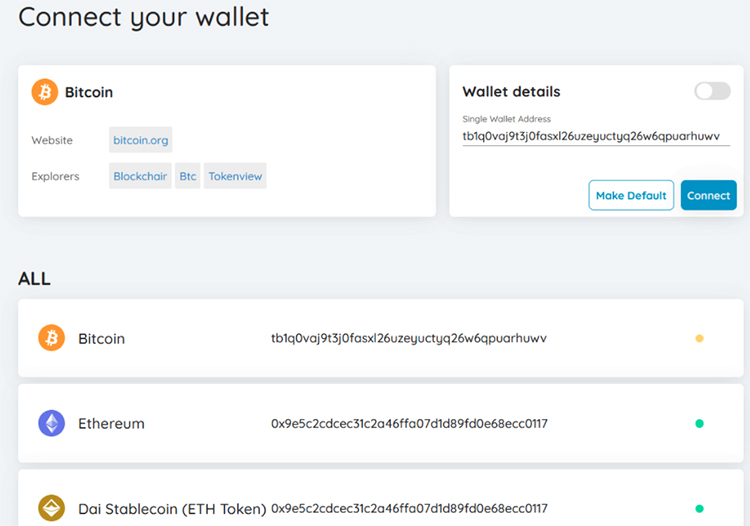
First off, now, users can connect to their own wallet address and specify any cryptocurrency as the default crypto to allow customers to pay with.
Now specify any cryptocurrency as default
No-code tools for creating and editing invoices
Beyond default cryptos, access to wallet balances, and cryptocurrency payment charts, ForgingBlock also invested more in its invoicing system. Soon, ForgingBlock is launching a brand-new invoice editor; so users can customize the design including logo, product pictures, etc.
On ForgingBlock, users can create a form allowing customers to pay with bitcoin in less than one minute.
Microstrategy has increased its offering to $500 million just a day after it announced a $400 million offering to buy bitcoin.
According to Bloomberg citing unnamed people familiar with the matter, Microstrategy received $1.6 billion in orders for the offering, including interest from a large number of hedge funds.
The bond gives 6.125% to 6.25% interest on the secured offering, lower than early pricing discussions of 6.25% to 6.5% due to huge demand.
The initially proposed $400 million surpassed demand by the time the deal was launched, people familiar with the matter said, showing huge appetite for this third bitcoin buying debt offering that is in the process of hitting the market.