
Bankruptcy
Bankruptcies are piling up in the U.S. and crypto is catching the spillover


As U.S. bankruptcies surge past pandemic levels, is crypto becoming the unexpected outlet for liquidity, or just another risk tied to credit stress?
Bankruptcies hit highest level since 2020
In July, 71 large companies in the U.S. filed for bankruptcy, the highest monthly total since July 2020, when pandemic shutdowns forced dozens of firms into default.
Year-to-date, 446 large bankruptcy filings have been recorded, already surpassing pandemic levels and marking the busiest start to a year since 2010.
The hardest hit sectors are industrials and consumer discretionary. Industrials account for 70 filings so far in 2025, followed by 61 in consumer-related businesses. Healthcare has seen 32, while energy companies, supported by high commodity prices, have reported only 4.
Several well-known consumer brands including Forever 21, Rite Aid, Joann’s, and Claire’s have returned to court after earlier restructurings failed to stabilize their operations.
The numbers are tied directly to refinancing pressures. In early 2024, corporate interest costs made up just 9.1% of net income, the lowest level since the 1950s. As debt matured and rolled into higher-rate environments, that figure climbed rapidly.
The scale of these defaults is being closely tracked by crypto markets because it speaks directly to liquidity and credit stress. When companies default, credit availability in the broader economy contracts, and investors look for assets outside the corporate and banking system.
In 2020, when bankruptcies spiked, Bitcoin’s volumes and prices climbed as capital rotated into liquid alternatives.
At the same time, corporate distress has coincided with steady inflows into spot Bitcoin ETFs, showing that institutional investors are positioning for crypto to absorb capital outflows from weakening corporate credit markets.
Inflation pressures collide with tariff-driven costs
The Federal Reserve held its benchmark rate at 4.25- 4.5% in its July meeting, the seventh pause in a row, reflecting the challenge of balancing persistent inflation with growing signs of stress in the corporate sector.
What stood out this time was the division inside the Fed itself. Two governors, Michelle Bowman and Christopher Waller, voted for an immediate rate cut.
According to Reuters, it was the first time in more than three decades that two sitting members of the Federal Open Market Committee broke from the majority in the same meeting.
The case for cutting rates comes from weakening credit conditions and persistent stress amid Trump’s tariff-induced trade wars across the globe.
With bankruptcy filings rising and refinancing costs pushing small and mid-sized firms into difficulty, policymakers are under pressure to ease borrowing costs.
The case against cutting is tied to inflation. Government data showed producer prices rising 0.9% in July, the largest monthly increase since 2022. Core CPI has also returned above 3%.
MarketWatch noted that Fed officials remain worried about tariff-related costs feeding directly into consumer prices. The current effective tariff rate is 17.3%, the highest since 1935, making the situation more complex than during past easing cycles.
Financial markets have responded cautiously. According to CME FedWatch data, traders still price an 79% chance of a September rate cut, but expectations for deeper cuts later in the year have been scaled back.
Bond yields remain elevated, and credit spreads widened in July. Equity gains are increasingly concentrated in a small set of large technology companies, while broader indices show little momentum.
Crypto markets have reacted in line with this broader adjustment. Bitcoin (BTC) retreated from its peak of about $124,000 in July to around $113,200 as of this writing on Aug. 21.
Data from Coinglass shows more than $1 billion in leveraged positions were liquidated during the drop, highlighting how sensitive trading still is to macro signals.
ETF flows shifted quickly. According to CoinShares, U.S.-listed Bitcoin ETFs recorded over $500 million in net outflows during mid-August, while Ethereum funds saw more than $400 million withdrawn in the same week.
These were among the largest combined outflows in the last few months. Just weeks earlier, in mid-July, Bitcoin exchange-traded products had reported inflows of more than $1 billion across two sessions.
The gridlock inside the Fed matters for crypto because it magnifies uncertainty around liquidity.
If policymakers move too slowly, credit stress could deepen and keep investors cautious. If they move too quickly, inflation could stay elevated, making assets like Bitcoin more attractive as a hedge.
Credit tightening sends investors looking beyond banks
Small and mid-sized companies are carrying the heaviest burden of higher rates. Data from S&P Global shows that 43% of firms in the Russell 2000 index were unprofitable at the end of 2024, the highest share since 2020 and even above 2008 levels.
Interest expenses for these firms climbed to 7.1% of total debt, the most since 2003. With refinancing costs rising and bankruptcy filings accelerating, many of these businesses are being cut off from affordable credit.
Collectively, small firms employ more than 62 million people, nearly 46% of the U.S. workforce, which makes the financing gap more than just a corporate issue.
Traditional credit channels are narrowing. Regional banks remain cautious about extending new loans, bond markets are expensive, and private credit funds tend to favor larger borrowers.
The result is a growing credit void that leaves smaller companies exposed. For investors, this tightening has historically been a signal to search for alternative channels of yield and liquidity.
Crypto is beginning to play a role in filling this space. Tokenized U.S. Treasuries have expanded rapidly in 2025, surpassing $7.3 billion in value locked across platforms according to data.
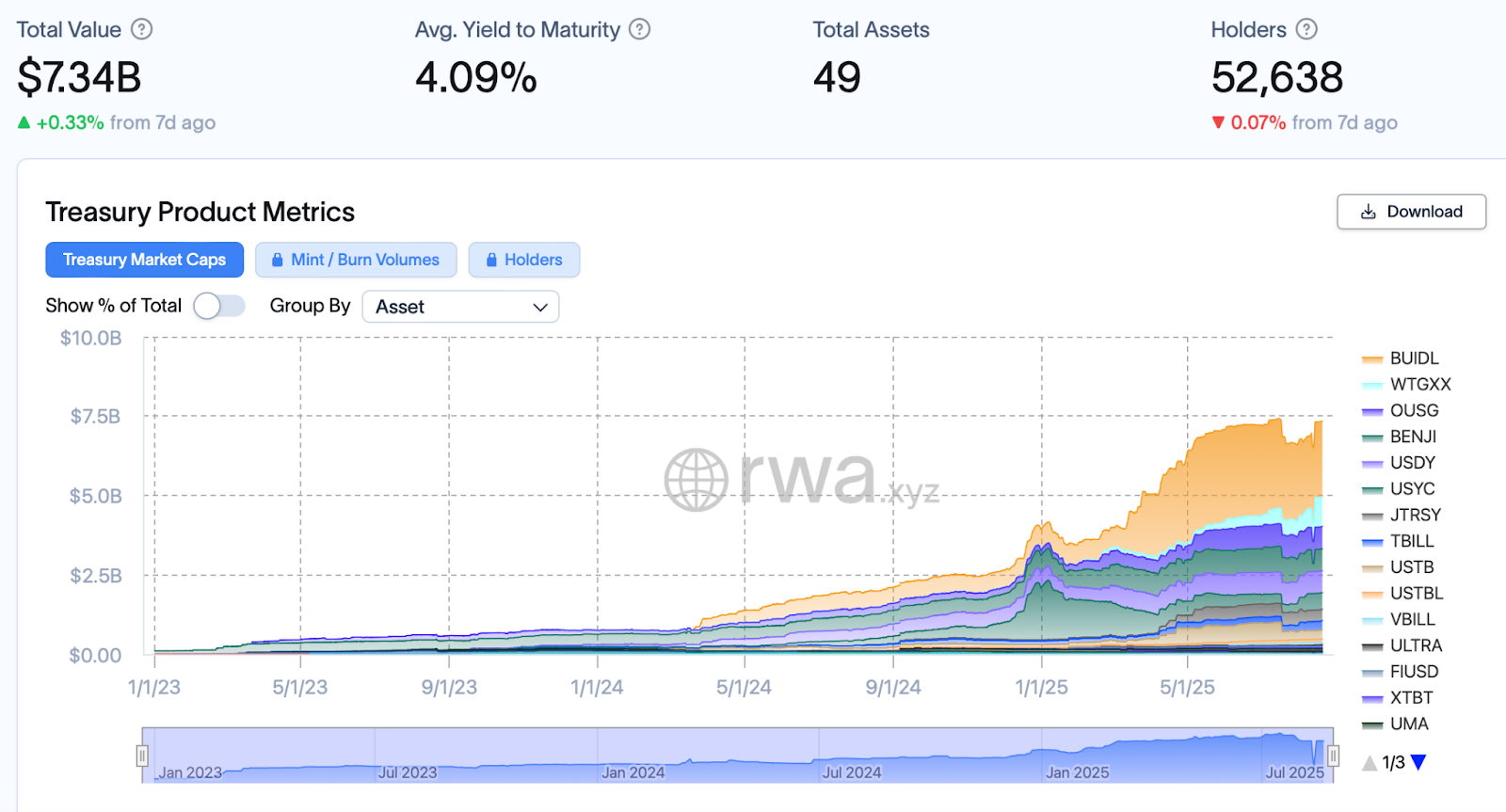
These products give investors direct access to short-term government debt through blockchain-based tokens.
On the lending side, DeFi protocols such as Aave (AAVE) and Maple Finance continue to handle billions in loans, with Aave alone managing nearly $37 billion in total value locked across multiple chains.
While most activity is still concentrated in crypto-native collateral, new structures are emerging that link lending pools to real-world borrowers, including fintech firms and supply chain companies.
Stablecoin usage also reflects this trend. On-chain settlement volumes in Tether (USDT) and USD Coin (USDC) rose through July and August, with both tokens now consistently handling trillions of dollars in monthly transactions.
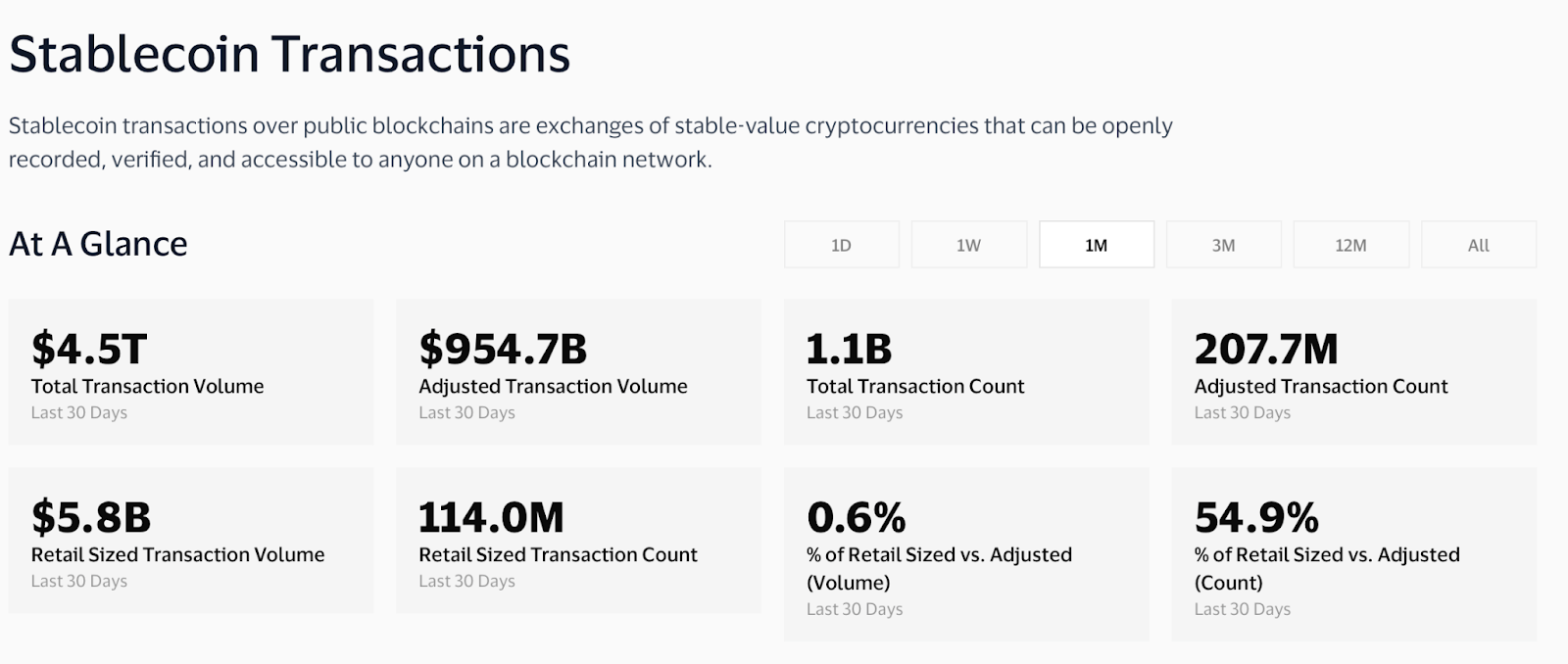
For businesses facing tighter access to credit and slower settlement times through banks, stablecoins provide a liquid and transparent payment rail.
The scale of these experiments remains small compared with the U.S. credit market, but a financing environment where traditional debt is harder to secure creates stronger incentives for blockchain-based alternatives.
Market braces for wider institutional participation
Growing regulatory clarity is gearing crypto markets for wider institutional integration.
SEC guidance issued in July introduced new disclosure requirements specific to crypto ETFs, covering areas like custody, risks, and fraud safeguards, aiming to standardize applications and reduce approval timelines from up to 240 days to around 75 days.
Asset managers, including those pursuing altcoin ETFs, view this guidance as a turning point toward mainstream acceptance of digital assets.
Several high-profile ETF decisions are now slated for October. Proposals for spot ETFs linked to Ripple (XRP), Solana (SOL), Litecoin (LTC), and staking-enabled Ethereum products have moved through the SEC’s review queue, often via extended deadlines.
ETF expert Nate Geraci forecasts that the “spot crypto ETF floodgates” could open within two months, with specific expectations for XRP, SOL, and LTC ETF approvals, and staking approval for ETH on the horizon.
Prediction platforms and analysts share that optimism. Polymarket shows a 78% probability that an XRP ETF will be approved by year-end. Bloomberg ETF analysts have raised approval odds to 95% for the same category.
The Solana + Staking ETF, REX‑Osprey, has quietly launched in the U.S., listing on Cboe BZX. It raised $12 million in assets on day one and carries a 1.4% fee.
The product also offers a staking yield of around 7.3%. It is the first altcoin ETF available to traditional brokerage accounts, with other issuers such as Fidelity and VanEck in the pipeline.
Market sentiment has responded to these developments. The crypto market itself stands at nearly $4 trillion, with Bitcoin covering two‑thirds of that value. Altcoins including XRP, SOL, and LTC are now seen as next beneficiaries of regulatory clarity.
What to expect next?
The U.S. economy is caught between rising bankruptcies, persistent inflation, and policy indecision. At the same time, several spot ETF approvals are pending which could expand institutional access beyond Bitcoin. These forces create a mixed near-term outlook for crypto.
If inflation stays firm and the Fed delays cuts, Bitcoin may regain appeal as a hedge, while new ETFs could drive inflows. If credit stress deepens, however, investor caution could outweigh optimism.
Prices are likely to remain sensitive to both macro data and regulatory milestones over the coming months. As always, crypto is a volatile market. Never invest more than you can afford to lose.
Disclosure: This article does not represent investment advice. The content and materials featured on this page are for educational purposes only.
Source link






Bankruptcy
Binance Founder Changpeng Zhao Asks Court To Dismiss $1,760,000,000 FTX Bankruptcy Clawback Suit: Report

The former CEO of the crypto titan Binance is reportedly taking action to terminate the lawsuit filed by the bankruptcy estate of the collapsed digital asset exchange FTX.
In November, the FTX trust and FTX Digital Markets filed a suit against Binance, the exchange’s co-founder Changpeng Zhao and several other executives over a July 2021 share repurchase deal with FTX founder Sam Bankman-Fried.
Bloomberg reports that Zhao is now asking the US Bankruptcy Court for the District of Delaware to dismiss the claims seeking to claw back $1.76 billion that the trust and FTX Digital Markets say were improperly transferred by Bankman-Fried.
In a motion to dismiss filed on Monday, Zhao says the court does not have personal jurisdiction over him because of improper and ineffective service.
The motion argues that Zhao is a resident of the United Arab Emirates and, under the bankruptcy law, serving US counsel on a foreign defendant is improper and invalidates the complaint.
“The claims are so far removed from Delaware, and even the United States, that the statutes at issue, which lack extraterritorial application, do not even apply.”
The filing also says that the bankruptcy law does not definitively extend to foreign transfers, but the trust and FTX Digital Markets improperly attempt to extend their fraudulent transfer claims abroad.
Follow us on X, Facebook and Telegram
Don’t Miss a Beat – Subscribe to get email alerts delivered directly to your inbox
Check Price Action
Surf The Daily Hodl Mix

Disclaimer: Opinions expressed at The Daily Hodl are not investment advice. Investors should do their due diligence before making any high-risk investments in Bitcoin, cryptocurrency or digital assets. Please be advised that your transfers and trades are at your own risk, and any losses you may incur are your responsibility. The Daily Hodl does not recommend the buying or selling of any cryptocurrencies or digital assets, nor is The Daily Hodl an investment advisor. Please note that The Daily Hodl participates in affiliate marketing.
Generated Image: Midjourney
Source link
FTX has declared it is partnering with distribution service provider Payoneer to distribute funds to affected customers. Payoneer will reportedly act as an optional intermediary in reimbursing funds.
According to the official press release, Payoneer will assist in distributing compensation funds to retail customers who are registered and deemed eligible to receive the funds from the legal proceedings related to the bankrupt exchange. The service will be available to help process customer requests for reimbursements that have been lodged after May 30, 2025.
“For transferred claims, distributions will only be made to the transferee holder of an allowed claim that is processed and reflected on the official register of claims maintained by the Notice and Claims Agent as of future record dates, where the 21-day notice period has lapsed without objection,” wrote the company in its statement.
With this partnership, Payoneer officially becomes the third distribution service provider to work together with FTX (FTT) to distribute its compensation funds. The firm joins two other major crypto platforms, BitGo and Kraken, in facilitating payment distributions for FTX customers.
The distribution of compensation funds will be part of the wider Chapter 11 Plan of Reorganization mandated to the exchange by the the United States Bankruptcy Court for the District of Delaware.
In a recent post, the now-bankrupt exchange also reminded users to remain cautious of phishing emails and fake websites impersonating the official site to avoid losses. After the announcement aired, the price of the exchange’s native token jumped slightly by 1.8% according to data on crypto.news. It is now trading by $0.98 in the past 24 hours.

FTX Recovery Trust and its Digital Markets arm reminded customers that once they have chosen Payoneer for the reimbursement process, they will also be relinquishing their right to receive the distributed funds in cash. This right to receive cash was granted to customers from the original reimbursement plan approved by U.S. authorities.
Instead, FTX will be sending the funds through Payoneer which will then be credited the customer’s selected bank account in the applicably currency depending on the chosen bank account. The amount credited to the account will be calculated based on the available cash distributions they are entitled to receive under the reimbursement plan.
In order to receive compensation funds through Payoneer, customers would first need to login to the official claims portal, fill in Know Your Customer verification, submit the necessary tax forms and proceed to onboard their chosen payment service provider of either BitGo, Kraken or Payoneer.
Earlier in May, FTX announced the second round of distribution to eligible creditors. The second phase of distributions covers eligible creditors in both the Convenience and Non-Convenience Classes and amounts to around $5 billion in reimbursement funds.
Source link


FTX, the collapsed cryptocurrency exchange once helmed by Sam Bankman-Fried, plans to begin paying its main creditors at the end of May, Bloomberg reported based on court proceedings in Delaware this week.
The company has gathered $11.4 billion in cash to distribute to thousands of parties affected by its 2022 bankruptcy, with the first payments to major creditors set for May 30.
These include institutional investors and firms that held crypto on FTX’s platform. Smaller creditors with claims below the $50,000 mark have already begun receiving distributions.
FTX’s collapse left a financial crater and a trail of frustrated creditors—many of whom expected to be repaid in crypto, not dollars. Since the bankruptcy, the price of bitcoin has more than quadrupled, intensifying frustrations among those waiting for their assets back.
The task of unwinding FTX’s balance sheet has been slowed by a large number of claims, many of them reportedly questionable. Andrew Dietderich, a bankruptcy attorney for the firm, told the court that FTX has received “27 quintillion” claims, Blloomberg reported, many of which are duplicates or outright fraudulent.
Interest payments are compounding the urgency. While FTX earns only a modest return on its cash, legitimate creditors are entitled to 9% interest annually on unpaid claims. The longer it takes to pay, the more the company could owe.
Read more: Nearly All FTX Creditors Will Get 118% of Their Funds Back in Cash, Estate Says in New Plan
Source link

Is Bitcoin’s Bull Market Ending? Onchain Data Says Yes

Most Dual-Asset Investors See Crypto Beating Stocks Over Next Decade: Kraken Survey

Bankruptcies are piling up in the U.S. and crypto is catching the spillover

Bitcoin To $15 Million Possible Once Powell Is Out: Arthur Hayes

Trump’s World Liberty Expands USD1 Supply Amid ALT5 Sigma Insider Trading Allegations
Kyrgyzstan Appeals to US, UK Leaders Over Sanctions on Crypto Networks

UK Sanctions Kyrgyz Bank, $9.3B Crypto Network Tied to Russia

Bitcoin Crash to $100? Harvard Professor Rogoff Revisits 2018 BTC Price Prediction

US court clears $57M in frozen USDC in Libra token lawsuit

Lummis Fast-Tracks Crypto Market Structure Bill To Reach Trump’s Desk Before Thanksgiving

Tidal Trust II Files Leveraged Long XRP ETF With SEC

Kanye West Launches Token on Solana in Frenzied Debut

Bitcoin Sentiment Returns To Neutral After 10% Market Drop

Bitcoin Demand Cools While “Crypto Capital is Getting More Selective,” OKX’s Gracie Lin Warns

Traders debate which coin will hit $1 first in the 2025-26 memecoin cycle

Pi Network coin to $10? 4 catalysts that may make it possible

Arthur Hayes, Murad’s Prediction For Meme Coins, AI & DeFi Coins For 2025

3 Voting Polls Show Why Ripple’s XRP Price Could Hit $10 Soon

Expert Sees Bitcoin Dipping To $50K While Bullish Signs Persist

Aptos Leverages Chainlink To Enhance Scalability and Data Access

Bitcoin Could Rally to $80,000 on the Eve of US Elections

The Future of Bitcoin: Scaling, Institutional Adoption, and Strategic Reserves with Rich Rines

Institutional Investors Go All In on Crypto as 57% Plan to Boost Allocations as Bull Run Heats Up, Sygnum Survey Reveals

Sonic Now ‘Golden Standard’ of Layer-2s After Scaling Transactions to 16,000+ per Second, Says Andre Cronje

Crypto’s Big Trump Gamble Is Risky

Has The Bitcoin Price Already Peaked?

Ripple-SEC Case Ends, But These 3 Rivals Could Jump 500x

A16z-backed Espresso announces mainnet launch of core product

I’m Grateful for Trump’s Embrace of Bitcoin

Xmas Altcoin Rally Insights by BNM Agent I
 Markets5 months ago
Pi Network coin to $10? 4 catalysts that may make it possible
 24/7 Cryptocurrency News10 months ago
Arthur Hayes, Murad’s Prediction For Meme Coins, AI & DeFi Coins For 2025
 Ripple Price5 months ago
3 Voting Polls Show Why Ripple’s XRP Price Could Hit $10 Soon
 Bitcoin7 months ago
Expert Sees Bitcoin Dipping To $50K While Bullish Signs Persist
 24/7 Cryptocurrency News7 months ago
Aptos Leverages Chainlink To Enhance Scalability and Data Access
 Bitcoin10 months ago
Bitcoin Could Rally to $80,000 on the Eve of US Elections
 Bitcoin6 months ago
The Future of Bitcoin: Scaling, Institutional Adoption, and Strategic Reserves with Rich Rines
 Bitcoin9 months ago
Institutional Investors Go All In on Crypto as 57% Plan to Boost Allocations as Bull Run Heats Up, Sygnum Survey Reveals