
Bitcoin
How Declining Short-Term U.S. Treasury Yields Impact Bitcoin Price


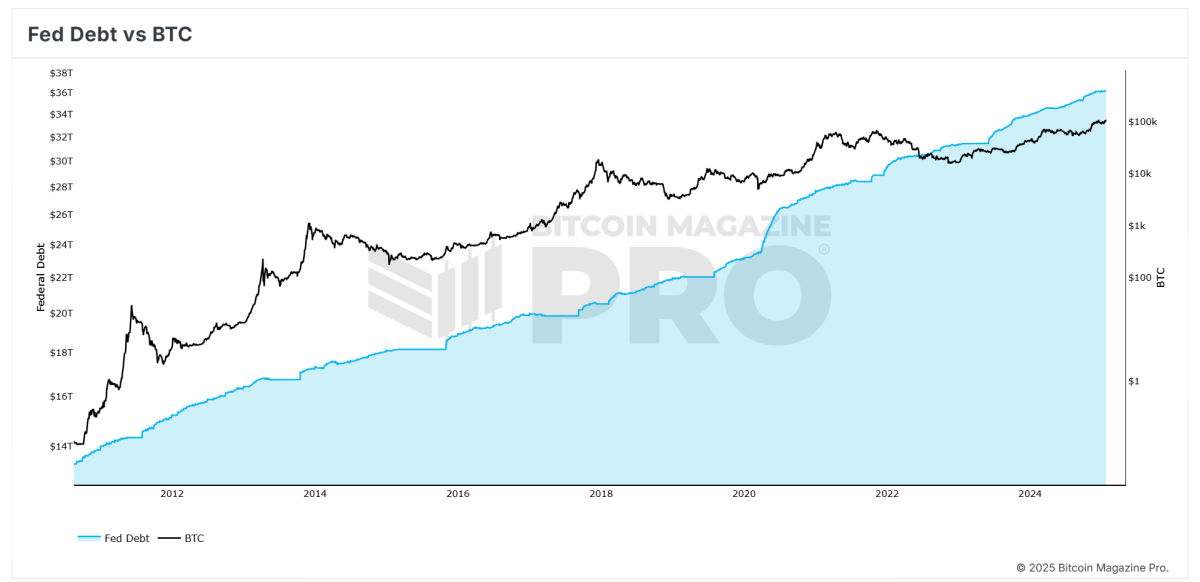
The recent divergence in U.S. Treasury yields, where shorter-term yields have been declining while longer-term yields are on the rise, has sparked significant interest across financial markets. This development provides critical insights into macroeconomic conditions and potential strategies for Bitcoin investors navigating these uncertain times.
We’ve recently observed a divergence in U.S. Treasury yields, with shorter-term yields declining while longer-term yields are rising. 🏦
What do you think this signals for the government bond market, Bitcoin, and the broader financial markets? 🤓
Let me know 👇 pic.twitter.com/eJmj6hhyKV
— Bitcoin Magazine Pro (@BitcoinMagPro) January 27, 2025
Treasury Yield Dynamics
Treasury yields reflect the return investors demand to hold U.S. government debt, and they are a critical barometer for the economy and monetary policy expectations. Here’s a snapshot of what’s happening:
- Short-term yields falling: Declining yields on short-term Treasury bonds, such as the 6-month yield, suggest that markets are anticipating the Federal Reserve will pivot to rate cuts in response to economic slowdown risks or lower inflation expectations.
- Long-term yields rising: Meanwhile, rising yields on longer-term bonds, like the 10-year Treasury yield, indicate growing concerns about persistent inflation, fiscal deficits, or higher-term premiums required by investors for holding long-duration debt.
This divergence in yields often hints at a shifting economic landscape and can serve as a signal for investors to recalibrate their portfolios.
Related: We’re Repeating The 2017 Bitcoin Bull Cycle
Why Treasury Yields Matter for Bitcoin Investors
Bitcoin’s unique properties as a non-sovereign, decentralized asset make it particularly sensitive to macroeconomic trends. The current yield environment could shape Bitcoin’s narrative and performance in several ways:
- Inflation Hedge Appeal:
- Rising long-term yields may reflect persistent inflation concerns. Historically, Bitcoin has been seen as a hedge against inflation and currency debasement, potentially increasing its appeal to investors looking to protect their wealth.
- Risk-On Sentiment:
- Declining short-term yields could indicate looser financial conditions ahead. Easier monetary policy often fosters a risk-on environment, benefiting assets like Bitcoin as investors seek higher returns.
- Financial Instability Hedge:
- Divergence in yields, particularly if it leads to an inverted yield curve, can signal economic instability or recession risks. During such periods, Bitcoin’s narrative as a safe-haven asset and alternative to traditional finance may gain traction.
- Liquidity Considerations:
- Lower short-term yields reduce borrowing costs, potentially leading to increased liquidity in the financial system. This liquidity often spills into risk assets, including Bitcoin, fueling upward price momentum.
Broader Market Insights
The impact of yield divergence extends beyond Bitcoin to other areas of the financial ecosystem:
- Stock Market: Lower short-term yields typically boost equities by reducing borrowing costs and supporting valuation multiples. However, rising long-term yields can pressure growth stocks, particularly those sensitive to higher discount rates.
- Debt Sustainability: Higher long-term yields increase the cost of financing for governments and corporations, potentially straining heavily indebted entities and creating ripple effects across global markets.
- Economic Outlook: The divergence could reflect market expectations of slower near-term growth coupled with longer-term inflationary pressures, signaling potential stagflation risks.
Related: What Bitcoin Price History Predicts for February 2025
Takeaways for Bitcoin Investors
For Bitcoin investors, understanding the interplay between Treasury yields and macroeconomic trends is essential for informed decision-making. Here are some key takeaways:
- Monitor Monetary Policy: Keep a close eye on Federal Reserve announcements and economic data. A dovish pivot could create tailwinds for Bitcoin, while tighter policy might pose short-term challenges.
- Diversify and Hedge: Rising long-term yields could lead to volatility across asset classes. Diversifying into Bitcoin as part of a broader portfolio strategy may help hedge against inflation and economic uncertainty.
- Leverage Bitcoin’s Narrative: In an environment of fiscal deficits and monetary easing, Bitcoin’s story as a non-inflationary store of value becomes more compelling. Educating new investors on this narrative could drive further adoption.
Conclusion
The divergence in Treasury yields underscores shifting market expectations around growth, inflation, and monetary policy—factors that have far-reaching implications for Bitcoin and broader financial markets. For investors, understanding these dynamics and positioning accordingly can unlock opportunities to capitalize on Bitcoin’s unique role in a rapidly changing economic landscape. As always, staying informed and proactive is key to navigating these complex times.
For ongoing access to live data, advanced analytics, and exclusive content, visit BitcoinMagazinePro.com.
Disclaimer: This article is intended for informational purposes only and does not constitute financial advice. Readers are encouraged to conduct thorough independent research before making investment decisions.
Source link



Bitcoin
Definition of a Bull Market Playing Out As Long-Term Holders Offload Coins, According to CryptoQuant CEO

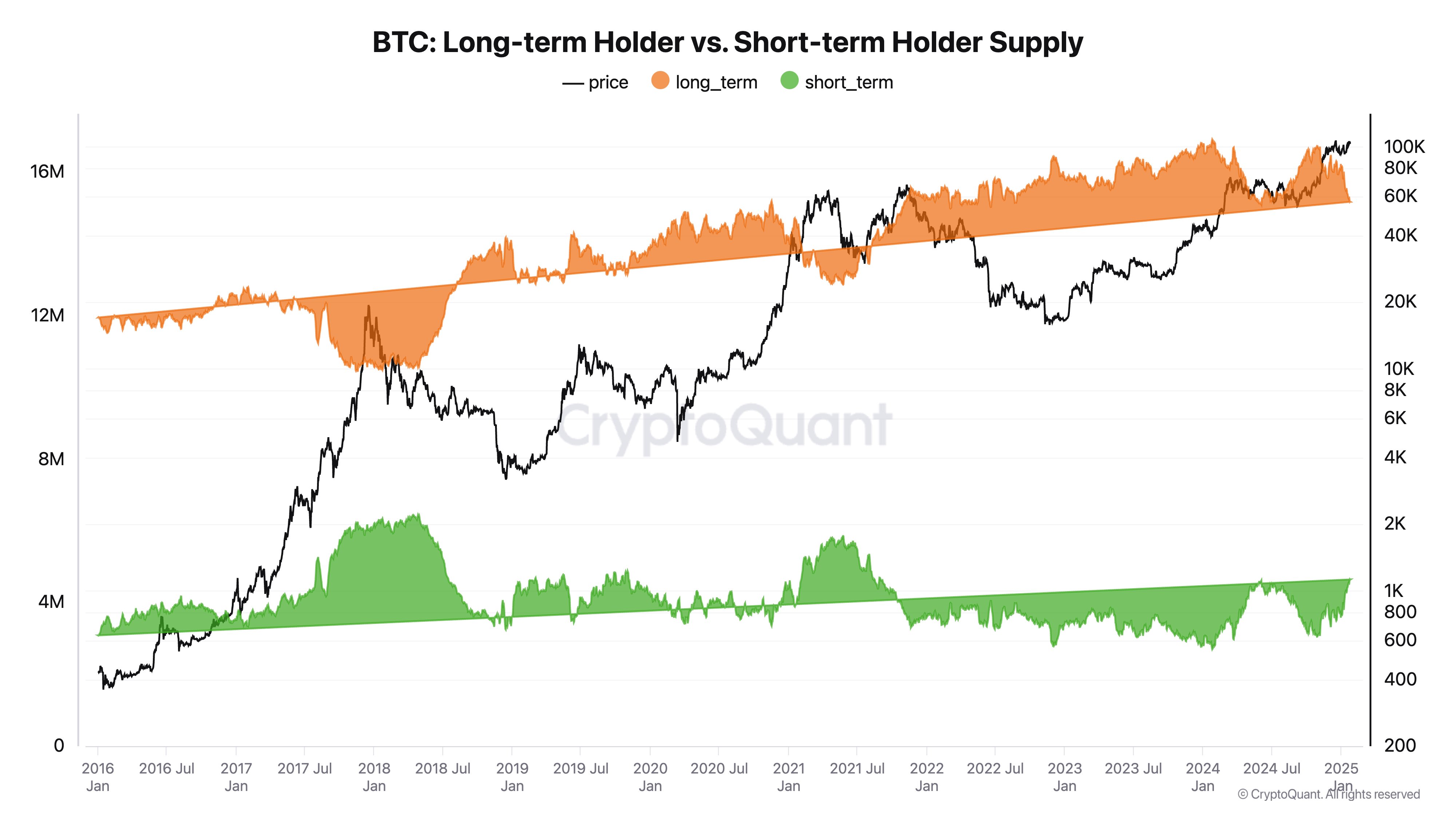
CryptoQuant CEO Ki Young Ju says that Bitcoin (BTC) is currently displaying classic bull market behavior on-chain.
Ki tells his 400,500 followers on the social media platform X that short-term BTC holders are entering the market, scooping up long-term holders’ coins.
Short-term BTC holders are investors who have held their coins for less than 155 days while long-term holders are those who have kept their coins inactive for 155 days or more.
According to the chief executive of the analytics firm, the transfer of BTC from long-term to short-term holders is something typically seen in previous bull markets.
“Trump promoted Bitcoin globally.
Short-term holders keep entering, while long-term holders are offloading.
If you know, you know – this is the definition of a bull market.”
Citing CryptoQuant data, Ki also says that larger BTC investors with at least one whole coin are gobbling up Bitcoin while smaller entities with less than a coin are offloading.
“Bitcoin retail investors with <1 BTC are selling, while the others with 1 [or more] BTC are buying.”
Ki says it’s possible that with President Trump’s “global promotional impact,” the bull run could be extended by “another couple of quarters” longer than usual, perhaps into 2026.
“Typical BTC distribution:
Whales —-> Retail Investors
This cycle:
Retail Investors (OG) + Whales (OG) —-> Retail Investors (Paper Bitcoins) + Whales (Institutions)
———-
OGs leave footprints through on-chain activity and crypto exchanges, while paper Bitcoin (ETFs, corporate stocks) leaves custody wallet on-chain footprints at settlement.
———-
Final phase of distribution:
Retail Investors (OG) + Whales (OG) + Whales (Institutions) —-> Retail Investors (Paper Bitcoins)
———-
I expect this won’t happen until at least mid-year. It might even extend into next year.”
At time of writing, Bitcoin is worth $98,847.
Don’t Miss a Beat – Subscribe to get email alerts delivered directly to your inbox
Check Price Action
Follow us on X, Facebook and Telegram
Surf The Daily Hodl Mix

Disclaimer: Opinions expressed at The Daily Hodl are not investment advice. Investors should do their due diligence before making any high-risk investments in Bitcoin, cryptocurrency or digital assets. Please be advised that your transfers and trades are at your own risk, and any losses you may incur are your responsibility. The Daily Hodl does not recommend the buying or selling of any cryptocurrencies or digital assets, nor is The Daily Hodl an investment advisor. Please note that The Daily Hodl participates in affiliate marketing.
Generated Image: Midjourney
Source link

Bitcoin (BTC) market sentiment has turned bearish, with Wall Street’s tech-heavy Nasdaq futures trading 700 points lower. The risk aversion is driven by concerns that the cost-effective Chinese artificial intelligence startup DeepSeek could significantly challenge U.S. technological dominance.
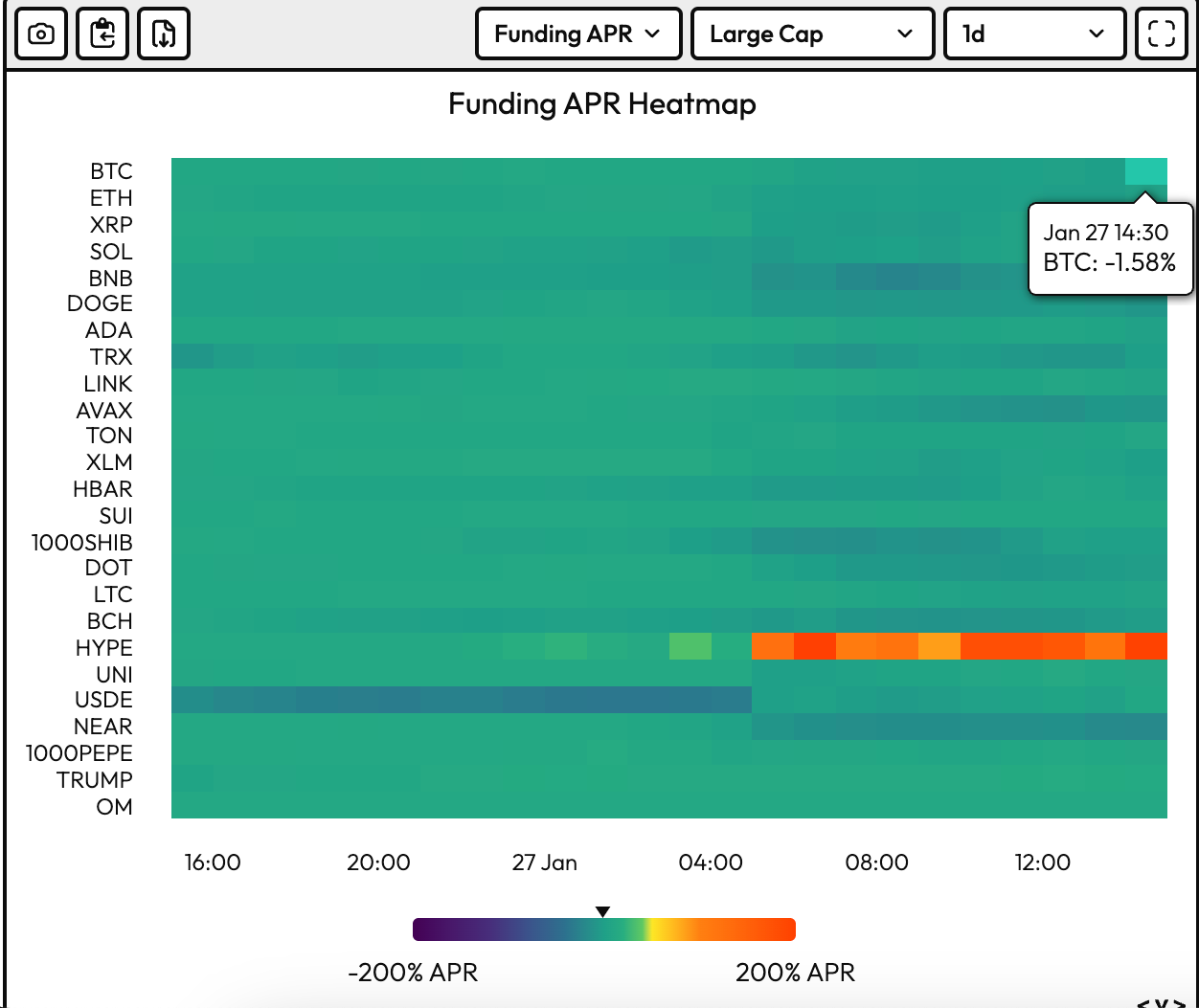
Bitcoin’s perpetual futures funding rates, periodic payments made between long and short positions in perpetual futures contracts, have flipped negative, according to data source Velo Data. It’s a sign of more bearish sentiment in the market - traders are chasing short positions in anticipation of lower prices.
The leading cryptocurrency by market value has dropped over 3% since early Asian hours, reaching lows under $98,000 at one point, according to CoinDesk data. Futures tied to Nasdaq have dropped over 3.5%, with NVIDIA, the bell-wether for all things AI, down 10% in pre-market trading.
“Today’s sell-off comes after President Donald Trump last week gave the green light to a working group on crypto policy that notably stopped short of confirming that the US would set up a bitcoin reserve. Meanwhile, Chinese artificial intelligence startup DeepSeek appears to have spooked tech stocks as its success suggests it is possible to build AI models that cost less than AI incumbents in the U.S.,” Petr Kozyakov, co-founder and CEO at Mercuryo, said in an email.
Historically, however, the negative flip in funding rates has tended to mark local price bottoms. Besides, there is always a risk of a short squeeze – bears throwing in the towel and squaring off their bets, putting upward pressure on prices. That said, the funding rate has narrowly flipped bearish, meaning its too early to call short BTC as an overcrowded trade.
Source link


Shiba Inu Whale Buys 257.5B SHIB Amid Dip
Solana Plunges 12%, But This Pattern Could Mean Decline Isn’t Over Yet
President Trump’s Executive Orders Build Confidence With Institutional Crypto Investors: CoinShares

How Declining Short-Term U.S. Treasury Yields Impact Bitcoin Price

Is Chinese AI Sensation DeepSeek a Security Risk?

This low-cap token could deliver massive profits
Elon Musk Said to Propose Blockchain Use at D.O.G.E. for Efficiency: Bloomberg
DeepSeek Limits Access Following Record Downloads and Disruptions

Bollinger Bands Tighten On XRP Daily Chart – Major Price Move Ahead?

Definition of a Bull Market Playing Out As Long-Term Holders Offload Coins, According to CryptoQuant CEO

Ethereum's Looming Collapse Is A Lesson In Blockchain Integrity

Trump signs crypto EOs, BoJ hikes, SOL ETF decision today

PEPE gets ready to surge, Yeti Ouro is predicted to surpass this rally

Bitcoin Funding Rates Flip Negative as Nasdaq Futures Tank 700 Points

Pepe coin Price Likely to Crash 56% as Whales Sell 1.1 Trillion PEPE

Ethereum’s lowered yield might signal a paradigmatic shift in the ecosystem

Arthur Hayes, Murad’s Prediction For Meme Coins, AI & DeFi Coins For 2025
Telegram users can send gifts to friends, TON fails to pump

Bitcoin Could Rally to $80,000 on the Eve of US Elections

Institutional Investors Go All In on Crypto as 57% Plan to Boost Allocations as Bull Run Heats Up, Sygnum Survey Reveals

Crypto’s Big Trump Gamble Is Risky

A Kamala Presidency Could Be Just as Bullish for Bitcoin

Ripple-SEC Case Ends, But These 3 Rivals Could Jump 500x

SEC filing underway, Bitcoin rewards app Fold adopts FLD ticker

Cardano and the XRP price action lock in bulls vs bears battle as RCO Finance prepares for 3,000% surge
Tether CEO Paolo Ardoino Denies Rumors That Stablecoin Issuer Is Under Federal Investigation

A16z-backed Espresso announces mainnet launch of core product

Xmas Altcoin Rally Insights by BNM Agent I

Crypto Exchange OKX Moves To Support USDC Ecosystem by Adding Six New Trading Pairs

Blockchain groups challenge new broker reporting rule
 DeFi4 months ago
Ethereum’s lowered yield might signal a paradigmatic shift in the ecosystem
 24/7 Cryptocurrency News3 months ago
Arthur Hayes, Murad’s Prediction For Meme Coins, AI & DeFi Coins For 2025
 News4 months ago
Telegram users can send gifts to friends, TON fails to pump
 Bitcoin3 months ago
Bitcoin Could Rally to $80,000 on the Eve of US Elections
 Bitcoin2 months ago
Institutional Investors Go All In on Crypto as 57% Plan to Boost Allocations as Bull Run Heats Up, Sygnum Survey Reveals
 Opinion3 months ago
Crypto’s Big Trump Gamble Is Risky
 Opinion3 months ago
A Kamala Presidency Could Be Just as Bullish for Bitcoin
- Price analysis3 months ago
Ripple-SEC Case Ends, But These 3 Rivals Could Jump 500x