funding
Crypto VC is back with a vengeance

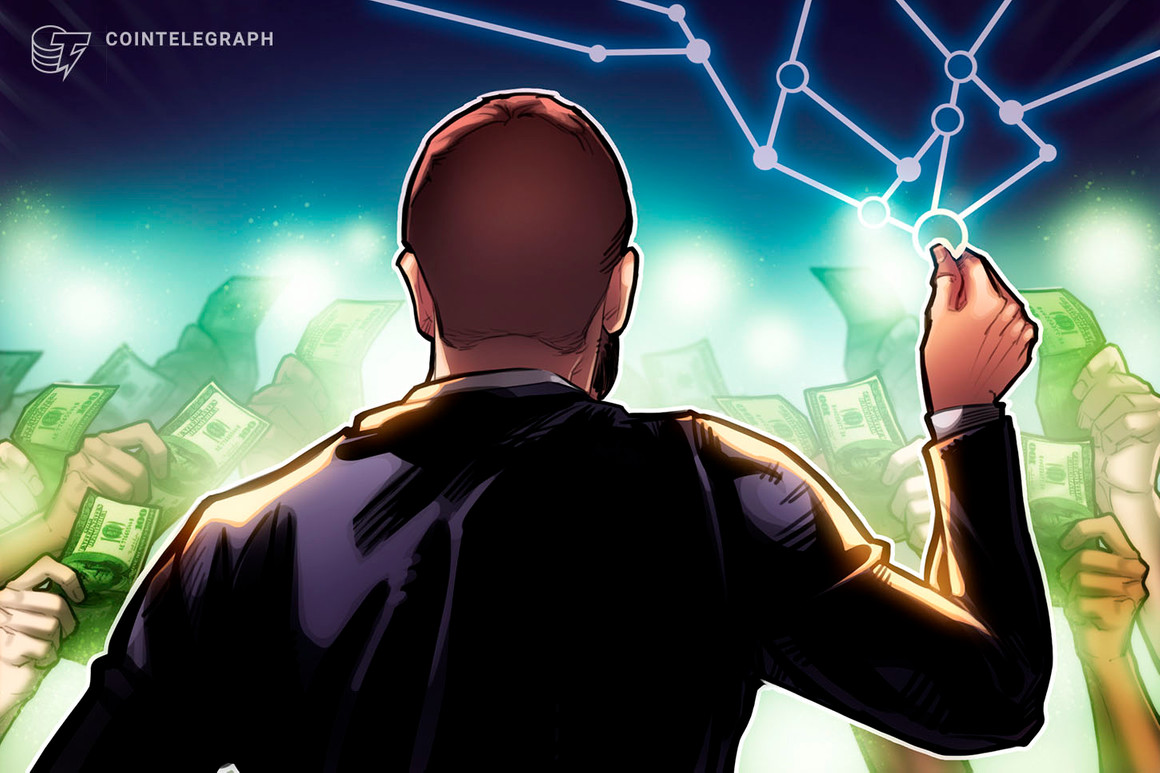
You’ve no doubt heard the expression, follow the money. Well, if you do that in the venture capital world, you’ll be led directly to crypto, blockchain and digital assets. After a modest summertime lull in venture financing, this week saw the announcement of two massive raises worth a combined $500 million. That’s $500 million VCs are allocating to crypto-focused startups at the intersection of Web3, blockchain infrastructure and decentralized communities.
If you think funding deals have stopped amid the bear market, think again. I mentioned “summertime lull” at the outset, but that doesn’t mean funding has stopped. There are so many deals, in fact, that I’ve had to start a separate series called VC Roundup just to keep track. Data from Cointelegraph Research also shows that Q2 funding deals were just as big as the first quarter in dollar terms.
This week’s Crypto Biz looks at the latest funding news from the world of blockchain.
CoinFund launches $300M early-stage Web3 venture fund
Venture firm CoinFund has launched a new investment fund devoted to all things crypto. The newly launched CoinFund Ventures 1 will invest $300 million into early-stage companies innovating in the blockchain arena, with a key focus on Web3. CoinFund raised $83 million during the bull market in 2021. Its latest deal is more than three times that amount — and it was raised during the depths of crypto winter. That tells us venture capitalists probably believe the market has already bottomed or is in the process of doing so.
Blockchain VC Shima Capital debuts with $200M Web3 fund
Shima Capital, a venture firm founded by hedge fund investor Yida Gao, has debuted with a $200 million investment fund targeting startups from across the blockchain ecosystem. Shima Capital Fund I, which is backed by Dragonfly Capital, Animoca Brands and OKX, is set to deploy up to $2 million in pre-seed funding to promising startups and innovators. Some of the most promising themes Shima has identified include decentralized identity, decentralized social media, decentralized autonomous organizations (DAOs) and blockchain gaming, among others.
Web3 aims to revolutionize participation in a wide variety of fields, from technology to the arts. However, it needs those participants to see what its potential holds, argues @nitingaur, founder and director of @IBM Digital Asset Labs https://t.co/ThiJmisXPS
— Cointelegraph (@Cointelegraph) March 13, 2022
Samsung revealed as most active investor in blockchain since September
It’s not just crypto-focused VCs that are invested in blockchain; some of the world’s largest companies are also backing startups at the intersection of Web3 gaming, Bitcoin (BTC) infrastructure solutions and digital asset custody. According to Blockdata, Samsung is the most active player in this space, having invested in 13 blockchain companies already. Google-parent Alphabet has made strategic investments in Fireblocks, Dapper Labs, Voltage and Digital Currency Group. Meanwhile, Morgan Stanley has thrown its weight behind Figment and New York Digital Investment Group (NYDIG). And people still think this blockchain stuff is just a fad?
Former JPMorgan, Barclays execs on why crypto jobs attractive even in bear market
There’s no stopping crypto — not even a bear market. Executives from traditional finance are still being lured into careers in digital assets despite the massive FUD campaign against the industry. Case in point: European crypto exchange-traded fund provider 21Shares recently announced three significant hires as part of its expansion into France, Germany and the United Arab Emirates. Two of the hires were former executives from JPMorgan and Barclays — you’ll want to read about why they’re so excited to join an industry that has lost two-thirds of its market capitalization over the past year.
Don’t miss it! Is Bitcoin a better inflation hedge than gold?
Bitcoin has been described by many as “digital gold,” forging a new frontier in inflation hedge economics. If inflation is your primary concern, are you better off holding Bitcoin or a precious metal with a 5,000-year track record? Cointelegraph sat down with Swan Bitcoin managing director Steven Lubka to discuss whether BTC’s inflation-hedge thesis still has merit. You can watch the full interview below.
Crypto Biz is your weekly pulse of the business behind blockchain and crypto delivered directly to your inbox every Thursday.
Source link





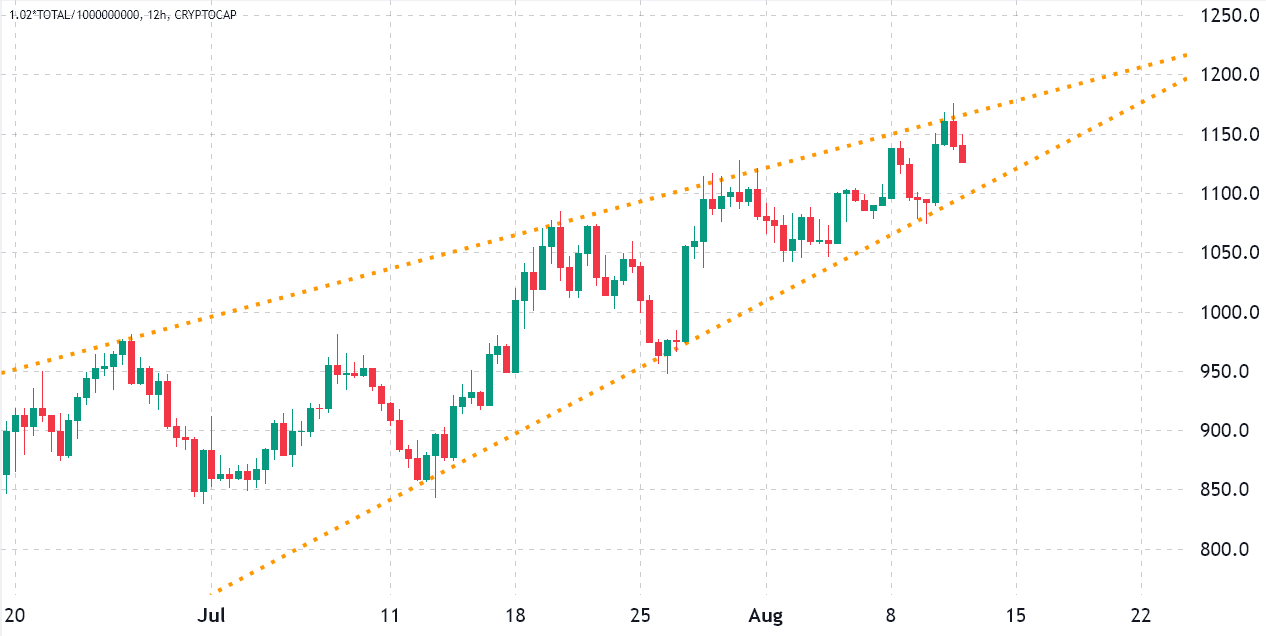
An ascending triangle formation has driven the total crypto market capitalization toward the $1.2 trillion level. The issue with this seven-week-long setup is the diminishing volatility, which could last until late August. From there, the pattern can break either way, but Tether and futures markets data show bulls lacking enough conviction to catalyze an upside break.
Investors cautiously await further macroeconomic data on the state of the economy as the United States Federal Reserve (FED) raises interest rates and places its asset purchase program on hold. On Aug. 12, the United Kingdom posted a gross domestic product (GDP) contraction of 0.1% year-over-year. Meanwhile, inflation in the U.K. reached 9.4% in July, the highest figure seen in 40 years.
The Chinese property market has caused the Fitch Ratings credit agency to issue a “special report” on Aug. 7 to quantify the impact of prolonged distress on a potentially weaker economy in China. Analysts expect asset management and smaller construction and steel-producing companies to suffer the most.
In short, risk asset investors are anxiously waiting for the Federal Reserve and Central Banks across the world to signal that the policy of tightening is coming to an end. On the other hand, expansionary policies are more favorable for scarce assets, including cryptocurrencies.
Sentiment improves to neutral after 4 months
The risk-off attitude caused by increased interest rates has instilled a bearish sentiment into cryptocurrency investors since mid-April. As a result, traders have been unwilling to allocate to volatile assets and sought shelter in U.S. Treasuries, even though their returns do not compensate for inflation.
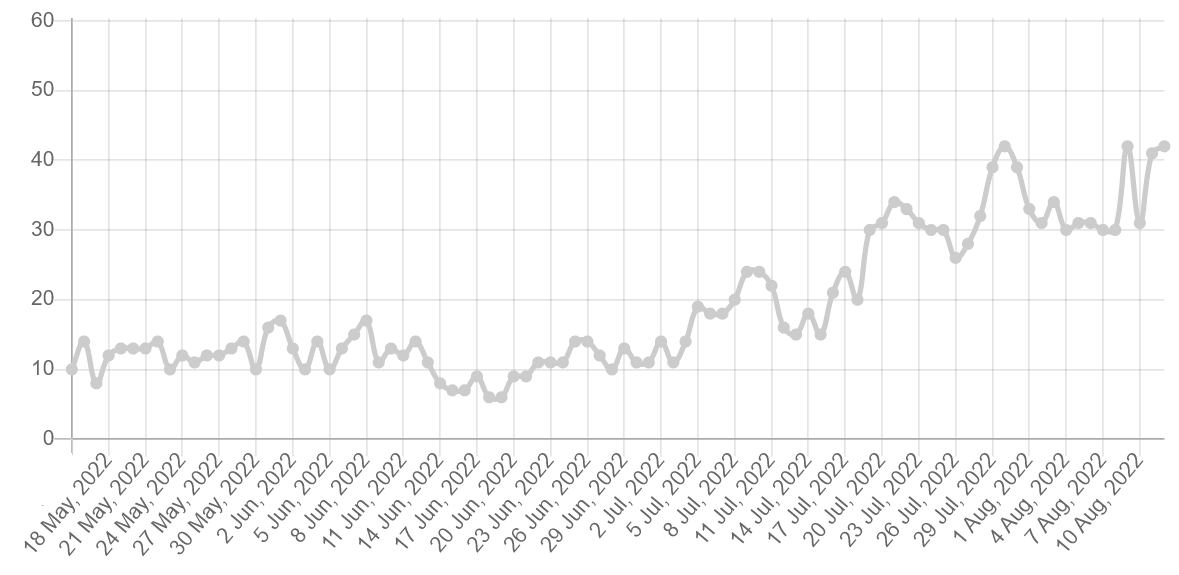
The Fear and Greed Index hit 6/100 on June 19, near the lowest ever reading for this data-driven sentiment gauge. However, investors moved away from the “extreme fear” reading during August as the indicator held a 30/100 level. On Aug. 11, the metric finally entered a “neutral” area after a fou-month-long bearish trend.
Below are the winners and losers from the past seven days as the total crypto capitalization increased 2.8% to $1.13 trillion. While Bitcoin (BTC) presented a mere 2% gain, a handful of mid-capitalization altcoins jumped 13% or more in the period.
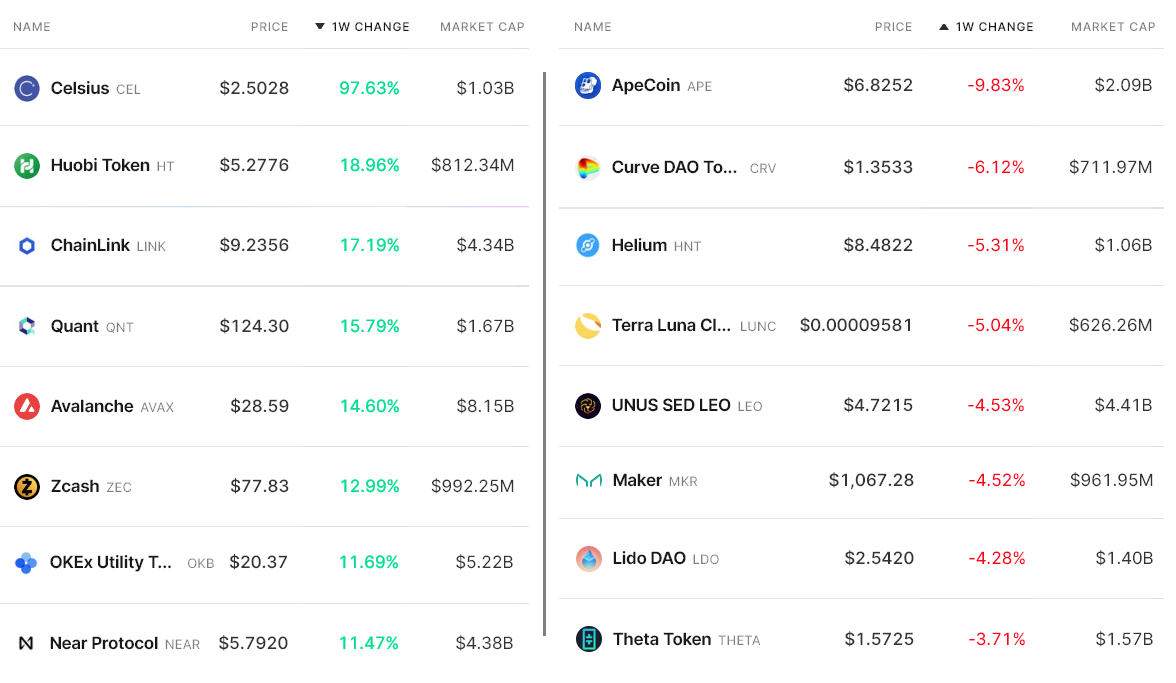
Celsius (CEL) jumped 97.6% after Reuters reported that Ripple Labs displayed interest in acquiring Celsius Network and its assets which are currently under bankruptcy.
Chainlink (LINK) rallied 17% after announcing on Aug. 8 that it would no longer support the upcoming Ethereum proof-of-work (PoW) forks that occur during the Merge.
Avalanche (AVAX) gained 14.6% after being listed for trading on Robinhood on Aug. 8.
Curve DAO (CRV) lost 6% after the nameserver for the Curve.Fi website was compromised on Aug 9. The team quickly addressed the problem, but the front-end hack caused some of its users’ losses.
Market may have rallied, but retail traders are neutral
The OKX Tether (USDT) premium is a good gauge of China-based retail crypto trader demand. It measures the difference between China-based peer-to-peer (P2P) trades and the United States dollar.
Excessive buying demand tends to pressure the indicator above fair value at 100% and during bearish markets Tether’s market offer is flooded and causes a 4% or higher discount.
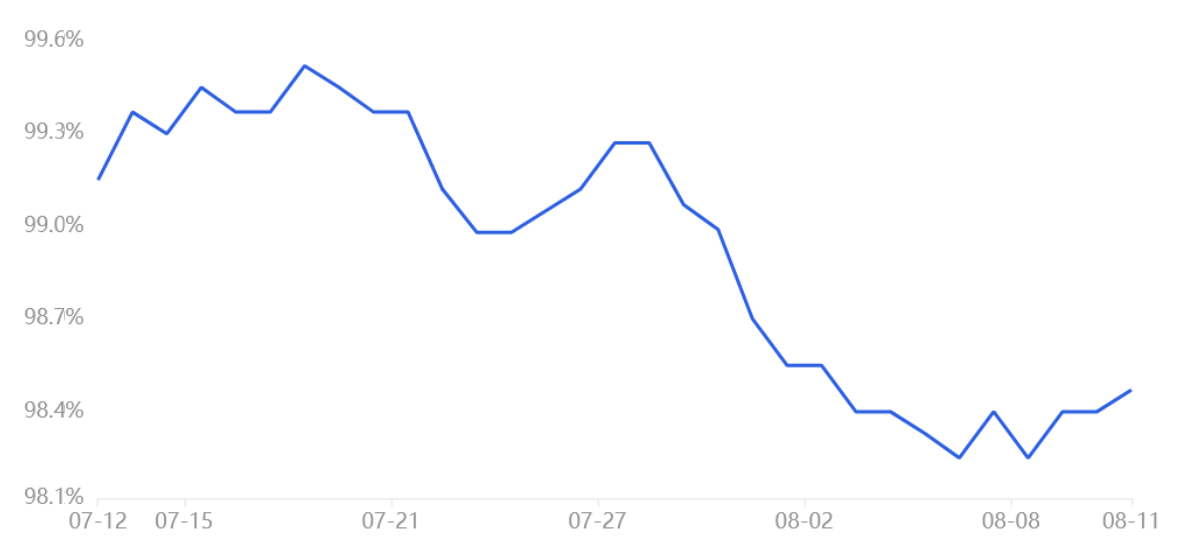
On Aug. 8, the Tether price in Asia-based peer-to-peer markets entered a 2% discount, signaling moderate retail selling pressure. More importantly, the metric has failed to improve while the total crypto capitalization gained 9% in 10 days, indicating weak demand from retail investors.
To exclude externalities specific to the Tether instrument, traders must also analyze futures markets. Perpetual contracts, also known as inverse swaps, have an embedded rate that is usually charged every eight hours. Exchanges use this fee to avoid exchange risk imbalances.
A positive funding rate indicates that longs (buyers) demand more leverage. However, the opposite situation occurs when shorts (sellers) require additional leverage, causing the funding rate to turn negative.
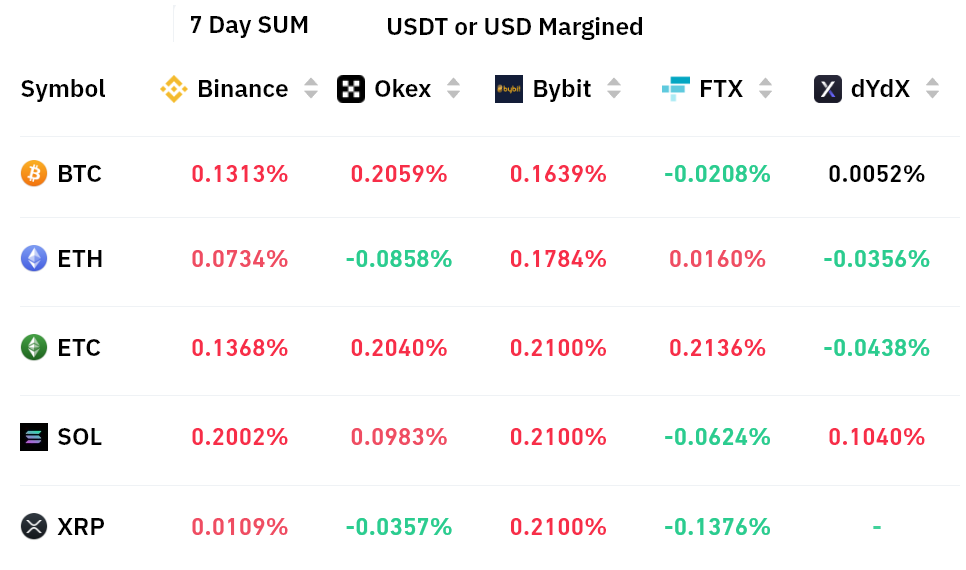
Perpetual contracts reflected a neutral sentiment after Bitcoin and Ether held a slightly positive (bullish) funding rate. The current fees imposed on bulls are not concerning and resulted in a balanced situation between leveraged longs and shorts.
Further recovery depends on the Federal Reserve
According to derivatives and trading indicators, investors are less inclined to increase their positions at current levels, as shown by the Tether discount in Asia and the absence of a positive funding rate in futures markets.
These neutral-to-bearish market indicators are worrisome, given that total crypto capitalization has been in a seven-week uptrend. Investors’ distress over Chinese property markets and further FED tightening movements is the most likely explanation.
For now, the odds of the ascending triangle breaking above the projected $1.25 trillion mark seem low, but further macroeconomic data is needed to estimate the direction central banks might take.
The views and opinions expressed here are solely those of the author and do not necessarily reflect the views of Cointelegraph. Every investment and trading move involves risk. You should conduct your own research when making a decision.
Source link
Cybersecurity
Lightning Network payment rail, DeFi trading platform and blockchain security firm raise millions


Even with the onset of crypto winter, 2022 has been a watershed year for venture capital funding. Crypto and blockchain companies collectively raised $30.3 billion in venture capital in the first half of 2022, exceeding all of last year’s totals. While the number of deals has declined in recent months, startups at the intersection of blockchain payments, decentralized finance (DeFi) and cybersecurity are still attracting sizable interest from the VC community. The latest edition of VC Roundup highlights some of the most intriguing funding deals of the past month.
Related: The risks and benefits of VCs for crypto communities
ZEBEDEE closes $35M Series B
ZEBEDEE, a Bitcoin (BTC)-powered payment processor for the gaming industry, has raised $35 million from several investors including Kingsway Capital, The Raine Group and Square Enix. ZEBEDEE is essentially a platform that allows game developers to incorporate programmable money, including BTC, into their games. The payment platform is powered by Lightning Network, making ZEBEDEE a “Bitcoin enabler of choice” for its partners, according to Kingsway Capital managing partner Afonso Campos.
So, we all know that the Lightning Network transfers value instantly and is ever growing with more than 4K Bitcoin stored on its public channels. But how does it make money?
You asked our Development Team and here’s their response pic.twitter.com/f3ZMpEFjhW
— ZEBEDEE (@zebedeeio) July 21, 2022
Blockchain security company raises $90M Series A
Blockchain security firm Halborn closed a $90 million funding round in July that was led by Summit Partners with additional participation from Castle Island Ventures, Digital Currency Group and Brevan Howard, among others. Halborn was founded in 2019 by ethical hackers offering blockchain security services. The company recently warned MetaMask users to be weary of a phishing campaign targeting their browser wallets.
DeFi platform Hashflow raises $25M in Series A funding
Hashflow, a decentralized finance trading platform headquartered in San Francisco, has closed a $25 million funding round backed by some of crypto’s most prominent venture funds. The investment round, which had participation from Jump Crypto, Electric Capital, Dragonfly Capital Partners and GSR, will aid Hashflow in expanding its product offerings for market markers and institutional traders.
See the biggest deals and more VC data from Q1, courtesy of @CointelegraphCS.
https://t.co/MPIp7dgMOW pic.twitter.com/KTGDkM4qBf
— Cointelegraph (@Cointelegraph) June 3, 2022
Socios acquires 24.5% stake in Barca Studios
Fan engagement token platform Socios announced in early August that it would invest $100 million in Barca Studios, the digital content arm of the FC Barcelona football club. Socios, which is owned by blockchain technology provider Chiliz, will help FC Barcelona accelerate its Web3 and nonfungible token (NFT) engagement strategy. Specifically, Barca Studios is pursuing NFT and metaverse projects that will help the football club engage with its vast global fanbase, and will rely on Socios’ blockchain to deliver on the strategy.
Related: Crypto Biz: Gucci ‘apes’ into crypto
EtherMail secures seed funding for wallet-to-wallet communications
Web3 email solution EtherMail has raised $3 million ahead of the planned launch of its encrypted wallet-to-wallet communication service. Scheduled for release in the third quarter, EtherMail enables Web3 companies to send “rich, relevant content directly to their asset holders,” thereby reducing the risk of communication fraud. The service also streamlines community newsletter distribution by enabling autonomous, self-updating mailing lists. The seed round was led by Fabric Ventures and Greenfield One.
Source link

Cryptocurrencies have failed to break the $1.1 trillion market capitalization resistance, which has been holding strong for the past 54 days. The two leading coins held back the market as Bitcoin (BTC) lost 2.5% and Ether (ETH) retraced 1% over the past seven days, but a handful of altcoins presented a robust rally.
Crypto markets’ aggregate capitalization declined 1% to $1.07 trillion between July 29 and Aug. 5. The market was negatively impacted by reports on Aug. 4 that the U.S. Securities and Exchange Commission (SEC) is investigating every U.S. crypto exchange after the regulator charged a former Coinbase employee with insider trading.
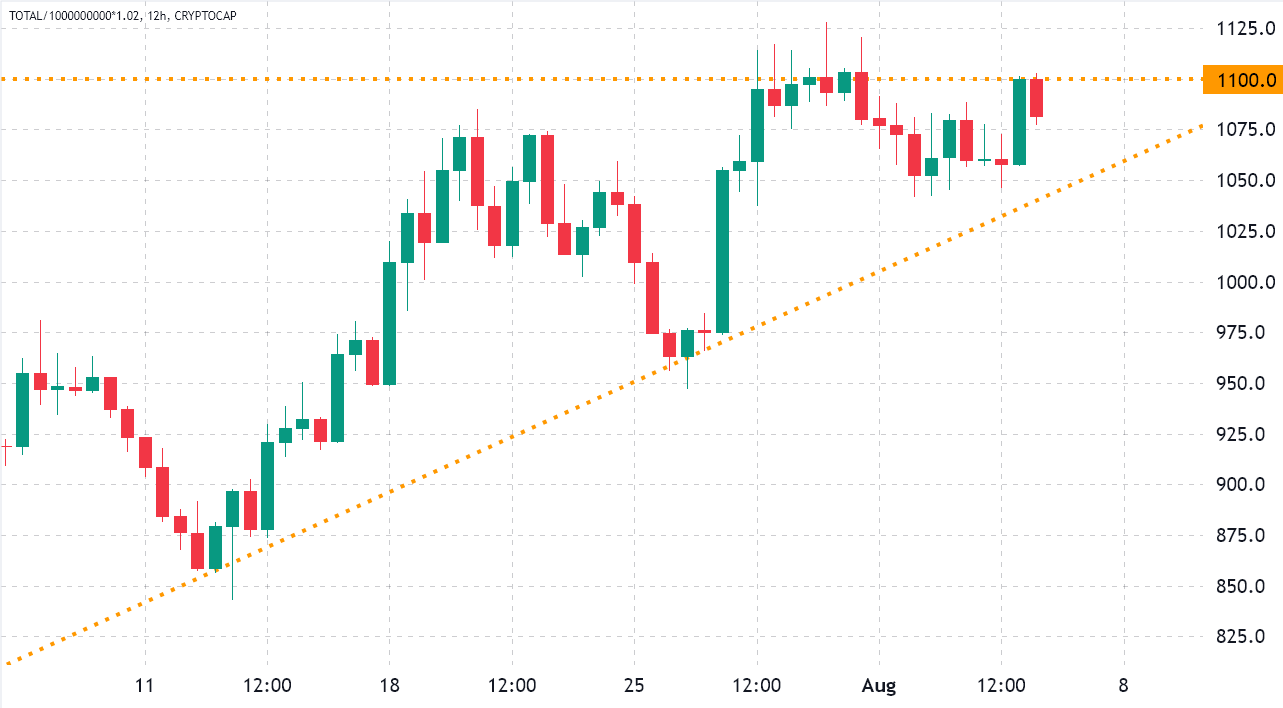
While the two leading cryptoassets were unable to print weekly gains, traders’ appetite for altcoins was not affected. Investors were positively impacted by the Coinbase exchange partnership with BlackRock, the world’s largest financial asset manager, responsible for $10 trillion worth of investments.
Coinbase Prime, the service offered to BlackRock’s clients, is an institutional trading solution that provides trading, custody, financing and staking on over 300 digital assets. Consequently, comparing the winners and losers among the top-80 coins provides skewed results, as 10 of those rallied 12% or more over the past seven days:
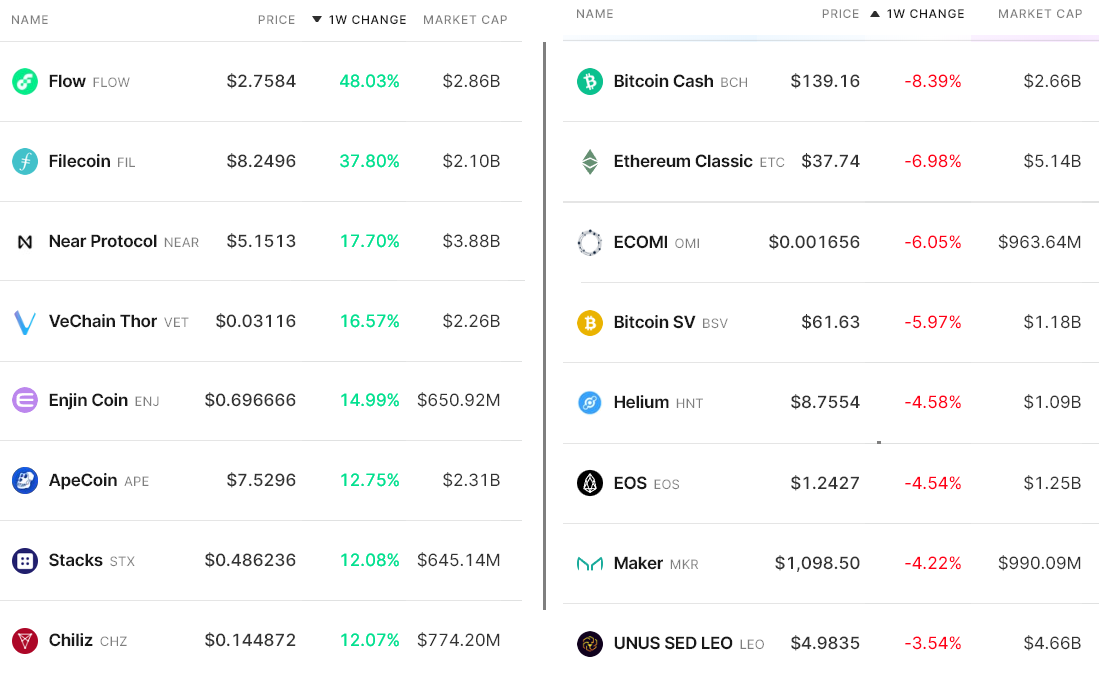
FLOW rallied 48% after Instagram announced support for the Flow blockchain via Dapper Wallet. The social network controlled by Meta (formerly Facebook) is expanding nonfungible token integration.
Filecoin (FIL) gained 38% following the v16 Skyr upgrade on Aug. 2, which hardened the protocol to avoid vulnerabilities.
VeChain (VET) gained 16.5% after some news sources incorrectly announced an Amazon Web Services (AWS) partnership. VeChain Foundation explained that the AWS reference was first cited in a May 9 case study.
Tether premium deteriorated slightly
The OKX Tether (USDT) premium is a good gauge of China-based crypto retail trader demand. It measures the difference between China-based peer-to-peer trades and the United States dollar.
Excessive buying demand tends to pressure the indicator above fair value at 100%, and during bearish markets, Tether’s market offer is flooded, causing a 4% or higher discount.
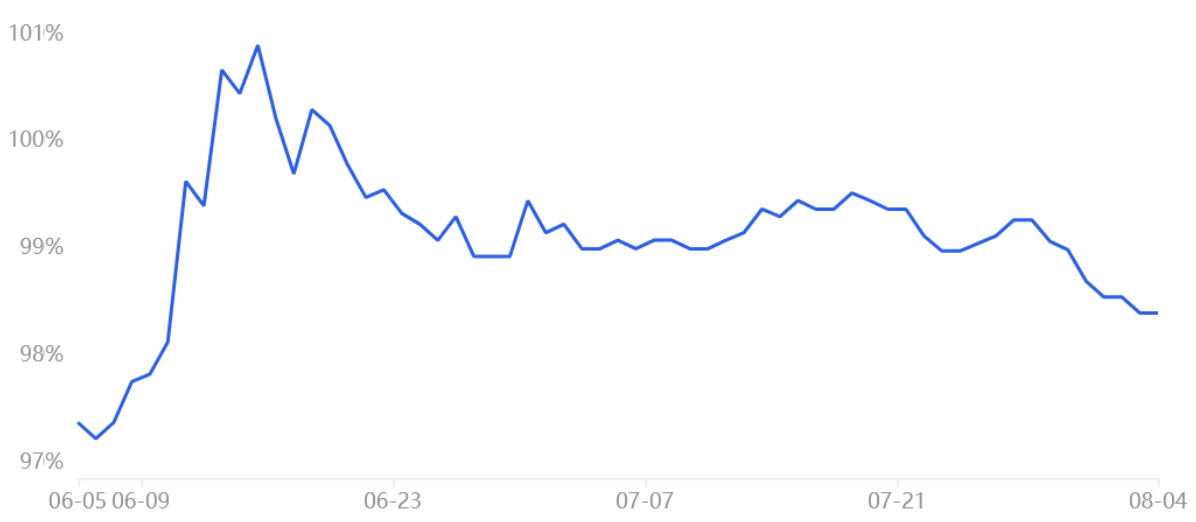
Currently, the Tether premium stands at 98.4%, its lowest level since June 10. While distant from retail panic selling, the indicator showed a modest deterioration over the past week.
However, weaker retail demand is not worrisome, as it partially reflects the total cryptocurrency capitalization being down 69% year-to-date.
Futures markets show mixed sentiment
Perpetual contracts, also known as inverse swaps, have an embedded rate usually charged every eight hours. Exchanges use this fee to avoid exchange risk imbalances.
A positive funding rate indicates that longs (buyers) demand more leverage. However, the opposite situation occurs when shorts (sellers) require additional leverage, causing the funding rate to turn negative.
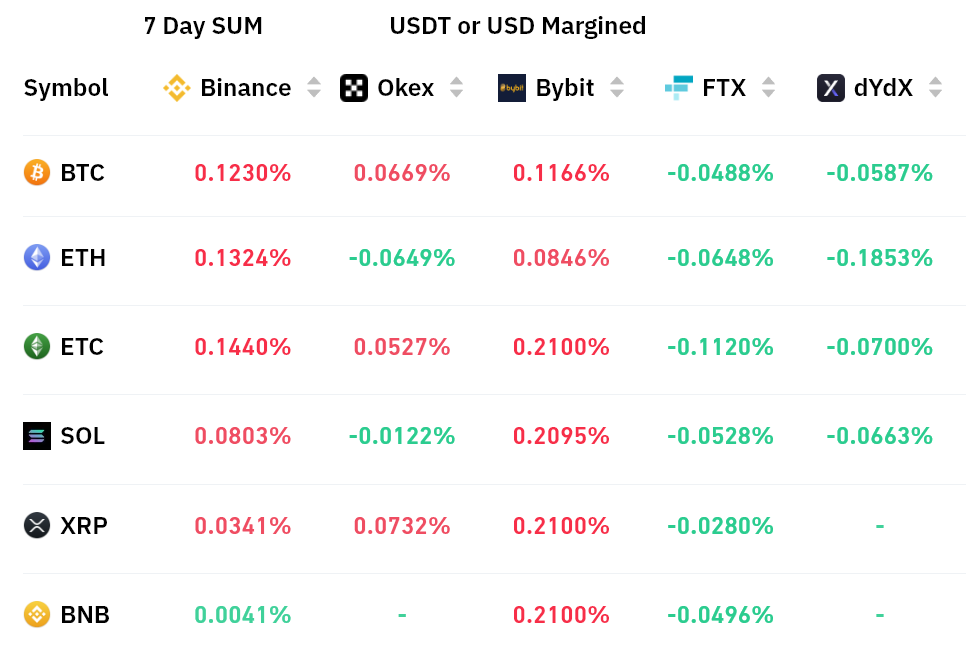
As depicted above, the accumulated seven-day funding rate is either slightly positive or neutral for the largest cryptocurrencies by open interest. Such data indicates a balanced demand between leverage longs (buyers) and shorts (sellers).
Considering the absence of Tether demand in Asia and mixed perpetual contract premiums, there is a lack of confidence from traders as the total crypto capitalization struggles with the $1.1 trillion resistance. So, presently, bears seem to have the upper hand considering the uncertainties caused by the SEC pressing charges against a former Coinbase manager.
The views and opinions expressed here are solely those of the author and do not necessarily reflect the views of Cointelegraph. Every investment and trading move involves risk. You should conduct your own research when making a decision.
Source link

Ethereum Sends Red Signals, Should You Worry About The Long Term?

BTC, ETH, BNB, XRP, ADA, SOL, DOGE, DOT, SHIB, AVAX

USDC Exchange Reserve Spikes - Can This Help Push Bitcoin Back Up?

Crypto VC is back with a vengeance

Bitcoin Price Declines Below 50-Day MA, Is A Recovery Expected?

Ethereum Merge prompts miners and mining pools to make a choice

Ethereum (ETH) Dips Consecutively And Falls Below $1,800

Three reasons to trade on the Exchange mobile app | by Silvia Chen | @blockchain | Aug, 2022

Crypto recruiting is a minefield – Cointelegraph Magazine

Another Stablecoin Fluctuates Wildly as HUSD Slips Below USD Peg to $0.82 per Token

Bitcoin Price Must Clear This Level If It Wants To See $28,000
Russian Suspect of Laundering Cryptocurrency From Ransomware Attacks Extradited to US

Nearly $55M worth of Bored Ape, CryptoPunks NFTs risk liquidation amid debt crisis

What is inflation?. Inflation is an economic situation… | by Blockchain.com | @blockchain | Aug, 2022

Bitcoin Long-Term Holders Have Shed 150k BTC Since LUNA Crash
BNM DAO Token Airdrop

What does the Coinbase Premium Gap Tell us about Investor Activity? – Blockchain News, Opinion, TV and Jobs
Fed policy and crumbling market sentiment could send the total crypto market cap back under $1T

Bitcoin Dropped Below 2017 All-Time-High but Could Sellers be Getting Exhausted? – Blockchain News, Opinion, TV and Jobs
New Minting Services

Uncertainty around French laws prompted F1 racers to remove crypto branding: Report

Bitcoin Enters August With Losses, Has It Set The Tone For The Month?

Bitcoin price hits 7-day low as US warns of ‘highly elevated’ CPI data

Bitcoin Eyes $28k With A One-day Breakout

Tezos (XTZ) Nears 3-Week High

Bitcoin Price Smashes Resistance, Why $23K Could Be Next

US lawmaker criticizes SEC enforcement director for not going after ‘big fish’ crypto exchanges

Is There Such a Thing as a Bullish Rate Hike? – Blockchain News, Opinion, TV and Jobs

Crypto miner Digihost plans to move rigs from New York to Alabama
Demand for Hardware Crypto Wallets Will Increase Amid Currency Restrictions in Russia
-
Uncategorized8 months ago
BNM DAO Token Airdrop
-
 Binance1 month ago
What does the Coinbase Premium Gap Tell us about Investor Activity? – Blockchain News, Opinion, TV and Jobs
-
 Asia4 weeks ago
Fed policy and crumbling market sentiment could send the total crypto market cap back under $1T
-
 Altcoins2 months ago
Bitcoin Dropped Below 2017 All-Time-High but Could Sellers be Getting Exhausted? – Blockchain News, Opinion, TV and Jobs
-
Uncategorized9 months ago
New Minting Services
-
 Cryptocurrencies3 weeks ago
Uncertainty around French laws prompted F1 racers to remove crypto branding: Report
-
 Bitcoin3 weeks ago
Bitcoin Enters August With Losses, Has It Set The Tone For The Month?
-
 Bitcoin1 month ago
Bitcoin price hits 7-day low as US warns of ‘highly elevated’ CPI data