Blockchain
California cannabis producer adopts blockchain to track its weed


A California-based cannabis nursery has turned to blockchain and smart contracts to verify the authenticity of its medicinal plants.
The cannabis nursery, known as Mendocino Clone Company, was named in a partnership announcement from the EMTRI project and tech firm Global Compliance Applications on Jan. 13.
It will be harnessing the project’s blockchain capabilities to certify all clones, or baby plants, with a batch certificate.
Cannabis nurseries are establishments that specialize in plant genetics, producing clones and baby plants and seeds for the purpose of wholesale distribution.
The move allows the nursery to “document the beginning stages of a cannabis plant’s journey to becoming a premium product for consumers based on the gram weight it flowers,” it stated.
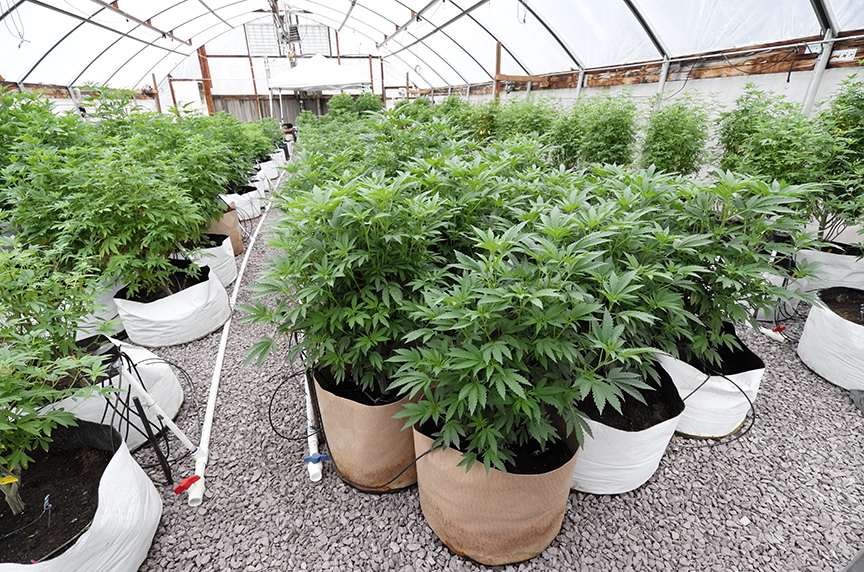
The batch certificate is a self-generated smart contract for each clone batch. It provides each baby plant with its own “unique identity block,” created by the nursery and linked to its Ethereum-based blockchain.
Its clients, which include commercial farms and retail dispensaries, can use this to verify the authenticity of their clones and their genetic lineage, it added.
The first round of batch certificate clones will be available starting the first week in February.
Additionally, licensed cultivators who purchase Mendocino clones will get access to EMTRI token (EMT) rewards and better rates for participating in the blockchain project.
EMT was launched in November 2022 to provide rewards for project participants. The tokens can be traded on Uniswap for USDC or staked for further yields. EMT is not listed on any centralized exchange or crypto market data platforms such as CoinGecko.
Co-founder of EMTRI Corp, Scott Zarnes, commented:
“We are excited to be at the forefront of the cannabis industry becoming the first in the United States to adopt this cutting-edge technology in this manner,”
Related: Cannabis-focused crypto startup is launching an NFT community
Combining crypto with cannabis is not a new concept, however.
In November, a cannabis-themed Metaverse project called Cannaland was launched to create a virtual world for cannabis enthusiasts. In January 2022, a custom pipe maker launched tokenized bongs with celebs like Snoop Dogg and Santana snapping up the NFTs.
Projects such as PotCoin (POT) and CannabisCoin (CANN) aimed to provide a digital currency specific to the industry as far back as 2014, but they never really gained traction.
Source link







Simply trading carbon credits, on the blockchain or otherwise, won’t solve a lot for the environment as companies must understand why they’re using them and how to make a real impact, carbon blockchain executives argue.
During a panel session in Davos, Switzerland, moderated by Cointelegraph’s editor-in-chief Kristina Lucrezia Cornèr on Jan. 16, several executives from carbon blockchain platforms spoke about the increasing interest from companies in carbon trading.
Karen Zapata, the COO of carbon blockchain platform ClimateTrade, said that sustainability had been a “trending topic” with many companies keen to get involved, but said that many still don’t understand it.
She recalled talking to a sustainability manager of a “big, big company” who told her he doesn’t know what a carbon credit is or “how it works” but is being pressured by his marketing team to “move this forward.”
Zapata emphasized that companies won’t be able to communicate what they are doing with carbon credits to their community if they don’t “even understand” what it is.
She added that one should be less concerned about the pricing behind carbon credits, and more about the impact. The price comes second, once the positive impact is understood, she explained.
Carbon marketplace Tolam Earth CEO Matthew Porter added to the conversation saying that carbon trading by itself “doesn’t solve a lot,” without knowing why they are doing it and creating “incentives and drivers.”
He also added that putting it on the chain only solves a “little bit” of inefficiency.
Related: Blockchain’s environmental impact and how it can be used for carbon removal
There has been no shortage of carbon credit developments in the blockchain space in recent times.
Blockchain-based storage network Filecoin launched Filecoin Green, a protocol labs initiative designed to reduce the environmental impact of its native cryptocurrency Filecoin in Oct. 2022.
The first project it launched was CO2.Storage, a Web3 data storage solution that aims to provide transparency for carbon offsets and address traditional storage solutions for all types of digital environmental assets, including renewable energy credits.
WeWork CEO Adam Neumann dived into the carbon crypto space in May 2022, raising $70 million in the first major funding round for his climate tech venture Flowcarbon.
The project was created to make carbon trading more accessible by putting carbon credits on the blockchain.
Source link

After Bitcoin (BTC) hit a yearly high of $19,501 on Jan. 13, where is it headed next?
Bitcoin is currently witnessing an uptick in bullish momentum after the positively perceived Consumer Price Index (CPI) report was followed by a strong rally across the crypto market.
The recent rally in Bitcoin is creating increased volume levels and higher social engagement on whether the price is in a breakout of fakeout mode.
Is the Bitcoin bear market over?
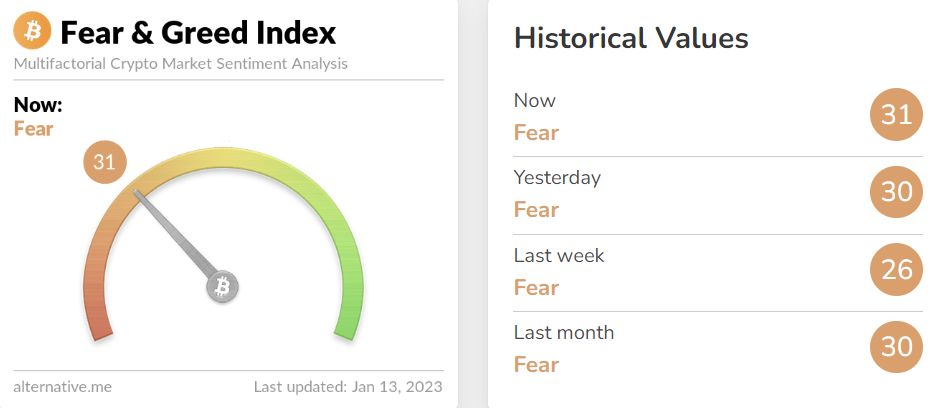
While the market is still technically in a bear market compared to last week, investor sentiment is improving. According to the Fear and Greed Index, a crypto-specific metric that measures sentiment using five weighted sources, investors’ feelings about the market hit a monthly high.
Bitcoin price is now approaching the psychologically important $20,000 level and many analysts and traders are issuing their thoughts on where BTC price could head next.
Let’s explore a few of these perspectives.
Bitcoin trading volumes remain a concern
Bitcoin price has yet to recover from its pre-FTX levels, but reached above $19,501 on Jan. 13 for the first time since Nov. 8, 2022. Despite the strength of the recent rally, some analysts believe BTC price needs to reach $21,000 before the current bullish trend can be sustained.
According to Glassnode analysis,
“A renewed bullish trend that started on January 1st drove bitcoin to the $18.6 - $18.9k level, yet a cross over to $19k is necessary to claim a new trading channel around $19-$21k. Resistance is expected around these levels as bitcoin faces a mid-term downward trend. If the price fails to break over the trend line, we expect a retrace toward the $16-$17k area.”
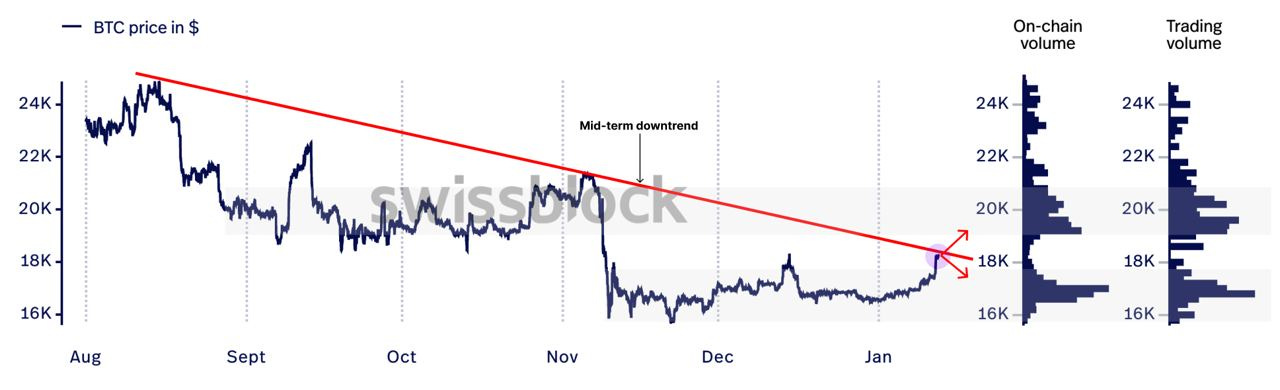
The lack of trading volume around $18,000 shows the weakness in the current on-chain and centralized exchange (CEX) activity. The largest volumes and overall activity seem to surround the $16,000 level, suggesting that is a more solid floor than the current price range. With less volume surrounding levels higher than $20,000, Bitcoin’s rally could be capped at $20,000.
Is it just a bear market rally?
Bitcoin is still facing headwinds including massive exchange layoffs in a tightening macro economy, Gemini and Genesis legal issues and the potential establishment of a US House crypto-focused subcommittee.
In addition, Bitcoin’s relative strength index (RSI) is currently showing BTC as overbought. According to RSI analysis, a sharp downtrend may form as the price corrects.
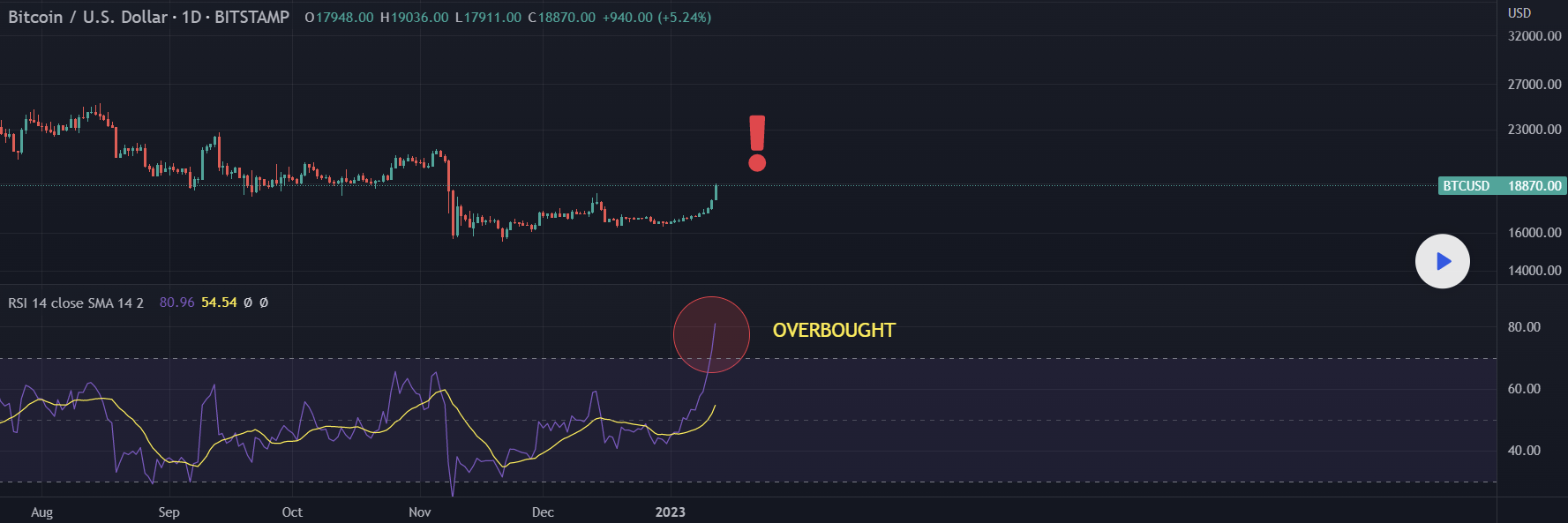
The macro markets are also at major resistance levels. The United States Dollar index (DXY) is at key support which means risk assets like Bitcoin may start to see a sell-off if the index recovers. Bitcoin remains correlated to equities and the SPX mini futures index is also showing signs of a pullback.
TraderSZ explains below:
$BTC - huge resistance here…dxy at key support…ES looking like it could pullback abit, eth at macro mid range…been up only all week so could get some profit taking/pullback….arrow would be my trigger IF it follows plan pic.twitter.com/6JziAmBywH
— TraderSZ (@trader1sz) January 12, 2023
With Bitcoin investors taking profits as suggested by TraderSZ, it may be tough for BTC to reach higher levels.
Historical analysis points to a new Bitcoin bottom
Bitcoin is currently below its 200-week moving average and according to independent market analyst Rekt Capital, Bitcoin price may have already hit its macro bottom according to historical data. Historically the “Death Cross” level shows a $23,500 bottom.
Several months later and #BTC has dropped into the Macro Bottoming Area as dictated by historical $BTC Death Cross price tendencies
According to these principles, the general Bottoming Out area begins from $23500 (green)#Crypto #Bitcoin https://t.co/85DjLHoZnD pic.twitter.com/iTbCV1CxG3
— Rekt Capital (@rektcapital) January 13, 2023
While traders and technical analysis are not known for accurately predicting how long a bull or bear market might last, independent market analyst HornHairs cited historical data from 2015 to estimate how long it will take for Bitcoin to hit a new all-time high.
The bull market from 2015 to 2017 lasted for 1064 days, matching with the 2018 to 2021 bull market which lasted the same number of days. If traders match the bear market that followed between 2017 to 2018 and 2021 to the current market, it would take 1,001 days until Bitcoin reaches a new all-time high.
$BTC #Bitcoin
2015-2017 bull market: 1064 days
2017-2018 bear market: 364 days2018-2021 bull market: 1064 days
2021-*current* market low: 364 daysDays left until the top if we just carbon copy the cycle timeframe again: 1001 days pic.twitter.com/KoNZxJRuy5
— HornHairs (@CryptoHornHairs) January 12, 2023
Despite the current conditions and the strength of the current price breakout, Bitcoin has proven many technical analysts wrong in the past. Risk-averse traders might consider keeping an eye out for increased trading volume at higher prices as an indicator of whether Bitcoin is finally back in a bull market.
The views, thoughts and opinions expressed here are the authors’ alone and do not necessarily reflect or represent the views and opinions of Cointelegraph.
Source link


Flare, a new layer-1 Ethereum Virtual Machine blockchain platform, has gone live with the launch of two core protocols aimed at powering decentralized interoperability applications.
The platform serves as an oracle network that allows developers to build applications that are aimed at being interoperable with different blockchains and internet platforms and services.
Flare features two protocols that power its application-building suite. Its State Connector protocol enables information and data to be used securely and at scale from various blockchains and internet sources with the use of smart contracts. The functionality is touted to offer powerful data to the network and facilitate the development of cross-chain solutions.
Meanwhile, the Flare Time Series Oracle (FTSO) sources and provides decentralized price and data feeds to decentralized applications (DApps) running on the layer-1 blockchain platform. According to Flare’s technical documentation, the FTSO smart contract provides continuous estimates for different types of data.
Independent providers retrieve data from external sources like centralized and decentralized exchanges and supply that data to the FTSO system. The information is weighted according to each provider’s voting power, and a median is calculated to produce the final estimate.
Related: Chainlink launches staking to increase the security of oracle services
This operates as an incentive system for data providers, which are rewarded for supplying price pairs and other information that are close to the median value from various sources.
The protocol’s two networks, Songbird and Flare, run Ethereum Virtual Machine which allows Ethereum contracts and tools to be used in the development of smart contracts and applications. However these layer 1 networks run independently of the Ethereum mainnet.
Details of the platform launch shared with Cointelegraph highlight the importance of providing secure access to data. Flare CEO & co-founder Hugo Philion believes the two protocols can lead to new use cases for blockchain technology, such as triggering a Flare smart contract with a payment made on another chain or by input from a conventional website.
“It also facilitates a new way of bridging, specifically to bring non-smart contract tokens to Flare for use in applications like DeFi protocols.”
Flare initiated its token airdrop on Jan. 9, with 4.27 billion FLR tokens distributed to millions of users across various cryptocurrency exchanges. The airdrop itself marked a unique milestone, as developers can now start using Flare’s EVM and data acquisition protocols.
The initial token distribution released 15 percent of the full public token allocation, with the remainder set to be released monthly over 36 months. The allocation method for the remaining token supply will be settled by a community vote through the Flare Improvement Proposal 01 (FIP.01).
Source link

Solana (SOL) Continues To Shine With 43% Gains In Last Week
Price analysis 1/17: SPX, DXY, BTC, ETH, BNB, XRP, DOGE, ADA, MATIC, DOT

Whales Move Billions Of XRP Following Price Spike

Masa Finance launches soulbound Web3 identity protocol for Ethereum

Here’s Why $22.4k Could Be Next Level To Break For Bitcoin

Silvergate reports $1B net loss in the fourth quarter of 2022

Bitcoin Price Spike May Push Rally To This Amount, Top Analyst Predicts

Bitcoin DeFi ecosystem explained
Rally Could Resume Above $1.05

Crypto mining stocks surge to yearly highs after Bitcoin bounces back

Cronos (CRO) Prints Over 9% Gains In A Day While Market Sees Correction

Putting carbon credits on blockchain won’t solve the problem alone: Davos

Ethereum Price Gearing For Lift-Off to $1,800: Rally Isn’t Over Yet

‘Ninth circle of hell’ is reserved for SBF for his betrayal: Scaramucci
Bitcoin Price Consolidates Below Resistance and At Risk of Minor Pullback

What does the Coinbase Premium Gap Tell us about Investor Activity? – Blockchain News, Opinion, TV and Jobs
Fed policy and crumbling market sentiment could send the total crypto market cap back under $1T
BNM DAO Token Airdrop

Bitcoin Dropped Below 2017 All-Time-High but Could Sellers be Getting Exhausted? – Blockchain News, Opinion, TV and Jobs

Will the Bitcoin mining industry collapse? Analysts explain why crisis is really opportunity

Judge rules LBRY video platform’s token is a security in case brought by the US SEC

Enjoy frictionless crypto purchases with Apple Pay and Google Pay | by Jim | @blockchain | Jun, 2022
New Minting Services

Silvergate Capital’s crypto-to-fiat transfers decrease by $50B compared to Q3 2021

Friends or Enemies? – Blockchain News, Opinion, TV and Jobs

Could Today’s CPI Data be Bullish? – Blockchain News, Opinion, TV and Jobs

Benvenuto! Italian regulators welcome Europe’s largest crypto powerhouse, Blockchain.com | by Blockchain.com | @blockchain | Aug, 2022

Uncertainty around French laws prompted F1 racers to remove crypto branding: Report

Investment Giant Fidelity Plans Crypto Expansion – Blockchain News, Opinion, TV and Jobs

Is There Such a Thing as a Bullish Rate Hike? – Blockchain News, Opinion, TV and Jobs
-
 Binance6 months ago
What does the Coinbase Premium Gap Tell us about Investor Activity? – Blockchain News, Opinion, TV and Jobs
-
 Asia6 months ago
Fed policy and crumbling market sentiment could send the total crypto market cap back under $1T
-
Uncategorized1 year ago
BNM DAO Token Airdrop
-
 Altcoins7 months ago
Bitcoin Dropped Below 2017 All-Time-High but Could Sellers be Getting Exhausted? – Blockchain News, Opinion, TV and Jobs
-
 Antminer6 months ago
Will the Bitcoin mining industry collapse? Analysts explain why crisis is really opportunity
-
 SEC2 months ago
Judge rules LBRY video platform’s token is a security in case brought by the US SEC
-
 apple-pay7 months ago
Enjoy frictionless crypto purchases with Apple Pay and Google Pay | by Jim | @blockchain | Jun, 2022
-
Uncategorized1 year ago
New Minting Services