
Bitcoin
Bitcoin Shakes Off Genesis Bankruptcy Filing









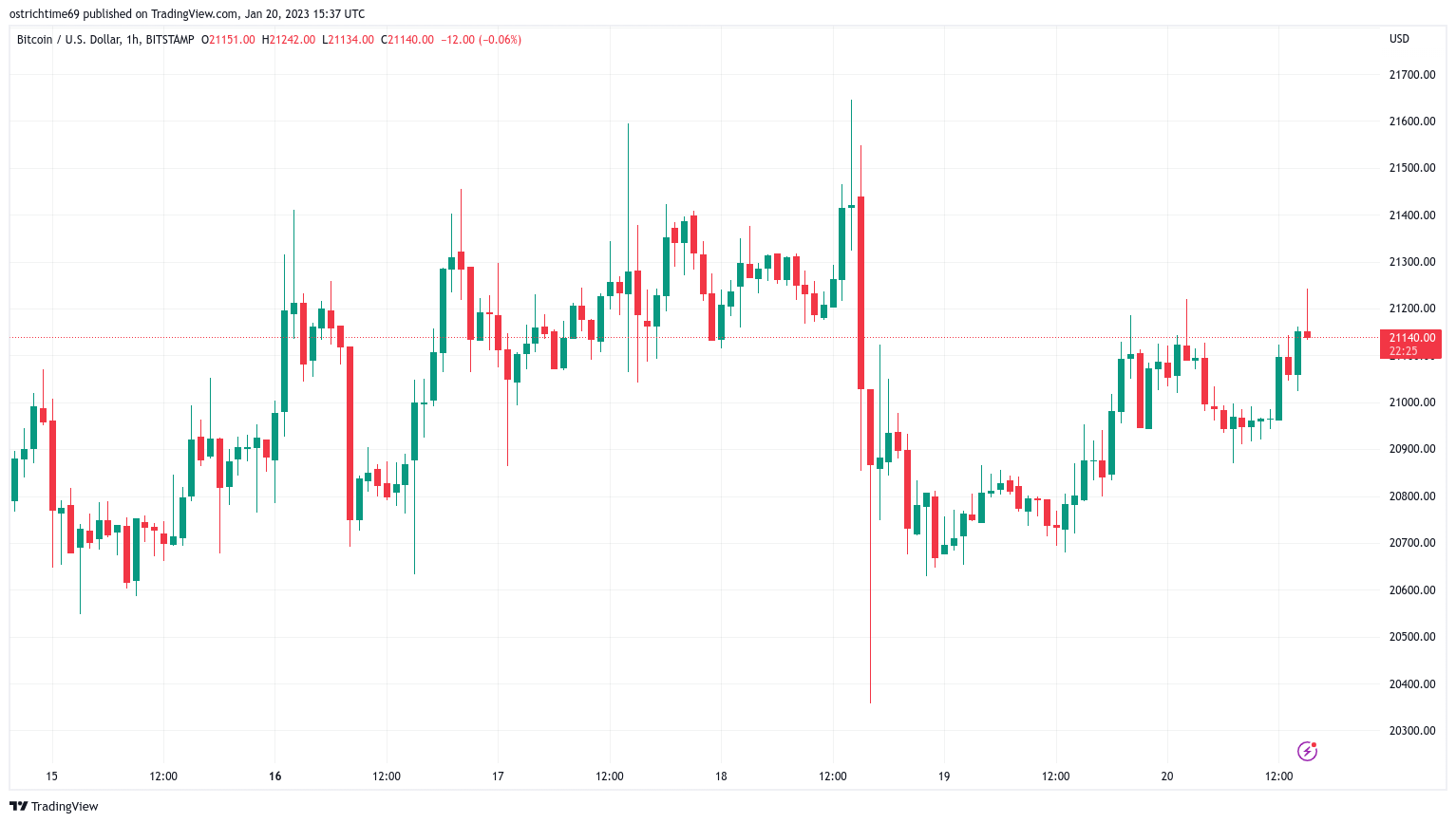
Bitcoin (BTC) rose toward new multi-month highs on Jan. 20 as analysis predicted a new trading range above $18,000.
Bitcoin price range “well defined”
Data from Cointelegraph Markets Pro and TradingView showed BTC/USD testing but preserving support at $21,000.
The pair edged higher at the Wall Street open, in line with United States equities as the third trading week of an explosive January drew to an end.
Despite misgivings over the rally’s fundamental strength, Bitcoin continued to avoid significant corrections, with exchange order book analysis revealing $23,000 as the next big resistance zone to crack.
“I view the lack of BTC liquidity below $18k and above $23k as a lack of sentiment for those levels at this time,” on-chain monitoring resource Material Indicators wrote in part of commentary about the Binance order book setup.
“Nothing changes sentiment like price moving through support or resistance, but for now, the trading range is well defined.”
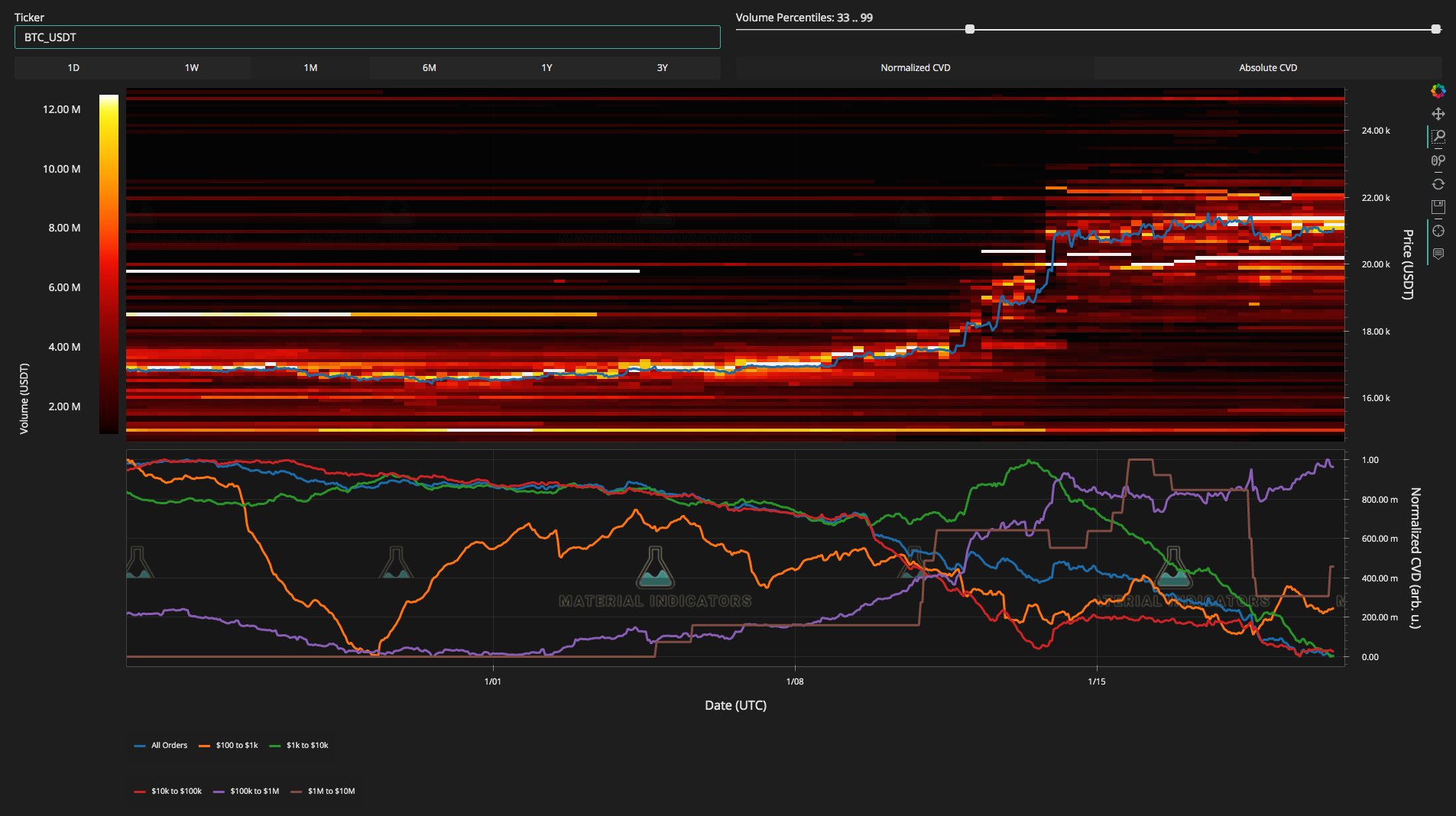
An accompanying chart also revealed significant bid support in place at just above the psychologically significant $20,000 mark.
In terms of short-term targets, popular trader and analyst Crypto Ed hoped for a trip to $21,500 before a turnaround with a downside target of $19,800.
“I still believe that we will get there, and maybe we are already on our way over there,” he said in a YouTube update on the day.
The area around $21,400 was equally important for fellow trader CJ, who told Twitter followers that this would be a suitable place to “tag longs.”
Analyst: Bitcoin should “close gap” with gold
Zooming out, others focused on continued impressive moves by safe haven gold, which had hit a new nine-month high on Jan. 19.
Related: Bitcoin can pass $30K before setting new bear market low — forecast
In a Twitter debate, analysts eyed a potential continued game of catch-up between gold and Bitcoin, which researcher and data analyst James V. Straten argued had been a “mirror image” of each other in 2022.
“My bet BTC closes that gap soon,” he said while discussing the market implications of Federal Reserve policy.
Straten added that BTC/USD had already “retraced the entire FTX collapse and approaching the end of the narrative for DCG,” referring to ongoing problems for crypto finance conglomerate, Digital Currency Group.
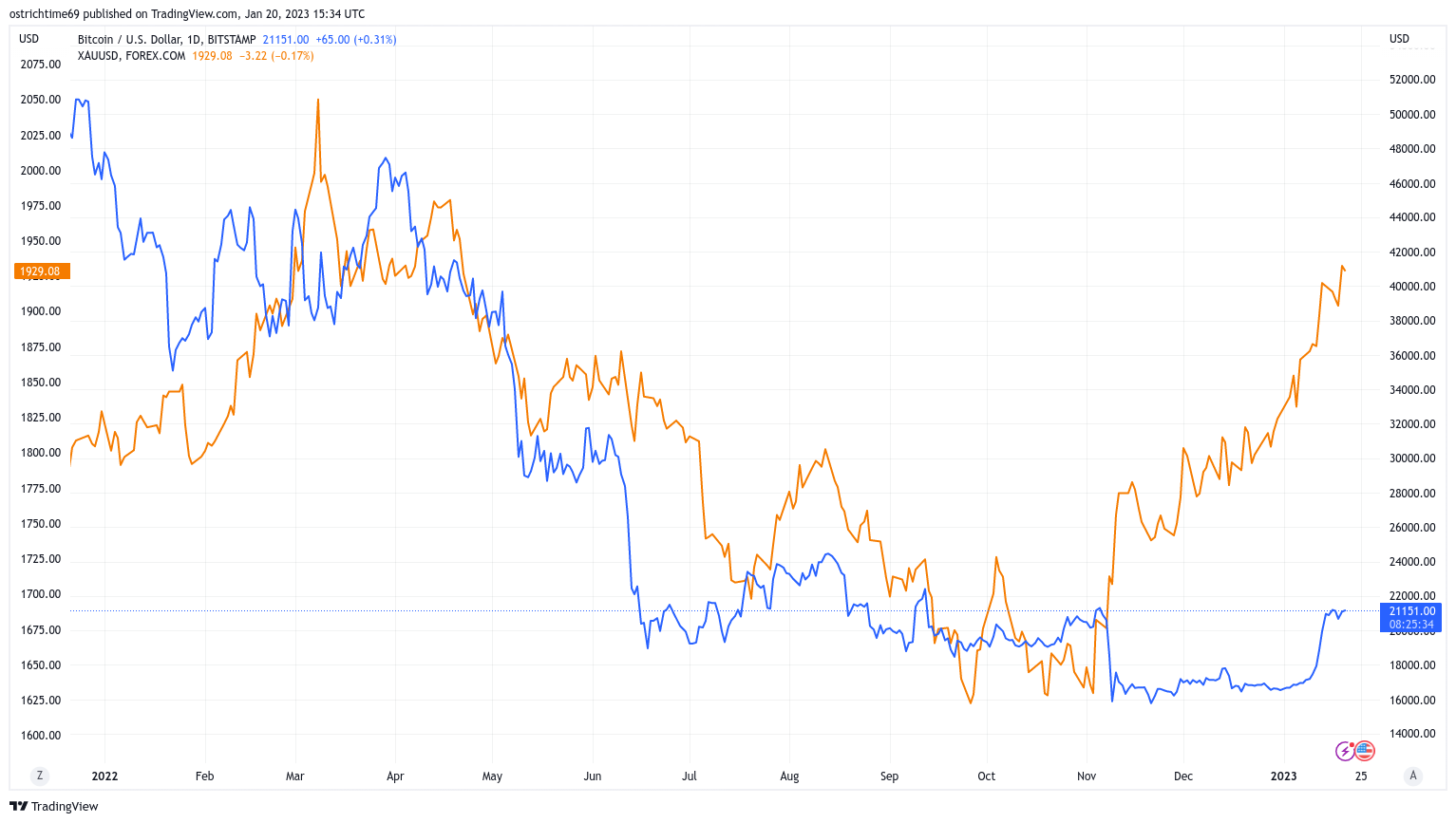
As Cointelegraph reported, expectations previously called for a copycat move on Bitcoin after gold took an early lead in recovering from lows.
The views, thoughts and opinions expressed here are the authors’ alone and do not necessarily reflect or represent the views and opinions of Cointelegraph.
Source link
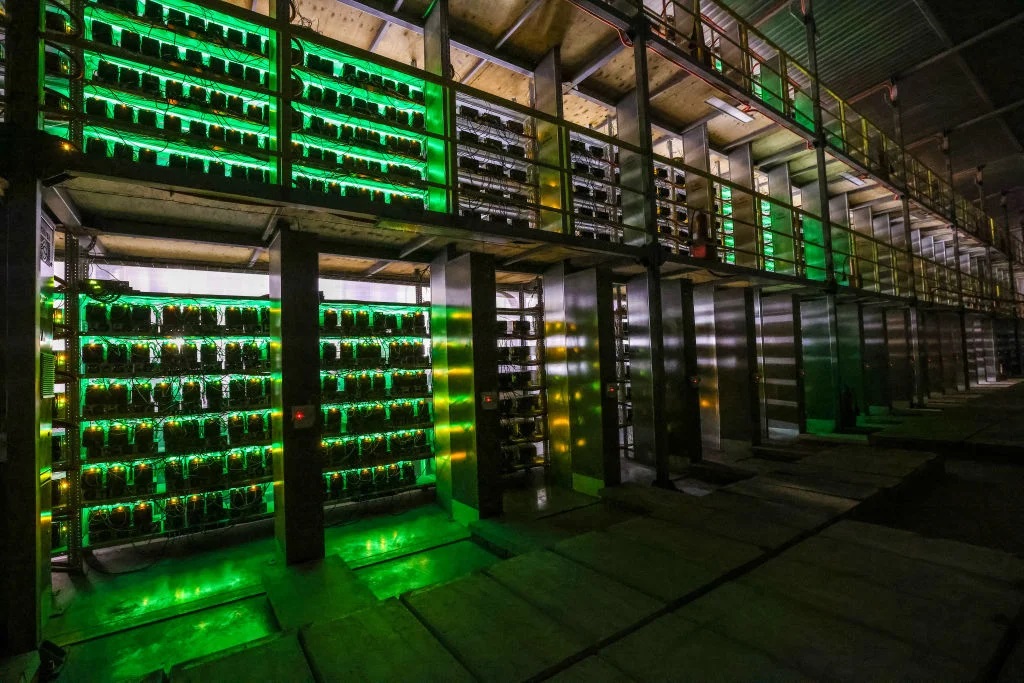
The Bitcoin hash rate is trending at near all-time highs, per on-chain data on January 20, 2023.
Bitcoin Hash Rate at 274 EH/s
According to streams from BitInfoCharts, the Bitcoin network currently has a hash rate of 274 EH/s, up by almost one percent in the past 24 hours. Even at this pace, the hash rate is down from January 16 highs of 302 EH/s.
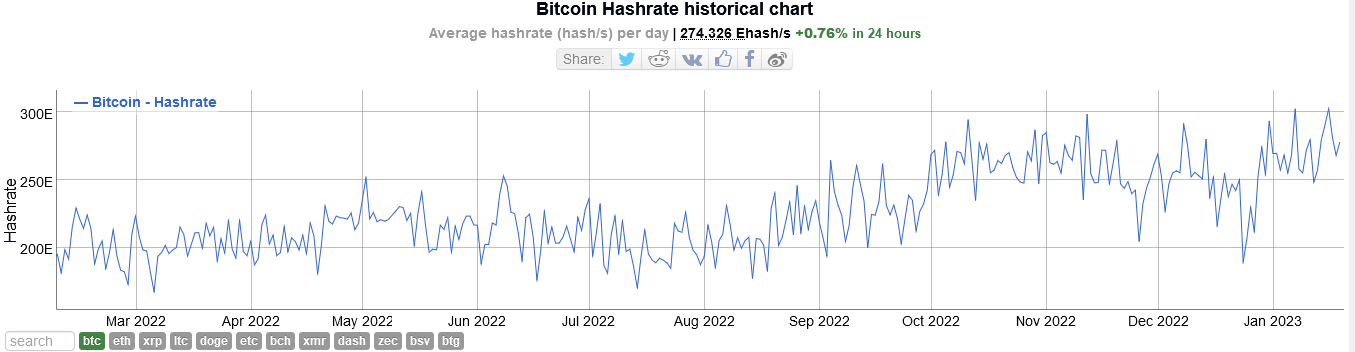
Hash rate is the measure of computing power dedicated to BTC mining. As a proof-of-work platform, the Bitcoin network depends on a community of node operators using Application Specific Integrated Circuit (ASIC) gear for block confirmation and security.
ASICs are special nodes explicitly designed to mine cryptocurrencies in proof-of-work networks using, among others, the SHA-256 consensus algorithm. ASICs that can mine BTC can also be used to mine its forks, adhering to a proof-of-work system, including Bitcoin Cash. For confirming a block, a miner is rewarded with BTC.
The amount of computing power channeled to the Bitcoin network often fluctuates depending on many factors, including the cost of scarce gear, often from Bitmain, and the price of BTC.
In recent years, chipset manufacturers, led by Bitmain, have been tuning their equipment, making them more efficient in power consumption. At the same time, they are packing them with more power.
Accordingly, the latest BTC ASICs can dispense more computing power. As an illustration, the Bitmain Antminer S19 XP released in July 2022 can produce 140 TH/s while using 3010W. Meanwhile, the older versions, like Bitmain Antminer S17+, can generate 76.00 TH/s while using more power at 3040W.
Improving efficiency coupled with rising prices may explain the rising hash rate. Since miners are likely to power their gear as Bitcoin prices recover, the hash rate might bounce, even to new all-time highs, in the months ahead.
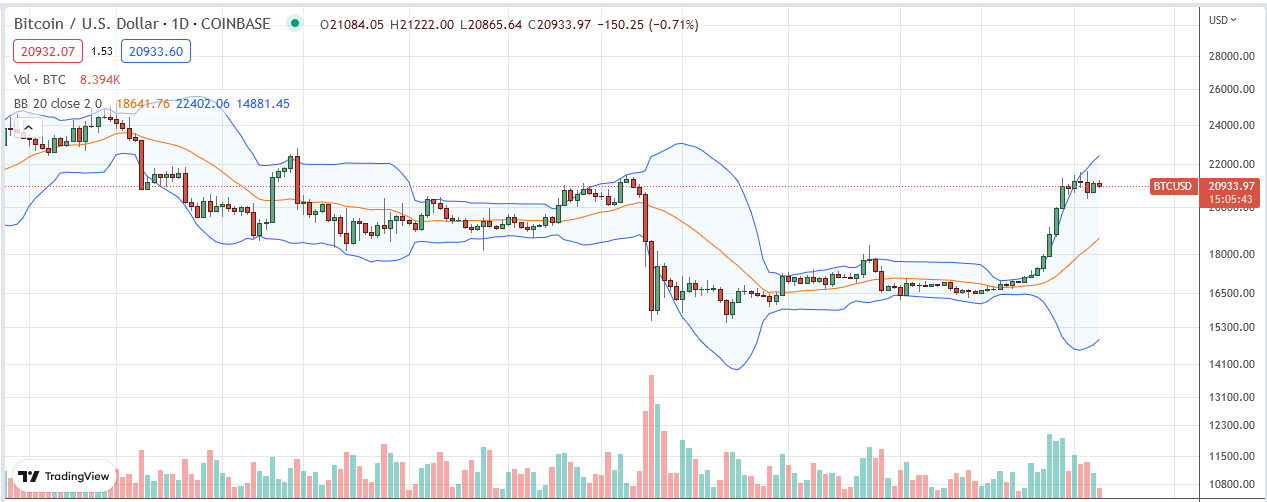
This will be especially true if BTC prices continue to maintain the current trajectory. After months of lower lows in 2022, Bitcoin appeared to have bottomed up in November 2022 at $15,300. Prices are now trending above $20,000, according to TradingView charts.
Mining Difficulty Adjusted Upwards
Hash rate trends and difficulty readings are proportional. In response to the rising hash rate, near all-time highs, the network automatically increased mining difficulty by double digits to 10.26% on January 16. The difficulty was adjusted upwards by 13.55% on October 10, 2022.
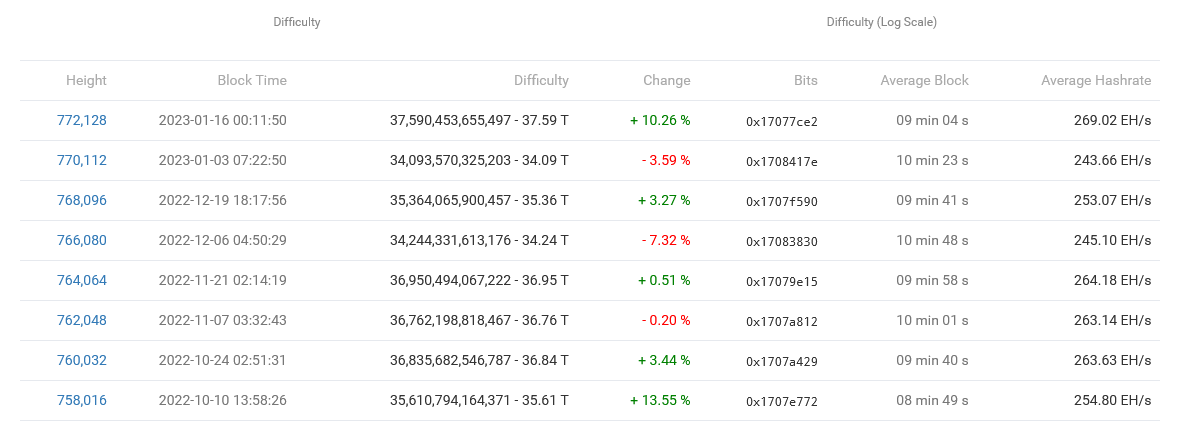
Mining difficulty in Bitcoin changes depending on the hash rate. With more computing power, miners can extract more coins within the allocated 10-minute block-producing time. Bitcoin ensures that this never happens by increasing difficulty, making confirming a block more tasking and consuming more resources.
In this way, the 10-minute block-producing time is retained, and the network continues to function as designed, regardless of the investment made by miners.
In their observation, Binance, which also operates a mining pool, said if BTC prices rise above $23,000, miners using efficient miners would still turn in a profit despite the upward difficulty adjustment.
Feature image by Alexander Ryumin/Tass via Getty Images, chart from TradingView.com
Source link

Bitcoin lost steam the previous day and seems poised to re-test its support levels in the coming days. The cryptocurrency rallied on the back of favorable macroeconomic winds and high upside liquidity from overleveraged short traders.
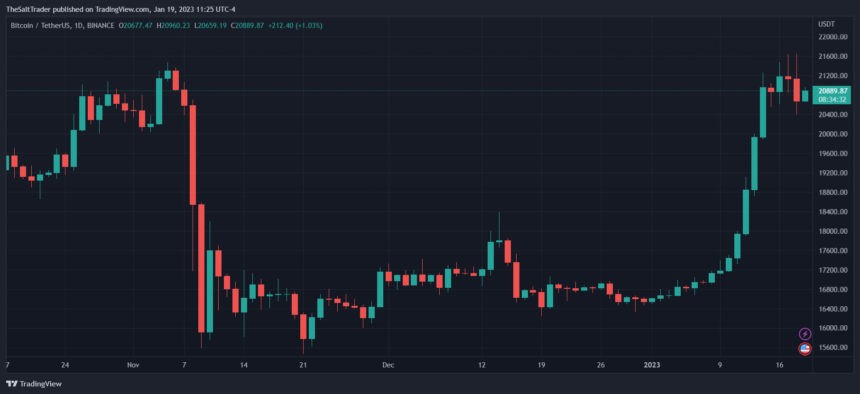
As of this writing, Bitcoin trades at $20,800 with a 3% loss in the last 24 hours. BTC remained positive during the previous seven days and recorded a 16% profit. The number one crypto by market capitalization is the best performer in the top 10.
The Biggest Obstacle For Bitcoin In The Short Term
NewsBTC reported that short positions were piling up as Bitcoin trended to the upside. The market took out over half a billion dollars in short positions. As the market trended upside, these positions were liquidated, allowing BTC to continue climbing.
In that sense, Bitcoin might keep trending upwards but at a slower pace. As the market ate off those shorts during the past week, over-confident long positions might become the target. This shift might push BTC back to the critical supports at $19,600 to $19,700.
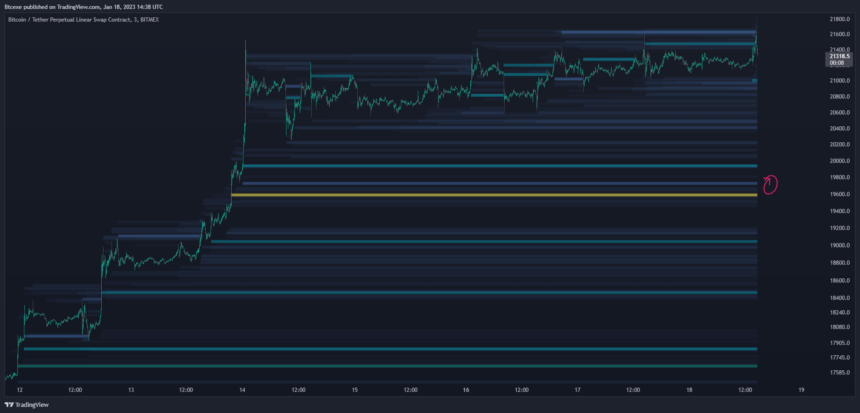
These levels have confluence with the 200-Day Simple Moving Average (SMA) and 50x leverage longs. Thus, there is a high liquidity pool sitting at those levels, ready to be taken by market movers.
On higher timeframes, a recent report from QCP Capital claims the macroeconomic winds might change and could negatively impact crypto. 2023 kicked off with a positive outlook on critical metrics, such as inflation, and high expectations of a monetary pivot by the U.S. Federal Reserve.
The financial institution has been hiking interest rates and unloading its balance sheet to combat inflation. This metric has been at its highest level in the last 40 decades.
Markets Will Take A “Rude Shock?”
Recent data shows inflation is declining; this trend might support the Fed’s slowdown on its monetary policy and provide room for Bitcoin and risk on assets to rally. However, QCP Capital believes that while Q1, 2023 might be positive for these assets, Q2 could see some hurdles:
While we expect the 1 February FOMC to push back strongly against this pricing, we believe the 22 March FOMC will be the moment of truth, when updated rate forecasts will be released. Should there be no adjustment to the median 2023 dot, then we expect markets will be in for a rude shock.
The fact that Bitcoin and some stocks have been rallying is evidence of “how quickly financial conditions have loosened,” the firm believes. The Fed has been fighting against this economic environment, so its return could push the financial institution to tighten its monetary policy.
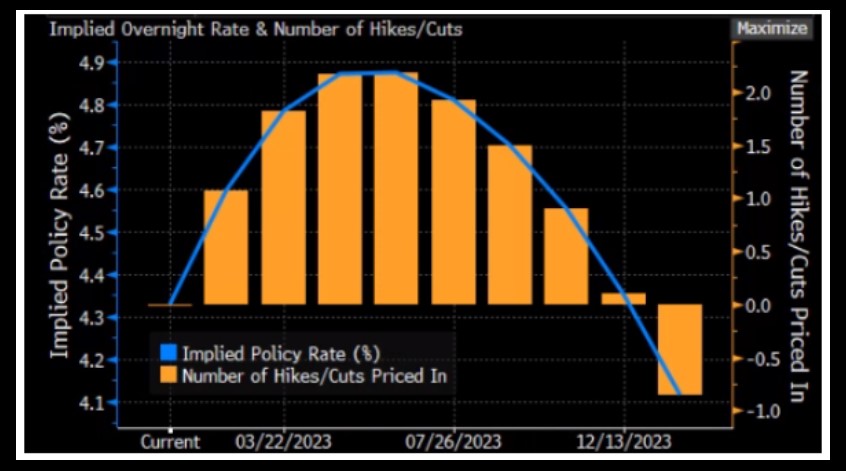
For this time next year, the market is expecting much lower interest rates, as seen in the chart above. It remains to be seen if the Fed will indulge these expectations or if inflation will persist, leading to more pain across the crypto and the legacy financial market.
Source link

debtors face ‘assault by Twitter’ stemming from Sam Bankman-Fried

Bitcoin Shakes Off Genesis Bankruptcy Filing

Bitcoin eyes $21.4K zone as analyst predicts BTC price will chase gold

XRP Vs. Cardano, Which Is The Better Investment In 2023?

10 ways blockchain developers can use ChatGPT

BTC, ETH, DOGE, and ADA Are Undervalued, Report Indicates

Sundance Film Festival embraces blockchain and crypto film initiatives

Bitcoin Hash Rate at Near All-Time High

NFT sales topped 101 million in 2022: DappRadar report

Bitcoin Holds The Line At $20,700, But Losses Are Imminent?

Bitcoin Price Bulls In Check, Signs of Fresh Increase above $21.5K

FTX reboot could falter due to long-broken user trust, say observers

HNT Balloons As Token Gets 36% More Helium In Run-Up To Network Migration

Crypto lender Genesis files for bankruptcy

If Any Crypto Will Reach $1 Trillion, It’s Ethereum

What does the Coinbase Premium Gap Tell us about Investor Activity? – Blockchain News, Opinion, TV and Jobs
Fed policy and crumbling market sentiment could send the total crypto market cap back under $1T

Will the Bitcoin mining industry collapse? Analysts explain why crisis is really opportunity
BNM DAO Token Airdrop

Bitcoin Dropped Below 2017 All-Time-High but Could Sellers be Getting Exhausted? – Blockchain News, Opinion, TV and Jobs

Judge rules LBRY video platform’s token is a security in case brought by the US SEC

Enjoy frictionless crypto purchases with Apple Pay and Google Pay | by Jim | @blockchain | Jun, 2022
New Minting Services

Silvergate Capital’s crypto-to-fiat transfers decrease by $50B compared to Q3 2021

Friends or Enemies? – Blockchain News, Opinion, TV and Jobs

Could Today’s CPI Data be Bullish? – Blockchain News, Opinion, TV and Jobs

Benvenuto! Italian regulators welcome Europe’s largest crypto powerhouse, Blockchain.com | by Blockchain.com | @blockchain | Aug, 2022

Uncertainty around French laws prompted F1 racers to remove crypto branding: Report

Investment Giant Fidelity Plans Crypto Expansion – Blockchain News, Opinion, TV and Jobs

Is There Such a Thing as a Bullish Rate Hike? – Blockchain News, Opinion, TV and Jobs
-
 Binance6 months ago
What does the Coinbase Premium Gap Tell us about Investor Activity? – Blockchain News, Opinion, TV and Jobs
-
 Asia6 months ago
Fed policy and crumbling market sentiment could send the total crypto market cap back under $1T
-
 Antminer6 months ago
Will the Bitcoin mining industry collapse? Analysts explain why crisis is really opportunity
-
Uncategorized1 year ago
BNM DAO Token Airdrop
-
 Altcoins7 months ago
Bitcoin Dropped Below 2017 All-Time-High but Could Sellers be Getting Exhausted? – Blockchain News, Opinion, TV and Jobs
-
 SEC2 months ago
Judge rules LBRY video platform’s token is a security in case brought by the US SEC
-
 apple-pay7 months ago
Enjoy frictionless crypto purchases with Apple Pay and Google Pay | by Jim | @blockchain | Jun, 2022
-
Uncategorized1 year ago
New Minting Services