AI
5 AI tools for learning and research


AI tools are revolutionizing learning and research in today’s digital age by providing sophisticated capabilities and effective solutions. These tools make use of artificial intelligence to speed up various tasks, increase output and offer insightful data.
Consensus, QuillBot, Gradescope, Elicit and Semantic Scholar are five well-known AI tools that are frequently used in the learning and research fields.
Consensus
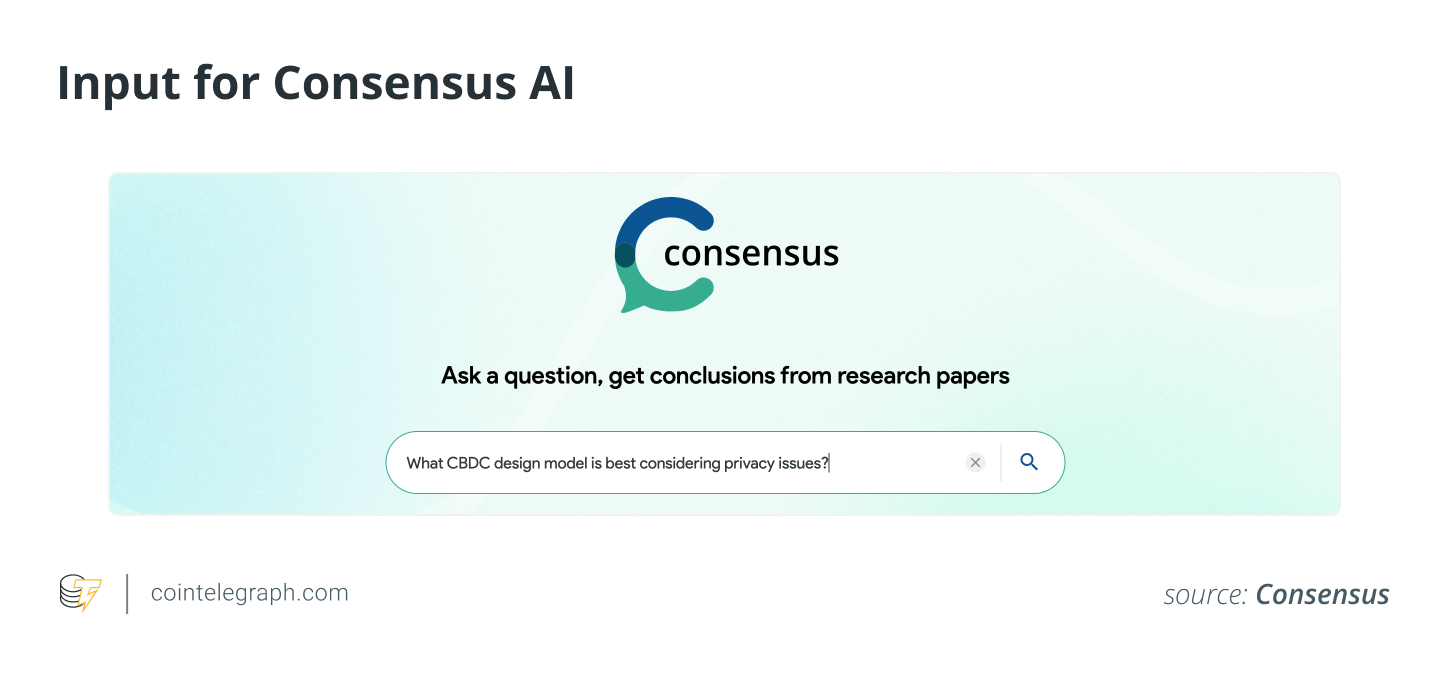
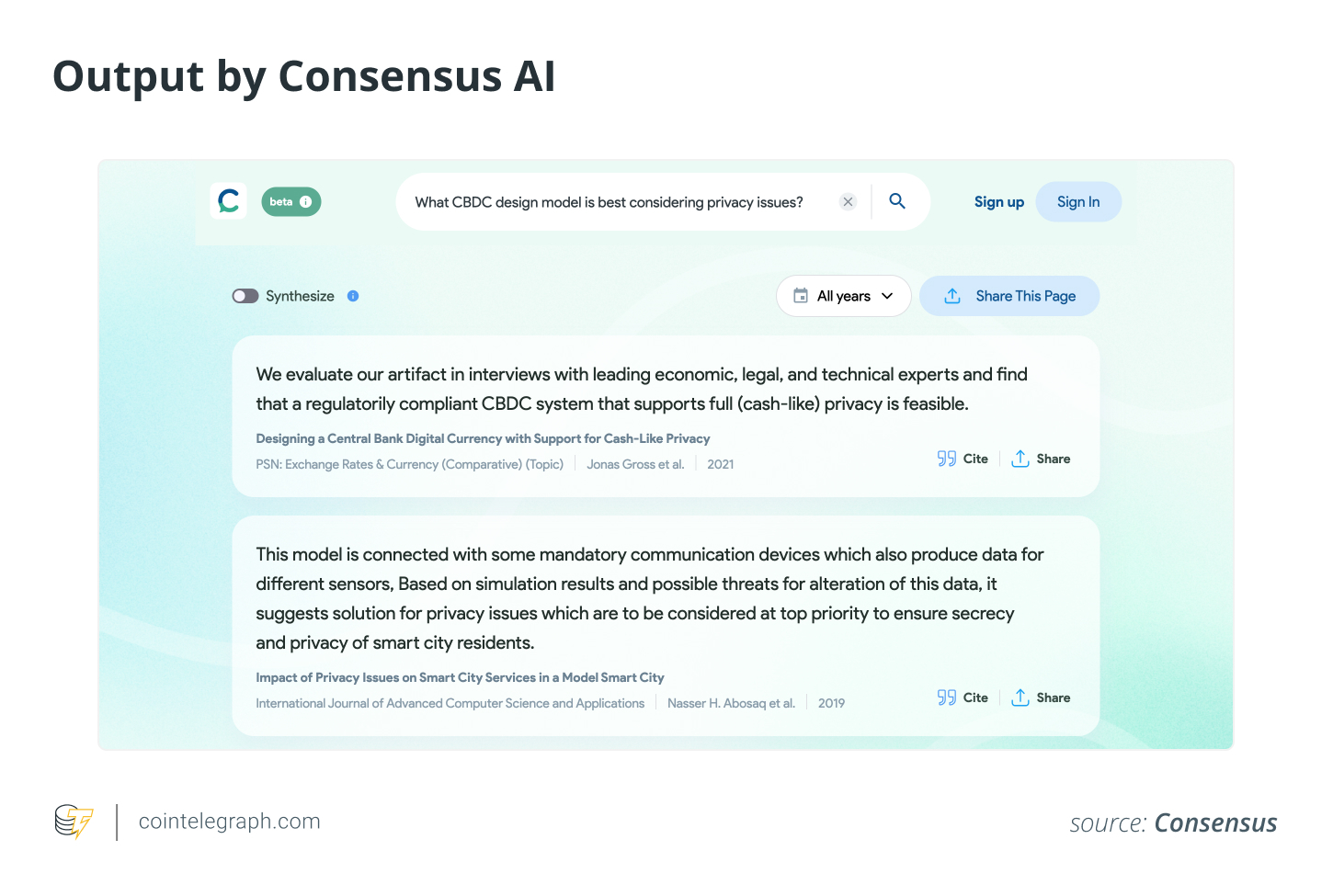
The goal of the Consensus AI search engine is to democratize expert knowledge by making study findings on a range of subjects easily accessible. This cutting-edge engine, which runs on GPT-4, uses machine learning and natural language processing (NLP) to analyze and evaluate web content.
When you pose the “right questions,” an additional AI model examines publications and gathers pertinent data to respond to your inquiry. The phrase “right questions” refers to inquiries that lead to findings that are well-supported, as shown by a confidence level based on the quantity and caliber of sources used to support the hypothesis.
QuillBot
QuillBot is an artificial intelligence (AI) writing assistant that helps people create high-quality content. It uses NLP algorithms to improve grammar and style, rewrite and paraphrase sentences, and increase the coherence of the work as a whole.
QuillBot’s capacity to paraphrase and restate text is one of its main strengths. This might be especially useful if you wish to keep your research work original and free of plagiarism while using data from previous sources.
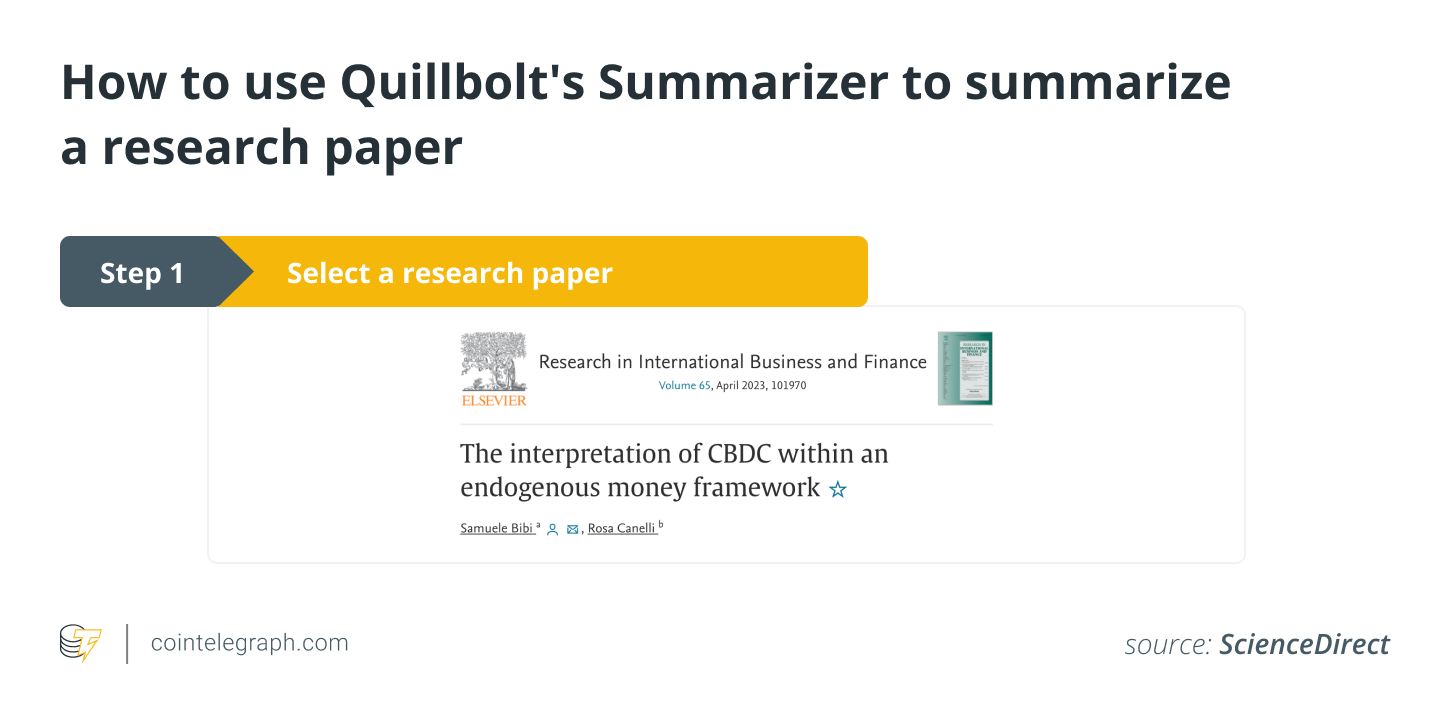
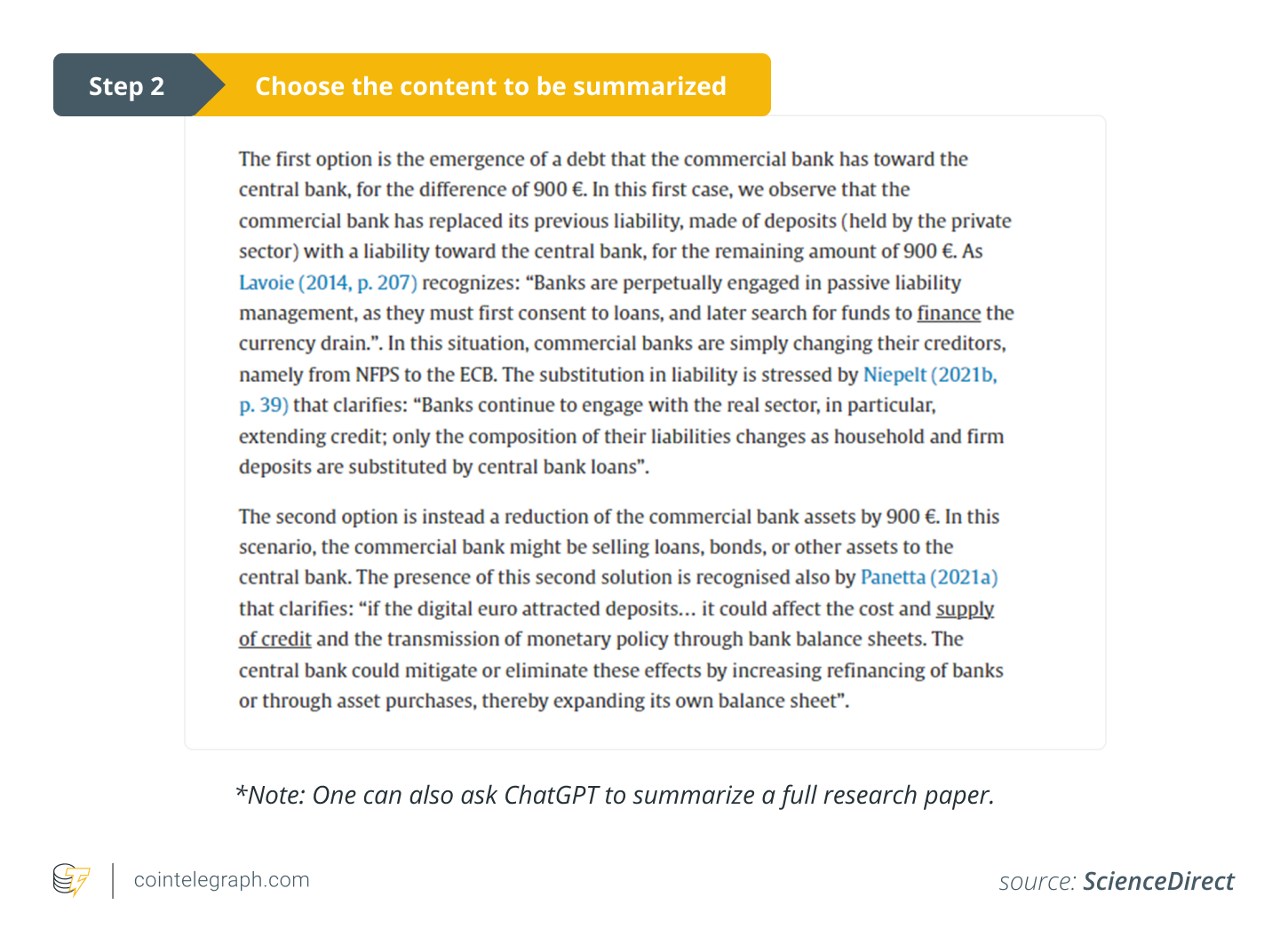
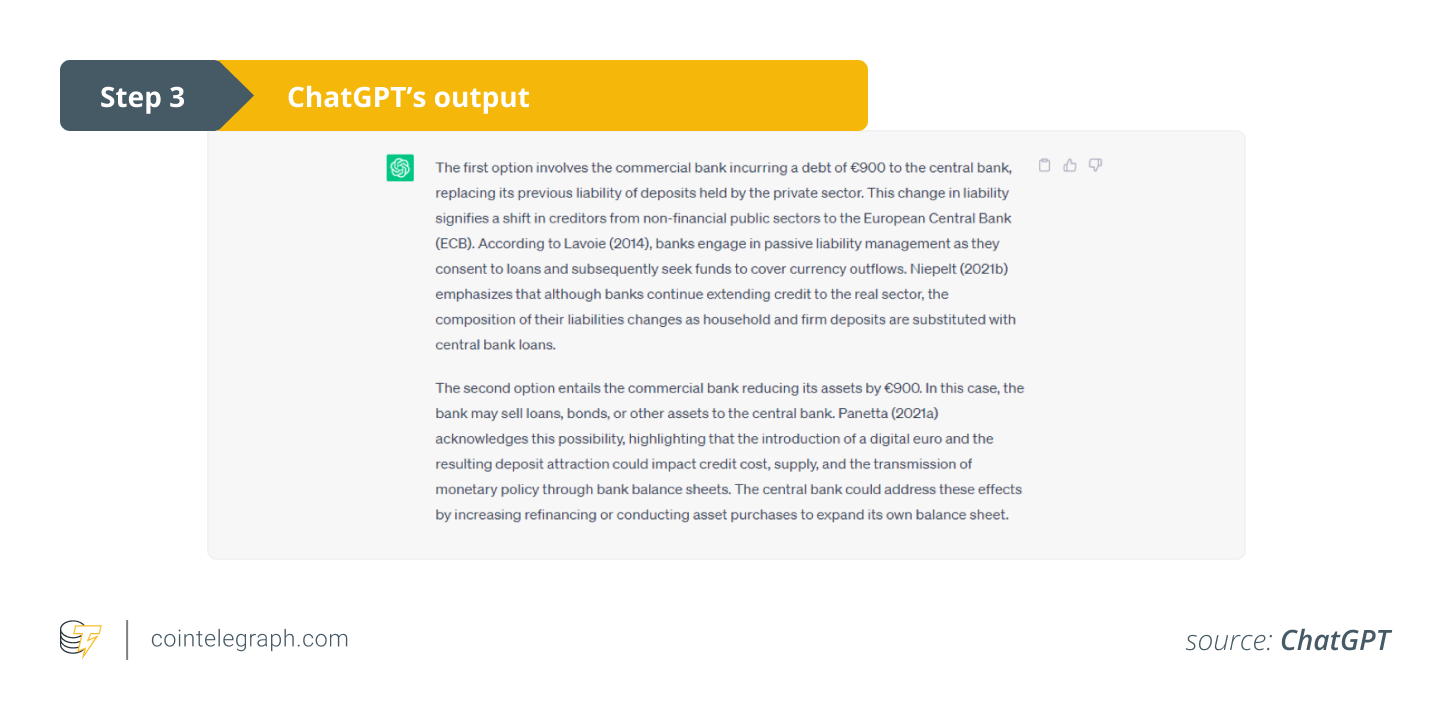
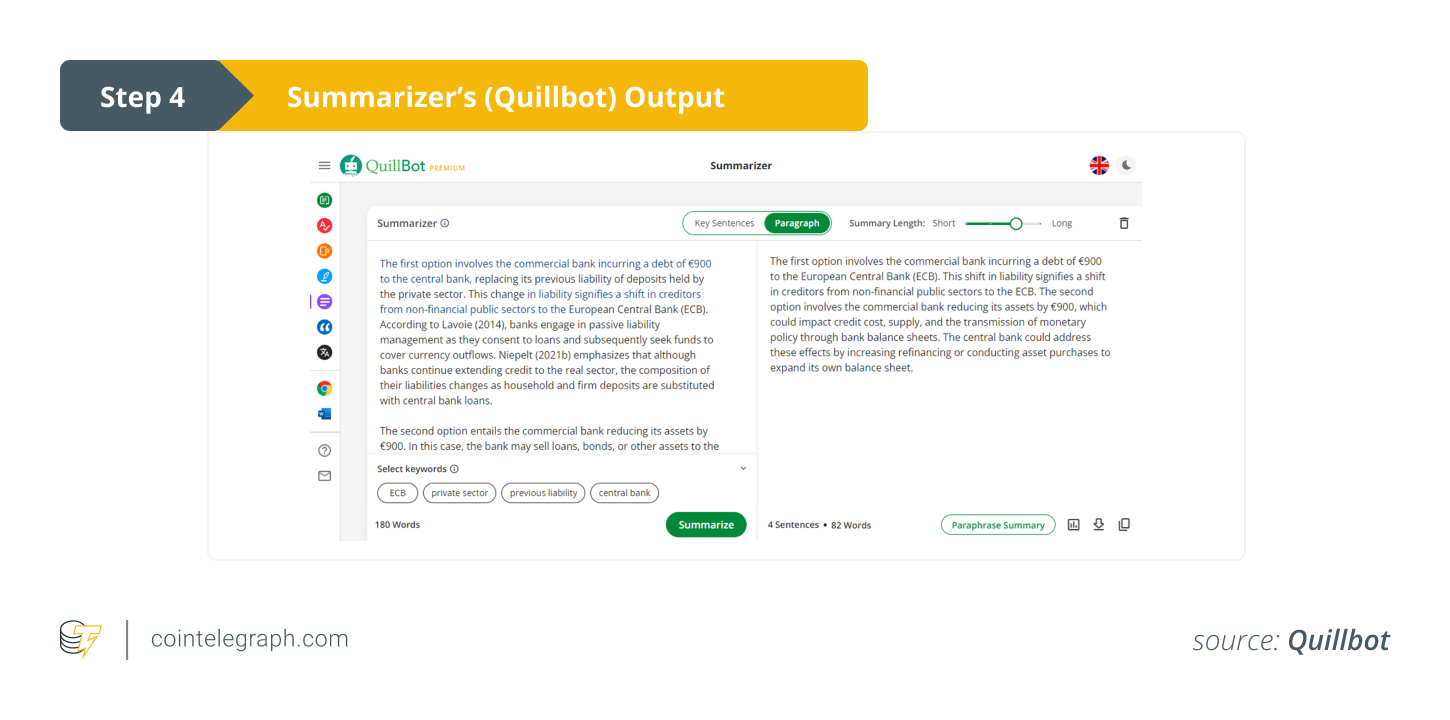
QuillBot can also summarize a research paper and offer alternate wording and phrase constructions to assist you in putting your thoughts into your own words. QuillBot can help you add variety to your writing by recommending different sentence constructions. This feature can improve your research papers readability and flow, which will engage readers more.
Additionally, ChatGPT and QuillBot can be used together. To utilize both ChatGPT and QuillBot simultaneously, start with the output from ChatGPT and then transfer it to QuillBot for further refinement.
Gradescope
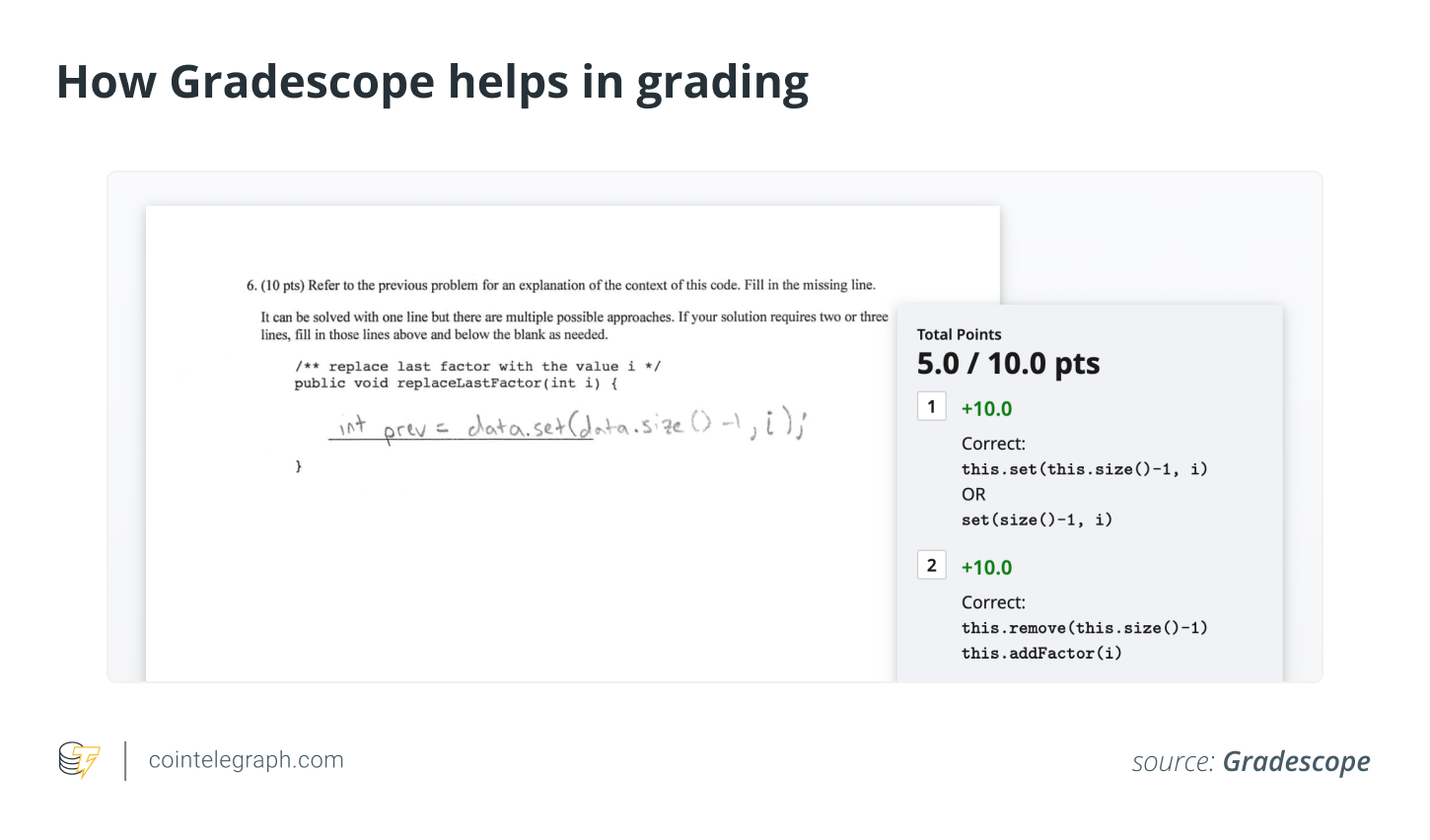
Widely used in educational institutions, Gradescope is an AI-powered grading and feedback tool. The time and effort needed for instructors to grade assignments, exams and coding projects are greatly reduced by automating the process. Its machine-learning algorithms can decipher code, recognize handwriting and provide students with in-depth feedback.
Related: How to use ChatGPT to learn a language
Elicit
Elicit is an AI-driven research platform that makes it simpler to gather and analyze data. It uses NLP approaches to glean insightful information from unstructured data, including polls, interviews and social media posts. Researchers can quickly analyze huge amounts of text with Elicit to find trends, patterns and sentiment.
Using the user-friendly Elicit interface, researchers can simply design personalized surveys and distribute them to specific participants. To ensure correct and pertinent data collection, the tool includes sophisticated features, including branching, answer validation and skip logic.
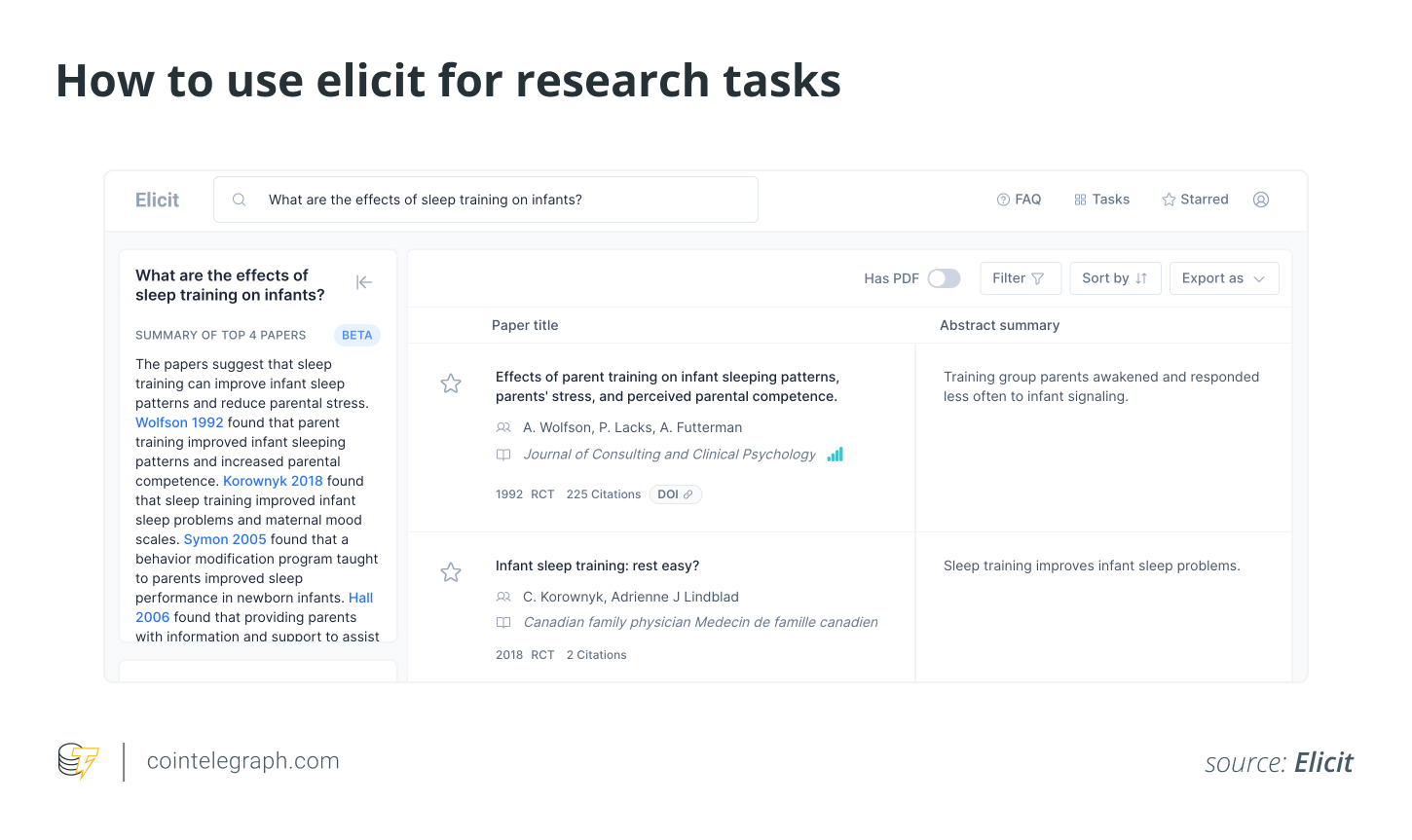
In order to help academics properly analyze and interpret data, Elicit also offers real-time analytics and visualizations. Elicit streamlines the research process, saves time and improves data collection for researchers in a variety of subjects thanks to its user-friendly design and powerful capabilities.
Semantic Scholar
Semantic Scholar is an AI-powered academic search engine that prioritizes scientific content. It analyzes research papers, extracts crucial information, and generates recommendations that are pertinent to the context using machine learning and NLP techniques.
Researchers can use Semantic Scholar to research related works, spot new research trends and keep up with the most recent advancements in their fields.
Related: 5 free artificial intelligence courses and certifications
Striking a balance: Harnessing AI in research responsibly
It’s crucial to keep moral standards in mind and prevent plagiarism when employing AI research tools. The use of another person’s words, ideas or works without giving due credit or permission is known as plagiarism. While using AI research tools, one may follow the guidelines below to prevent plagiarism and uphold ethical standards:
- Understand the purpose of the AI research tool.
- Attribute sources properly.
- Paraphrase and synthesize information.
- Cross-verify information from multiple sources.
- Check for copyright restrictions.
- Review and edit AI-generated content.
- Seek ethical AI tools.
Though AI research tools might be beneficial for improving your research and writing processes, it is important to uphold academic integrity and observe ethical standards. Always make an effort to give fair credit to others and make sure that your work accurately reflects your own thoughts and understanding.
Source link







Amazon’s cloud unit, commonly known as AWS, is building a $100 million solution to catch up with Microsoft and Google in the market for generative artificial intelligence.
According to Bloomberg, the upcoming AWS Generative AI Innovation Center will connect Amazon experts in AI and machine learning with clients seeking to build applications based on the latest technologies. In generative AI, algorithms are used to create new content, such as audio, code, images, texts, simulations, and videos.
Amazon said Highspot, Twilio, Ryanair and Lonely Planet will be among the first users of the innovation center. With the new center, the company expects to sell more cloud services amidst an increasing competition in the cloud infrastructure market.
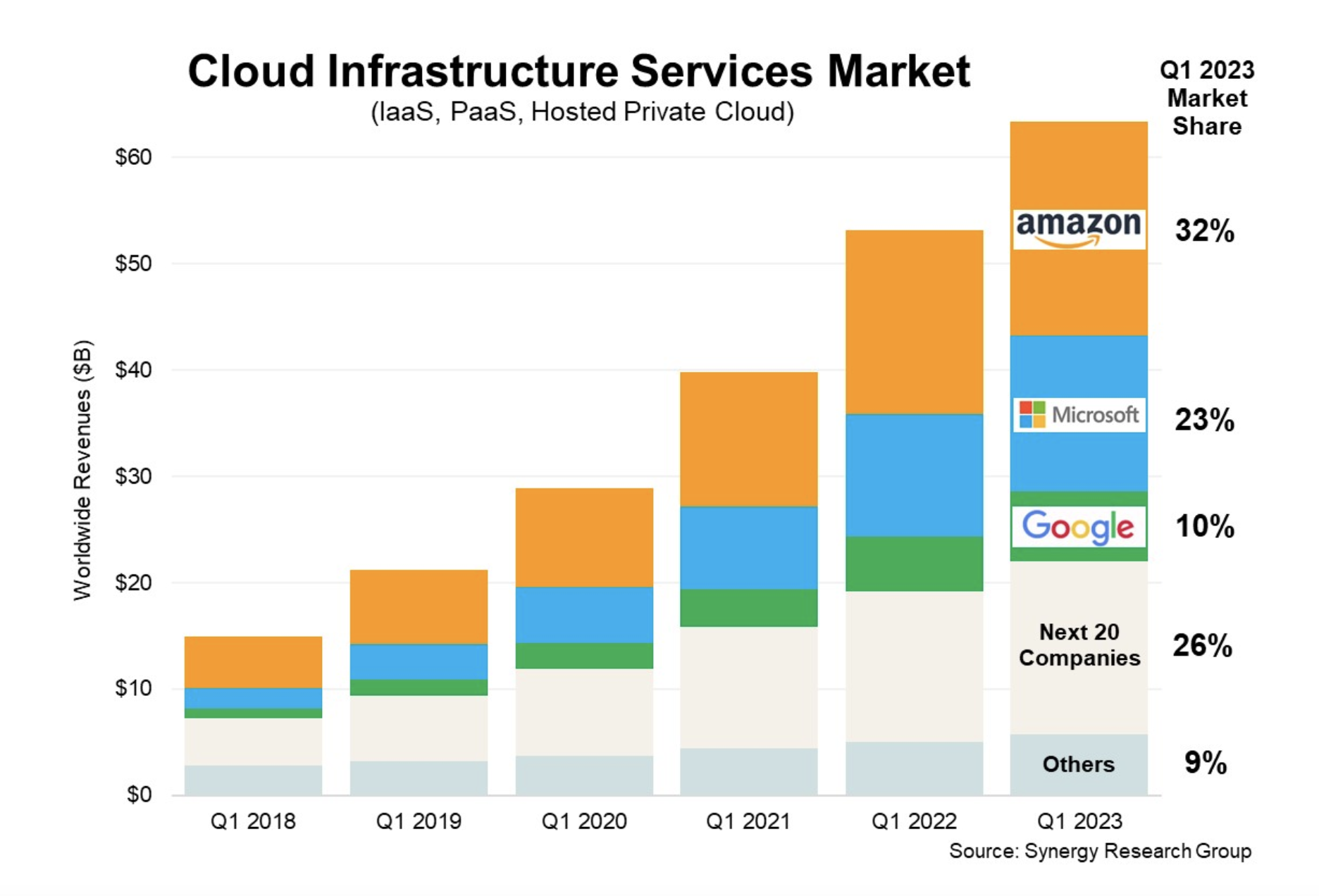
A recent analysis from Synergy Research Group comparing the biggest cloud services providers shows that enterprise spending on cloud solutions reached $63 billion worldwide in the first quarter of 2023, up 20% from the same quarter last year.
Microsoft and Google had the strongest year-over-year growth rates, gaining 23% and 10% in worldwide market share, respectively. Amazon, the leader in cloud infrastructure, kept its 32% market share in Q1.
“We will bring our internal AWS experts free-of-charge to a whole bunch of AWS customers, focusing on folks with significant AWS presence, and go help them turbocharge their efforts to get real with generative AI, get beyond the talk,” AWS CEO Adam Selipsky said at Bloomberg’s Tech Summit.
As part of its strategy to stand up against big tech competitors, Amazon recently debuted Bedrock, an AI solution that allows customers to build out their own ChatGPT-like models. The company also announced the upcoming Titan, which includes two new foundational models developed by Amazon Machine Learning.
On LinkedIn, recent opening positions for AI engineers show Amazon is also preparing to implement a new “search” functionality powered by AI for its online web store, with a ChatGPT-like interface.
Magazine: ‘Moral responsibility’ — Can blockchain really improve trust in AI?
Source link

Over the past year, more than 100,000 login credentials to the popular artificial intelligence chatbot ChatGPT have been leaked and traded on the dark web, according to a Singaporean cybersecurity firm.
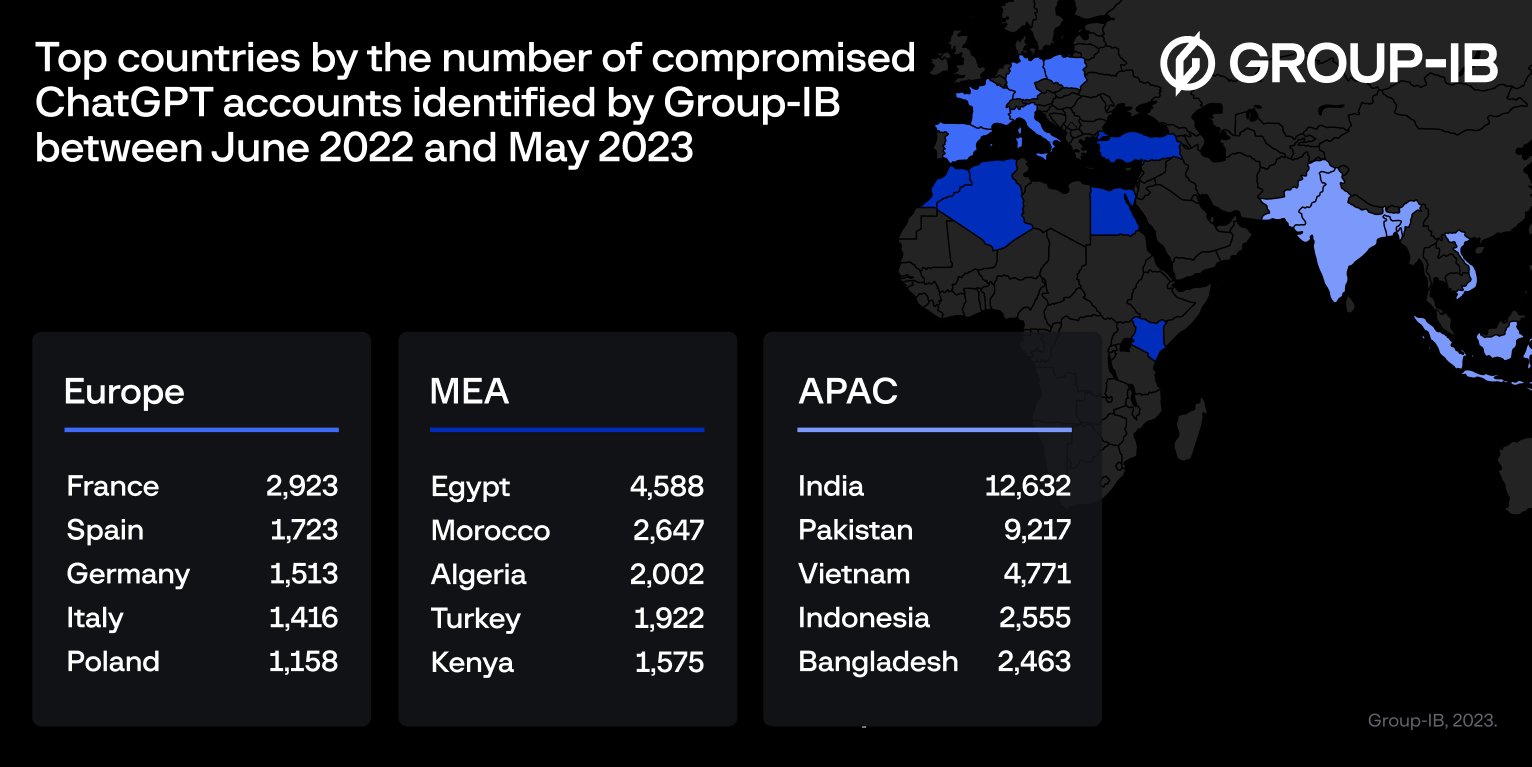
A June 20 blog post by Group-IB revealed just over 101,000 compromised logins for OpenAI’s flagship bot have traded on dark web marketplaces between June 2022 and May 2023.
The login information was found in the logs of “info-stealing malware.” May 2023 saw a peak of nearly 27,000 ChatGPT-related credentials made available on online black markets.
According to our findings, the Asia-Pacific region has experienced the highest concentration of ChatGPT credentials being offered for sale. pic.twitter.com/s3TbsntCgX
— Group-IB Threat Intelligence (@GroupIB_TI) June 20, 2023
The Asia-Pacific region had the highest amount of compromised logins for sale over the past year, making up around 40% of the nearly 100,000 figure.
Indian-based credentials took the top spot overall with over 12,500 and the United States had the sixth most logins leaked online at nearly 3,000. France was seventh overall behind the U.S. and took the pole position for Europe.
ChatGPT accounts can be created directly through OpenAI. Additionally, users can choose to use their Google, Microsoft or Apple accounts to login and use the service.
Cointelegraph contacted OpenAI for comment but did not immediately receive a response.
Related: How AI is changing the way humans interact with machines
Group-IB said it noticed an uptick in the number of employees using ChatGPT for work. It warned confidential information about companies could be exposed by unauthorized users as user queries and chat history is stored by default.
Such information could then be exploited by others to undertake attacks against companies or individual employees.
The firm advised users to regularly update passwords and use two-factor authentication to better secure ChatGPT accounts.
Interestingly, the firm noted that the press release was written with the assistance of ChatGPT.
AI Eye: Is AI a nuke-level threat? Why AI fields all advance at once, dumb pic puns
Source link

The past 12 months have seen the global digital paradigm evolve tremendously, especially regarding how humans interact with machines. In fact, the space has undergone such a radical transformation that people of all ages are now fast becoming conversant with artificial intelligence (AI) models, most popularly OpenAI’s ChatGPT.
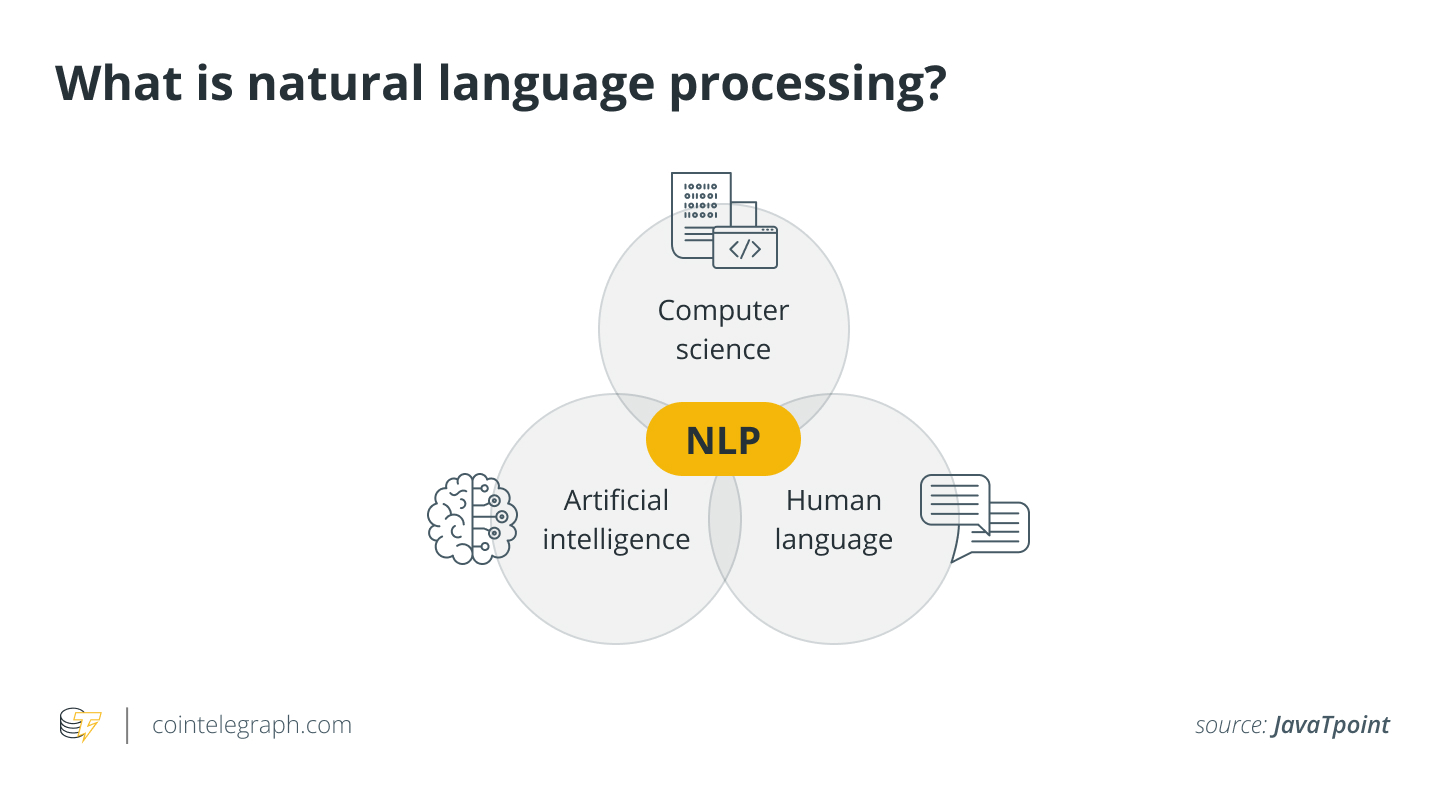
The primary driving force behind this revolution has been the advancements made in natural language processing (NLP) and conversational AI. NLP is a subfield of AI that focuses on the interaction between computers and humans using everyday language and speech patterns. The ultimate objective of NLP is to read, decipher, understand and make sense of human language in a way that is understandable and easy to digest for users.
To elaborate, it combines computational linguistics — i.e., rule-based modeling of human language — with other fields, such as machine learning, statistics and deep learning. As a result, NLP systems allow machines to understand, interpret, generate, and respond to human language in a meaningful and contextually appropriate way.
Moreover, NLP involves several key tasks and techniques, including part-of-speech tagging, named entity recognition, sentiment analysis, machine translation and topic extraction. These tasks help machines understand and generate human language-type responses. For example, part-of-speech tagging involves identifying the grammatical group of a given word, while named entity recognition involves identifying individuals, companies or locations in a text.
NLP redefining communication frontiers
Even though AI-enabled tech has only recently started becoming part of the digital mainstream, it has profoundly influenced many people for the better part of the last decade. Companions like Amazon’s Alexa, Google’s Assistant and Apple’s Siri have woven themselves into the fabric of our everyday lives, assisting us with everything from jotting down reminders to orchestrating our smart homes.
The magic behind these helpers is a potent mix of NLP and AI, enabling them to comprehend and react to human speech. That said, the scope of NLP and AI has now expanded into several other sectors. For example, within customer service, chatbots now enable companies to provide automated customer service with immediate responses to customer inquiries.
With the ability to juggle multiple customer interactions simultaneously, these automated chatbots have already slashed wait times.
Language translation is another frontier where NLP and AI have made remarkable progress. Translation apps can now interpret text and speech in real time, dismantling language barriers and fostering cross-cultural communication.
A paper in The Lancet notes that these translation capabilities have the potential to redefine the health sector. Researchers believe these systems can be deployed in countries with insufficient health providers, allowing doctors and medical professionals from abroad to deliver live clinical risk assessments.
Sentiment analysis, another application of NLP, is also being employed to decipher the emotional undertones behind words, making responses from platforms like Google Bard, ChatGPT and Jasper.ai even more human-like.
Recent: Bitcoin adoption in Mexico boosted by Lightning partnership with retail giant
Thanks to their growing prowess, these technologies can be integrated into social media monitoring systems, market research analysis and customer service delivery. By scrutinizing customer feedback, reviews and social media chatter, businesses can glean valuable insights into how their customers feel about their products or services.
Lastly, AI and NLP have ventured into the realm of content generation. AI-powered systems can now craft human-like text, churning out everything from news articles to poetry, helping create website content, generating personalized emails and whipping up marketing copy.
The future of AI and NLP
Looking toward the horizon, many experts believe the future of AI and NLP to be quite exciting. Dimitry Mihaylov, co-founder and chief science officer for AI-based medical diagnosis platform Acoustery, told Cointelegraph that the integration of multimodal input, including images, audio, and video data, will be the next significant step in AI and NLP, adding:
“This will enable more comprehensive and accurate translations, considering visual and auditory cues alongside textual information. Sentiment analysis is another focus of AI experts, and that would allow a more precise and nuanced understanding of emotions and opinions expressed in text. Of course, all companies and researchers will work on enabling real-time capabilities, so most human interpreters, I am afraid, will start losing their jobs.”
Similarly, Alex Newman, protocol designer at Human Protocol, a platform offering decentralized data labeling services for AI projects, believes that NLP and AI are on the verge of significantly increasing individual productivity, which is crucial given the anticipated shrinkage of the workforce due to AI automation.
Newman sees sentiment analysis as a key driver, with a more sophisticated interpretation of data taking place through neural networks and deep learning systems. He also envisions the open-sourcing of data platforms to better cater to those languages that have traditionally been under-served by translation services.
Megan Skye, a technical content editor for Astar Network — an AI-based multichain decentralized application layer on Polkadot — sees the sky as the limit for innovation in AI and NLP, particularly with AI’s ability to self-assemble new iterations of itself and extend its own functionality, adding:
“AI and NLP-based sentiment analysis is likely already happening on platforms like YouTube and Facebook that use a knowledge graph, and could be extended to the blockchain. For example, if a new domain-specific AI is configured to accept freshly indexed blocks as a stream of source input data, and we had access to or developed an algorithm for blockchain-based sentiment analysis.”
Scott Dykstra, chief technical officer for AI-based data repository Space and Time, sees the future of NLP at the intersection of edge and cloud computing. He told Cointelegraph that in the near to mid-term, most smartphones would likely come with an embedded large-language model that will work in conjunction with a massive foundational model in the cloud. “This setup will allow for a lightweight AI assistant in your pocket and heavyweight AI in the data center,” he added.
The road ahead is paved with challenges
While the future of AI and NLP is promising, it is not without its challenges. For example, Mihaylov points out that AI and NLP models rely heavily on large volumes of high-quality data for training and performance.
However, due to various data privacy laws, acquiring labeled or domain-specific data can be challenging in some industries. Furthermore, different industries have unique vocabularies, terminologies and contextual variations that require very specific models. “The shortage of qualified professionals to develop these models presents a significant barrier,” he opined.
Skye echoes this sentiment, noting that while AI systems can potentially operate autonomously in almost any industry, the logistics of integration, modification of workflows, and education present significant challenges. Furthermore, AI and NLP systems require regular maintenance, especially when the quality of answers and a low probability of error are important.
Magazine: Bitcoin 2023 in Miami comes to grips with ‘shitcoins on Bitcoin’
Lastly, Newman believes that the problem of access to new data sources pertinent to each industry looking to use these technologies will become more and more apparent with each passing year, adding:
“There’s plenty of data out there; it’s just not always accessible, fresh or sufficiently prepared for machine training. Without data that reflects the particulars of an industry, its language, rules, systems, and specifics, AI won’t be able to appreciate any context and operate effectively.”
Therefore, as more and more people continue to gravitate toward the use of the aforementioned technologies, it will be interesting to see how the existing digital paradigm continues to evolve and mature, especially given the rapid rate at which the use of AI seems to be seeping into various industries.
Source link

Digital pound will be pseudonymous with a focus on privacy: BoE CBDC chief

Tezos Releases Nairobi, XTZ Bulls Unmoved As Bears Dominate

Will $30K be a new springboard for Bitcoin bulls?

TRX Could Surge And Revisit $0.085

Riot Platforms to add 33,000 Bitcoin miners ahead of 2024 halving

Injective (INJ) Continues To Build Momentum, Jumps Nearly 27% In A Single Week

$27 trillion AUM is perched over Bitcoin and crypto: CoinShares CSO

Ethereum Price Lacks Momentum Above $1,900 But Dips Likely To Be Limited

Robinhood to axe 7% of full-time staff in latest round of layoffs: Report

Crypto Investment Inflows Reach One-Year High, Reveals CoinShares

Yes, the Secret Service has an NFT collection, and no, it’s not for sale

How A Morning Star Pattern Could Awaken Altcoins

Swiss central bank announces plans for wholesale CBDC pilot with ‘real money’: Report

Chainlink Bulls Must Defend Support Zone To Prepare For Another Rally

What is generative AI?

Judge rules LBRY video platform’s token is a security in case brought by the US SEC

Silvergate Capital’s crypto-to-fiat transfers decrease by $50B compared to Q3 2021

Will the Bitcoin mining industry collapse? Analysts explain why crisis is really opportunity

Exchange Outflows Shows Bitcoin, Ethereum Accumulation Trend Continues

Bitcoin Dropped Below 2017 All-Time-High but Could Sellers be Getting Exhausted? – Blockchain News, Opinion, TV and Jobs
BNM DAO Token Airdrop

What does the Coinbase Premium Gap Tell us about Investor Activity? – Blockchain News, Opinion, TV and Jobs
Fed policy and crumbling market sentiment could send the total crypto market cap back under $1T
New Minting Services

Can Cardano’s July hard fork prevent ADA price from plunging 60%?

SEC’s Chairman Gensler Takes Aggressive Stance on Tokens – Blockchain News, Opinion, TV and Jobs

Friends or Enemies? – Blockchain News, Opinion, TV and Jobs

LUNA2 Recovers 70% In Nine Days From Historic Lows

Enjoy frictionless crypto purchases with Apple Pay and Google Pay | by Jim | @blockchain | Jun, 2022

Block News Media Live Stream
-
 SEC8 months ago
Judge rules LBRY video platform’s token is a security in case brought by the US SEC
-
 Banking8 months ago
Silvergate Capital’s crypto-to-fiat transfers decrease by $50B compared to Q3 2021
-
 Antminer11 months ago
Will the Bitcoin mining industry collapse? Analysts explain why crisis is really opportunity
-
 Bitcoin8 months ago
Exchange Outflows Shows Bitcoin, Ethereum Accumulation Trend Continues
-
 Altcoins12 months ago
Bitcoin Dropped Below 2017 All-Time-High but Could Sellers be Getting Exhausted? – Blockchain News, Opinion, TV and Jobs
-
Uncategorized1 year ago
BNM DAO Token Airdrop
-
 Binance11 months ago
What does the Coinbase Premium Gap Tell us about Investor Activity? – Blockchain News, Opinion, TV and Jobs
-
 Asia11 months ago
Fed policy and crumbling market sentiment could send the total crypto market cap back under $1T