Binance
SEC’s Move To Sue Top Exchanges Decreases Trading Volumes – Blockchain News, Opinion, TV and Jobs



By Matteo Greco, Research Analyst at the publicly listed digital asset and fintech investment business Fineqia International
BTC closed last week at about $27,000, a 3.5% decrease from the $28,000 price at the end of last week. It dropped to about $25,500 on Monday, slightly moving upwards to $26.394 late Tuesday, after the SEC announced it is suing Binance and Coinbase, the world’s largest crypto exchanges by volume, for trading securities it deemed as being unlicensed in the US. Trading volumes remain at low levels, with BTC on-chain volume decreasing by 13% during May. The data suggests a difficult moment for the digital asset market in attracting investors and maintaining high trading volumes.
This can be attributed to two main factors. First, the difficult macroeconomic conditions are leading investors to adjust their positions in anticipation of announcements at the next FED meeting on June 14. While the CME futures expects with 80% probability that there will be no new rate hike at the next meeting, investors are still cautious as monetary policy expectations have changed rapidly from one day to another.
Second, the SEC is bearing down hard against exchanges. The US regulator contends that most digital assets qualify as securities and exchanges have been selling them to American investors without being appropriately registered in the U.S. The recent action being taken by the SEC against Binance and Coinbase caused a decline in the market, followed by a slight rebound during Tuesday.
The actions of the US regulator could push many exchanges outside the country, similar to what has transpired in Canada. It could benefit the Asian market, which is moving toward a friendlier environment for digital assets. As of June 1, the Japanese government lifted a ban on stablecoins and the Hong Kong government legalised the trading of cryptocurrencies by retail investors. Hong Kong asset manager First Digital is introducing a new stablecoin, for example, that will be pegged to the U.S. dollar.
These moves underlie attempts by Asian regulators to attract new investors in the digital asset market, a shift in attitude to the recent past, especially in China where cryptocurrency trading and bitcoin mining have been restricted.
Source link





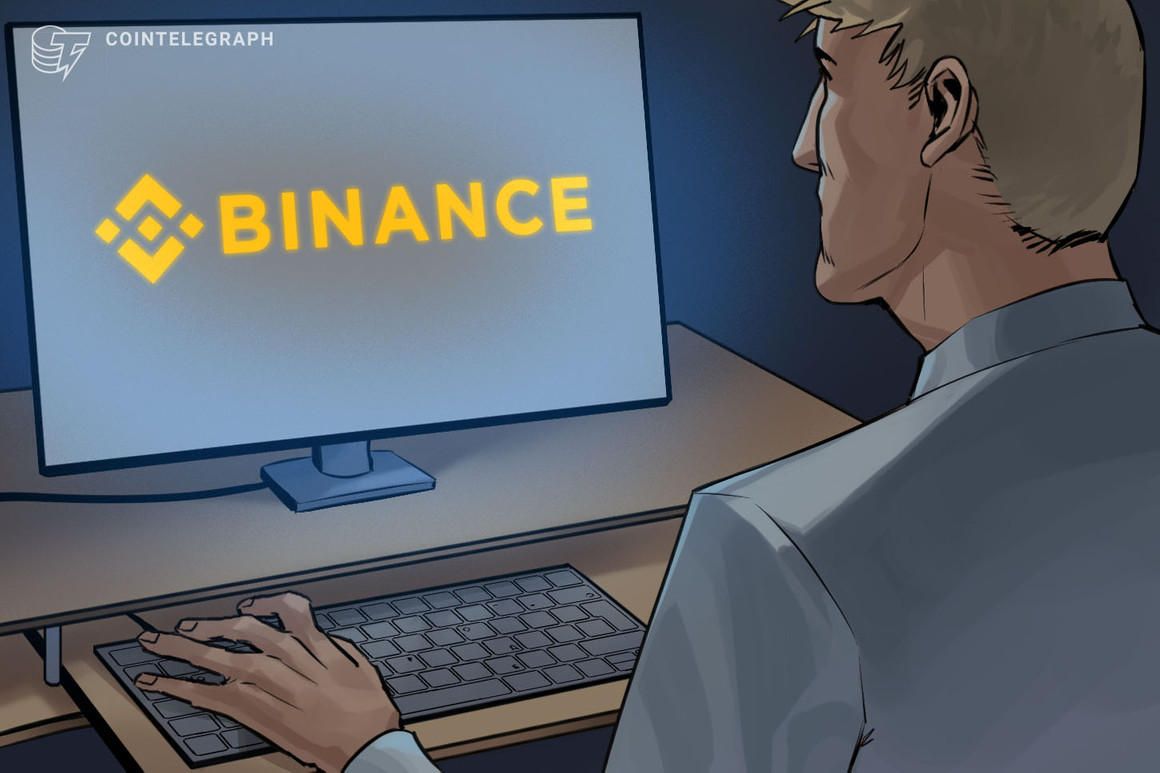

Binance CEO Changpeng Zhao has announced that Binance has officially issued a cease and desist notice to the fraudulent entity known as Binance Nigeria Limited.
On Sunday, June 18, Zhao took to Twitter to make the announcement. On June 9, the Nigerian Securities and Exchange Commission (SEC) released a circular stating the illegality of Binance Nigeria Limited in the country.
According to reports, a Binance spokesperson responded that the entity mentioned in the circular is not affiliated with the company. The spokesperson expressed the company’s intention to seek clarity from the Nigerian SEC and reiterated its commitment to cooperating with it on the next steps.
Binance have issued cease & desist notice to the scammer entity “Binance Nigeria Limited”.
Don’t believe everything you read in the news. ♂️
— CZ Binance (@cz_binance) June 18, 2023
Although Binance claimed no affiliation with Binance Nigeria Limited, as mentioned in the SEC’s circular, the company is concurrently facing a lawsuit from the United States Securities Exchange Commission. The U.S. SEC has filed 13 charges against Binance entities and Zhao.
Related: Binance CEO CZ deems SEC’s request for emergency relief unwarranted
Some charges include operating as an unregistered exchange, broker-dealer, clearing agency and misrepresenting trading controls. The U.S. SEC stated that despite earning $11.6 billion from U.S. customers, Binance and Zhao failed to register as an exchange, broker-dealer or clearing agency.
In a recent development on June 17, U.S. Judge Amy Berman Jackson approved an agreement between Binance.US, Binance, and the U.S. SEC. This agreement resulted in the dismissal of a previous temporary restraining order that aimed to freeze all Binance.US assets.
Binance, which is available in about 100 countries, registered its headquarters in George Town, Cayman Islands, in 2017. In 2019, it also registered a subsidiary in Mahe, Seychelles.
Magazine: Crypto regulation — Does SEC Chair Gary Gensler have the final say?
Source link


Binance CEO Changpeng “CZ” Zhao expressed his happiness and relief as a prolonged dispute with the United States Securities and Exchange Commission (SEC) was successfully resolved. The SEC’s ongoing scrutiny had created a tense and uncertain period for the company, making the resolution a welcome development.
As the regulatory uncertainty begins to fade, CZ can now concentrate on Binance’s future. In a tweet, the veteran crypto entrepreneur emphasized that the SEC’s emergency relief request was unnecessary, affirming that the mutually agreed resolution would enable Binance to progress unhindered.
In a noteworthy turn of events, Judge Amy Berman Jackson of the U.S. District Court for the District of Columbia gave her approval to the “Proposed Stipulation and Consent Order” that was reached between Binance, Binance.US and the SEC on Saturday, June 18.
Although we maintain that the SEC’s request for emergency relief was entirely unwarranted, we are pleased that the disagreement over this request was resolved on mutually acceptable terms.
User funds have been and always will be safe and secure on all Binance-affiliated…
— CZ Binance (@cz_binance) June 17, 2023
As per the consent order, Binance is obligated to “repatriate” all fiat currency and cryptocurrency assets associated with Binance.US by the date specified in the court’s ruling. Additionally, the agreement imposes restrictions on Binance global officials, disallowing them from accessing the private keys of all wallets, including cold and hot wallets.
In spite of the challenges and regulatory hurdles faced by Binance in recent times, CZ emphasized the company’s unwavering dedication to ongoing operations. While expressing content regarding the resolution of the SEC issue, the CEO of Binance underlined the assurance that users’ funds have remained, and will continue to remain, safe and secure across all Binance-associated services.
Related: CZ, Powell and more rally to fund legal fees for on-chain sleuth ZachXBT, surpassing $1M
During the period, Binance prioritized the safety and security of user funds, implementing strong security measures across all associated platforms. Moreover, Binance has indicated that its BNB Smart Chain is currently exploring the possibility of developing and launching a layer-2 blockchain scaling solution.
Magazine: Crypto regulation — Does SEC Chair Gary Gensler have the final say?
Source link

‘Britcoin’ launch inches closer after Project Rosalind CBDC tests

Binance Coin Defies Regulatory Pressure, Holds $220 Support

Do Kwon denies forging passport, blames ‘Chinese’ agency: Report

Fresh Increase Possible Above 100 SMA

Coinbase blasts SEC for ‘no straight answers’ following court order

Ethereum Price Prints Bullish Technical Pattern, Why Close Above $1,780 Is Critical

Watch out Ordinals, 30,000 ‘Ethscriptions’ land on Ethereum

Twitter suspends memecoin-linked AI bot after Elon Musk’s ‘scam crypto’ claim

Apple to fix gaming? SEC hates Metaverse, Logan Paul trolled on Steam – Cointelegraph Magazine

Bitcoin bulls look to re-establish control — Will BNB, LTC, OKB and QNT follow?

Is the cryptocurrency market about to break its 10-week losing streak?

Shiba Inu (SHIB) Burn Rate Suffers 87% Decline In Single Week

Aptos Gains 18% In Last Week

Quant Soars 20% After Partnership With Bank Of England, BIS For CBDC Project

Bitcoin Retailers Buying The Dip As BTC Soars Above $26,000

Judge rules LBRY video platform’s token is a security in case brought by the US SEC

Silvergate Capital’s crypto-to-fiat transfers decrease by $50B compared to Q3 2021

Will the Bitcoin mining industry collapse? Analysts explain why crisis is really opportunity

Exchange Outflows Shows Bitcoin, Ethereum Accumulation Trend Continues

Bitcoin Dropped Below 2017 All-Time-High but Could Sellers be Getting Exhausted? – Blockchain News, Opinion, TV and Jobs
BNM DAO Token Airdrop

What does the Coinbase Premium Gap Tell us about Investor Activity? – Blockchain News, Opinion, TV and Jobs
Fed policy and crumbling market sentiment could send the total crypto market cap back under $1T
New Minting Services

Can Cardano’s July hard fork prevent ADA price from plunging 60%?

SEC’s Chairman Gensler Takes Aggressive Stance on Tokens – Blockchain News, Opinion, TV and Jobs

Friends or Enemies? – Blockchain News, Opinion, TV and Jobs

LUNA2 Recovers 70% In Nine Days From Historic Lows

Enjoy frictionless crypto purchases with Apple Pay and Google Pay | by Jim | @blockchain | Jun, 2022

A String of 200 ‘Sleeping Bitcoins’ From 2010 Worth $4.27 Million Moved on Friday
-
 SEC7 months ago
Judge rules LBRY video platform’s token is a security in case brought by the US SEC
-
 Banking8 months ago
Silvergate Capital’s crypto-to-fiat transfers decrease by $50B compared to Q3 2021
-
 Antminer11 months ago
Will the Bitcoin mining industry collapse? Analysts explain why crisis is really opportunity
-
 Bitcoin8 months ago
Exchange Outflows Shows Bitcoin, Ethereum Accumulation Trend Continues
-
 Altcoins12 months ago
Bitcoin Dropped Below 2017 All-Time-High but Could Sellers be Getting Exhausted? – Blockchain News, Opinion, TV and Jobs
-
Uncategorized1 year ago
BNM DAO Token Airdrop
-
 Binance11 months ago
What does the Coinbase Premium Gap Tell us about Investor Activity? – Blockchain News, Opinion, TV and Jobs
-
 Asia11 months ago
Fed policy and crumbling market sentiment could send the total crypto market cap back under $1T