
AI
Meta’s new ‘Voicebox’ AI is a text-to-speech tool that learns like ChatGPT



Meta AI recently unveiled a “breakthrough” text-to-speech (TTS) generator it claims produces results up to 20 times faster than state-of-the-art artificial intelligence models with comparable performance.
The new system, dubbed Voicebox, eschews traditional TTS architecture in favor of a model more akin to OpenAI’s ChatGPT or Google’s Bard.
Among the main differences between Voicebox and similar TTS models, such as ElevenLabs Prime Voice AI, is that Meta’s offering can generalize through in-context learning.
Much like ChatGPT or other transformer models, Voicebox uses large-scale training data sets. Previous efforts to use massive troves of audio data have resulted in severely degraded audio outputs. For this reason, most TTS systems use small, highly curated, labeled data sets.
Meta overcomes this limitation through a novel training scheme that ditches labels and curation for an architecture capable of “in-filling” audio information.
As Meta AI put it in a June 16 blog post, Voicebox is the “first model that can generalize to speech-generation tasks it was not specifically trained to accomplish with state-of-the-art performance.”
This makes it possible for Voicebox to translate text to speech, remove unwanted noise by synthesizing replacement speech and even apply a speaker’s voice to different language outputs.
According to an accompanying research paper published by Meta, its pre-trained Voicebox system can accomplish all of this using only the desired output text and a three-second audio clip.
The arrival of robust speech generation comes at a particularly sensitive time, as social media companies continue to struggle with moderation, and in the United States, a looming presidential election threatens to once again test the limits of online misinformation detection.
Former U.S. President Donald Trump, for example, currently faces allegations that he mishandled confidential government materials after leaving office. Among the purported evidence cited in the case against him are audio recordings wherein he allegedly admitted to potential wrongdoing.
While there’s currently no indication that the former president intends to deny the content described in the audio files, his case illustrates that data integrity resides at the core of the U.S. legal system and, by extension, its democracy.
Voicebox isn’t the first tool of its kind, but it appears to be among the most robust. As such, Meta’s developed a tool for determining if speech was generated by it, and the company claims it can “trivially detect” the difference between real and fake audio. Per the blog post:
“As with other powerful new AI innovations, we recognize that this technology brings the potential for misuse and unintended harm. In our paper, we detail how we built a highly effective classifier that can distinguish between authentic speech and audio generated with Voicebox to mitigate these possible future risks.”
In the cryptocurrency world, AI has become as integral to day-to-day operations for most businesses as the internet or electricity. The largest exchanges rely on AI chatbots for customer interactions and sentiment analysis, and trading bots have become commonplace.
Related: Bybit plugs into ChatGPT for AI-powered trading tools
The advent of robust text-to-speech systems such as Voicebox, combined with automated trading, could help bridge a gap for would-be cryptocurrency traders who rely on TTS systems that, currently, may struggle with crypto jargon or multilingual support.
Source link







A combination of escalating interest rates and a tight regulatory environment in the United States has driven a $417 million outflow from the crypto industry in the past eight weeks, with halts in trading for many altcoins draining liquidity and prolonging the ongoing crypto winter.
This environment is forcing crypto companies to rethink and adapt their business strategies.
Crypto exchange Binance, for instance, is moving forward with efforts to diversify its sources of revenue amid legal challenges with regulators. The company is launching a new subscription-based cloud mining product dedicated to Bitcoin (BTC), allowing users without equipment to purchase Bitcoin hash rates via Binance’s cloud mining service.
Also taking a new direction is venture capital firm Andreessen Horowitz (a16z), opening its first office outside the U.S. in London, United Kingdom. Chris Dixon, a16z’s managing partner, cited a “predictable business environment” as one of the main factors behind the decision. U.K. Prime Minister Rishi Sunak attributed the expansion to having the “right regulation and guardrails” to “foster innovation” while protecting consumers.
According to the Sovereign Wealth Fund Institute, a16z is the largest venture capital firm in the world, with $35.8 billion in assets under management. With this move, the company joins many other crypto businesses setting up operations in more friendly regulatory environments outside the United States.
This week’s Crypto Biz looks at crypto markets outflows, a16z’s first branch outside the U.S., the ongoing silent ban on altcoins, and the AI models to be first deployed in the United Kingdom.
Crypto fund outflows reach $417 million over eight weeks as investor caution persists
CoinShares’ latest weekly report revealed that cryptocurrency investment products experienced outflows of $88 million last week. With the substantial drawdown, the outflow streak has reached eight weeks, totaling $417 million. CoinShares analysts attribute this ongoing trend to monetary policy considerations, prompting investors to remain cautious about digital assets. In the past week, Ether products witnessed $36 million of outflows, marking the largest weekly outflows for the asset since the Ethereum Merge in September 2022. Meanwhile, Bitcoin investment products saw outflows totaling $52 million.

A16z opening London crypto office, citing ‘predictable’ environment
Venture capital firm a16z will open its first office outside of the U.S. this year, adding to the backdrop of U.S.-based firms seeking greener pastures outside the country. The decision was finalized after a “productive dialogue” with the U.K. prime minister and “months of constructive conversations” with His Majesty’s Treasury, policymakers, and the Financial Conduct Authority. Aside from the new office, a16z has announced its plan to launch a new Crypto Startup School (CSS) program in London in the spring of 2024. The most recent CSS program received more than 8,000 applicants, with 26 companies receiving an investment from a16z.
EToro halts ALGO, MANA, MATIC and DASH purchases for U.S. customers
Trading platform eToro has halted purchases of Algorand (ALGO), Decentraland (MANA), Polygon (MATIC) and Dash (DASH) for U.S. customers in response to the tokens being labeled as securities in recent lawsuits from the Securities and Exchange Commission in the country. The move came just a few days after competitor Robinhood also halted support for MATIC, along with Cardano (ADA) and Solana (SOL), two other cryptocurrencies deemed as securities by the regulator. Although the assets are officially delisted, eToro US users can still hold and sell these tokens. The firm said it remains a “supporter” of the crypto industry and suggested that the move was purely to avoid any potential regulatory noncompliance.
eToro has a framework in place which reviews the cryptoassets we offer in light of the rapidly evolving regulatory landscape. Due to recent developments, we will be making some changes to our crypto offering for US customers. (1/5)
— eToro US (@eToroUS) June 12, 2023
UK to get “early or priority access” to AI models from Google and OpenAI
British Prime Minister Rishi Sunak recently announced that Google DeepMind, OpenAI and Anthropic — three tech outfits widely considered the global industry leaders in generative artificial intelligence (AI) technologies — have agreed to provide the U.K. with early access to their AI models. Sunak made the announcement during a speech opening London Tech Week, disclosing a three-part plan for AI systems deployment. The prime minister didn’t clarify whether the U.K. would obtain earlier access to production models than the general public or contractors, or if the commitment was simply to offer access to the government and other priority researchers.
Crypto Biz is your weekly pulse of the business behind blockchain and crypto, delivered directly to your inbox every Thursday.
Source link

AI tools are revolutionizing learning and research in today’s digital age by providing sophisticated capabilities and effective solutions. These tools make use of artificial intelligence to speed up various tasks, increase output and offer insightful data.
Consensus, QuillBot, Gradescope, Elicit and Semantic Scholar are five well-known AI tools that are frequently used in the learning and research fields.
Consensus
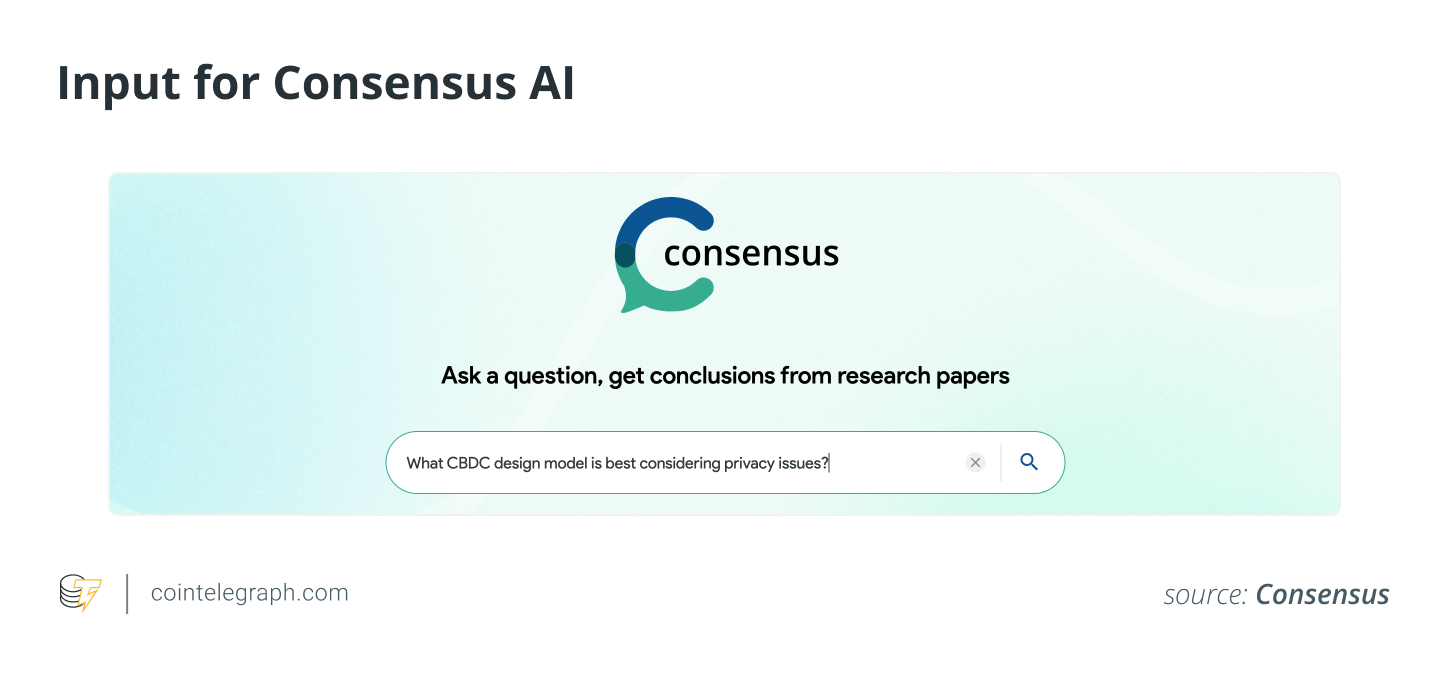
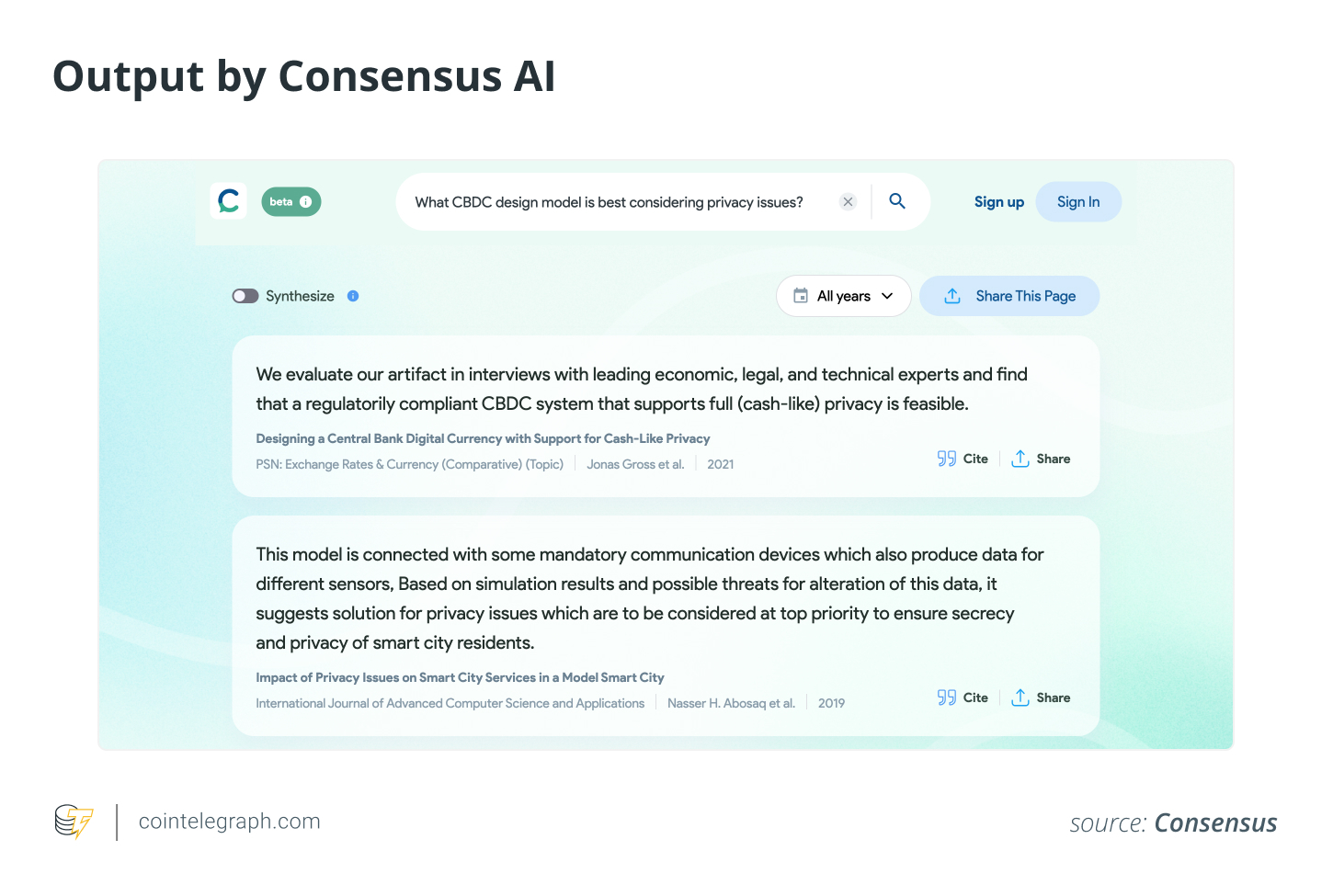
The goal of the Consensus AI search engine is to democratize expert knowledge by making study findings on a range of subjects easily accessible. This cutting-edge engine, which runs on GPT-4, uses machine learning and natural language processing (NLP) to analyze and evaluate web content.
When you pose the “right questions,” an additional AI model examines publications and gathers pertinent data to respond to your inquiry. The phrase “right questions” refers to inquiries that lead to findings that are well-supported, as shown by a confidence level based on the quantity and caliber of sources used to support the hypothesis.
QuillBot
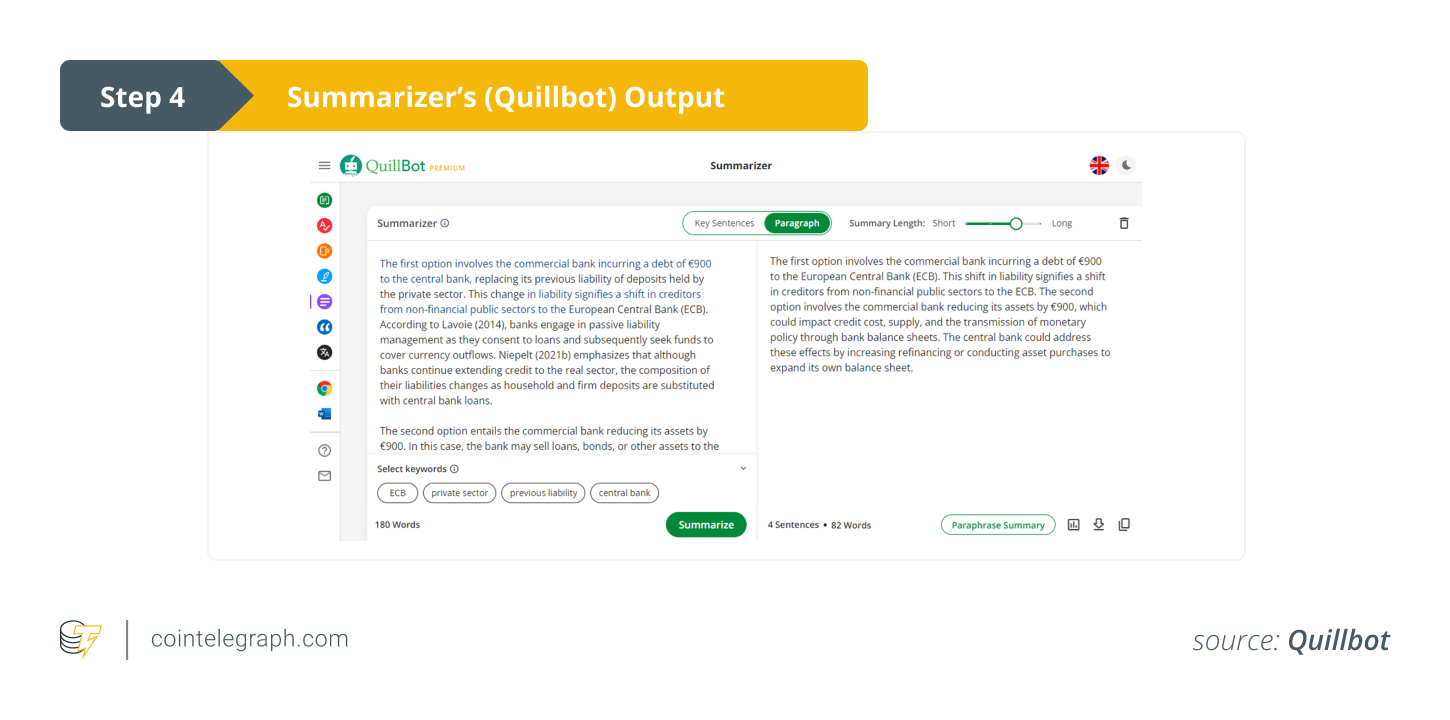
QuillBot is an artificial intelligence (AI) writing assistant that helps people create high-quality content. It uses NLP algorithms to improve grammar and style, rewrite and paraphrase sentences, and increase the coherence of the work as a whole.
QuillBot’s capacity to paraphrase and restate text is one of its main strengths. This might be especially useful if you wish to keep your research work original and free of plagiarism while using data from previous sources.
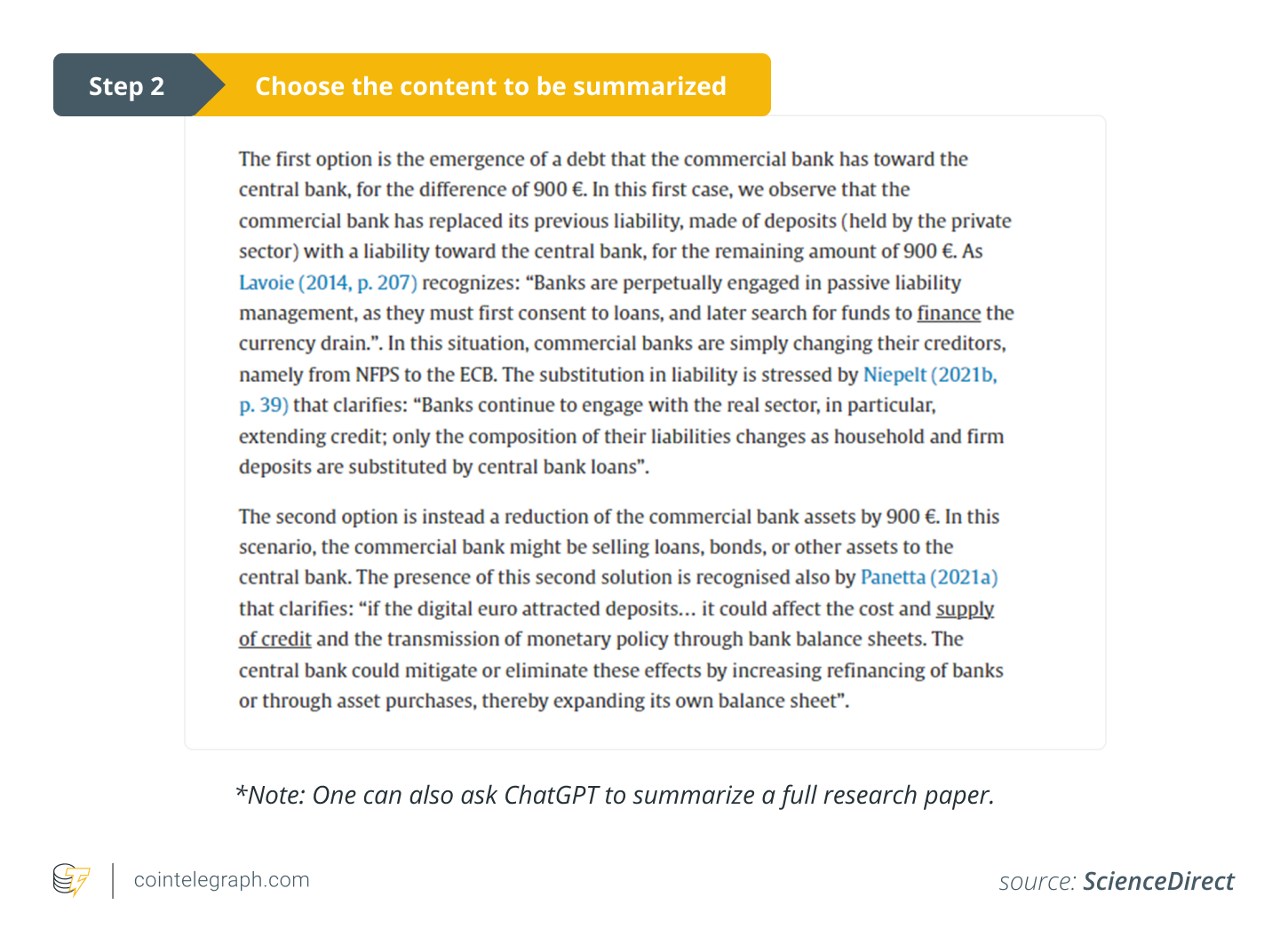
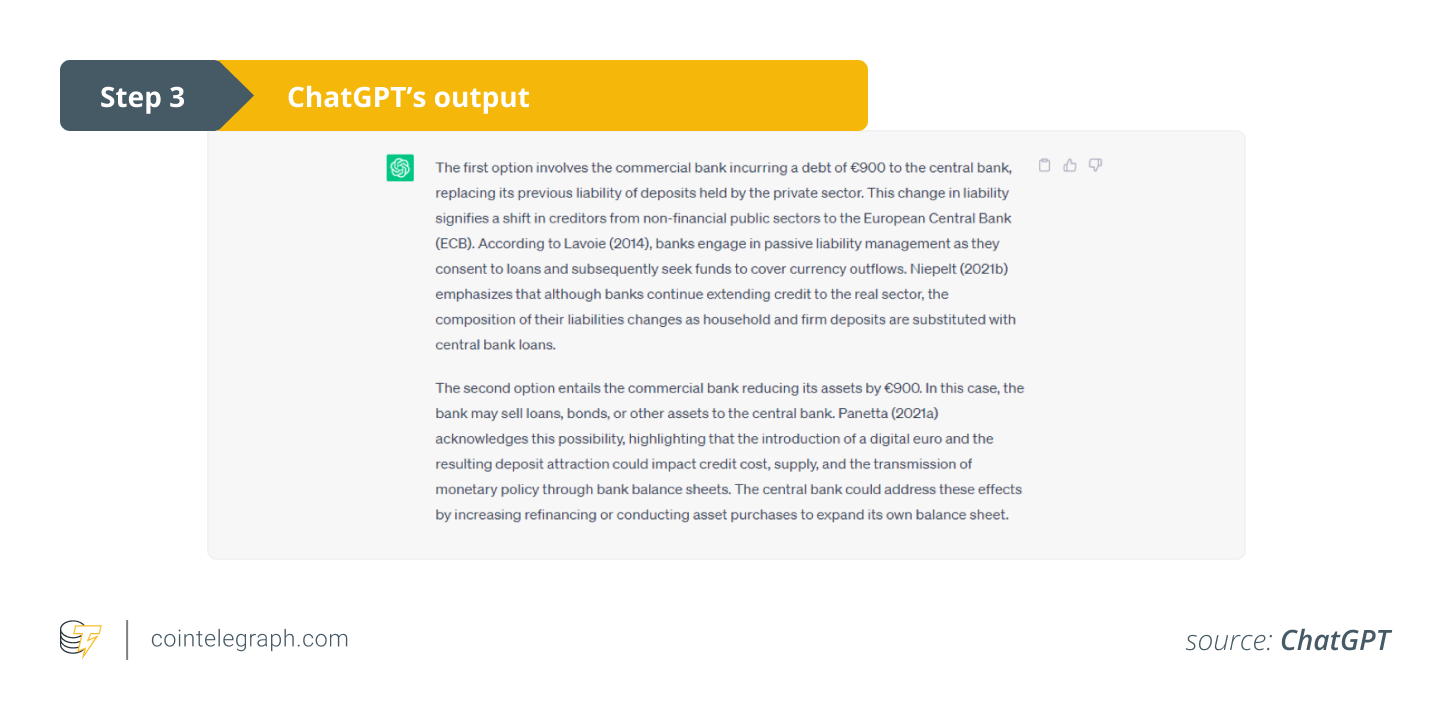
QuillBot can also summarize a research paper and offer alternate wording and phrase constructions to assist you in putting your thoughts into your own words. QuillBot can help you add variety to your writing by recommending different sentence constructions. This feature can improve your research papers readability and flow, which will engage readers more.
Additionally, ChatGPT and QuillBot can be used together. To utilize both ChatGPT and QuillBot simultaneously, start with the output from ChatGPT and then transfer it to QuillBot for further refinement.

Gradescope
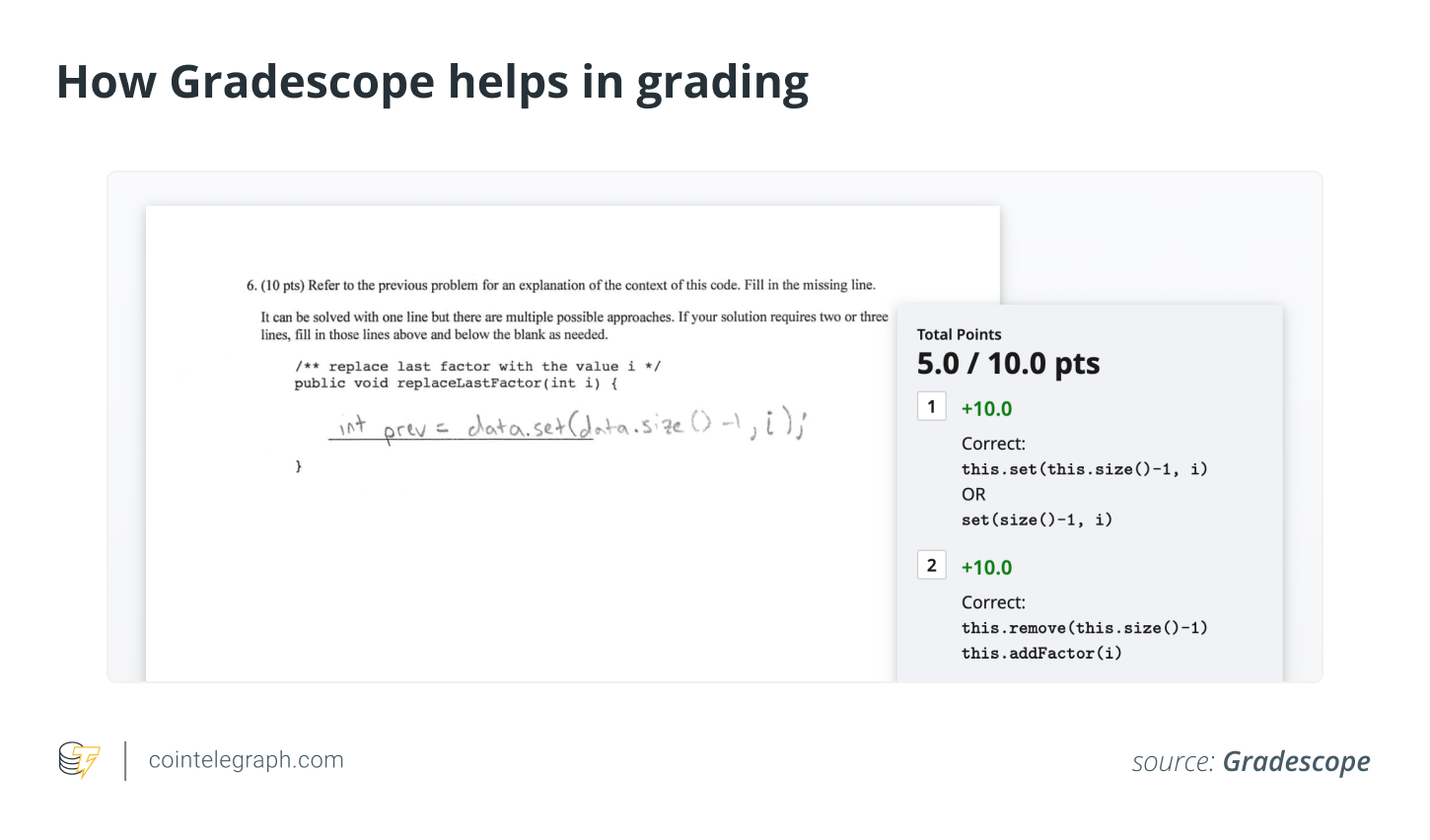
Widely used in educational institutions, Gradescope is an AI-powered grading and feedback tool. The time and effort needed for instructors to grade assignments, exams and coding projects are greatly reduced by automating the process. Its machine-learning algorithms can decipher code, recognize handwriting and provide students with in-depth feedback.
Related: How to use ChatGPT to learn a language
Elicit
Elicit is an AI-driven research platform that makes it simpler to gather and analyze data. It uses NLP approaches to glean insightful information from unstructured data, including polls, interviews and social media posts. Researchers can quickly analyze huge amounts of text with Elicit to find trends, patterns and sentiment.
Using the user-friendly Elicit interface, researchers can simply design personalized surveys and distribute them to specific participants. To ensure correct and pertinent data collection, the tool includes sophisticated features, including branching, answer validation and skip logic.
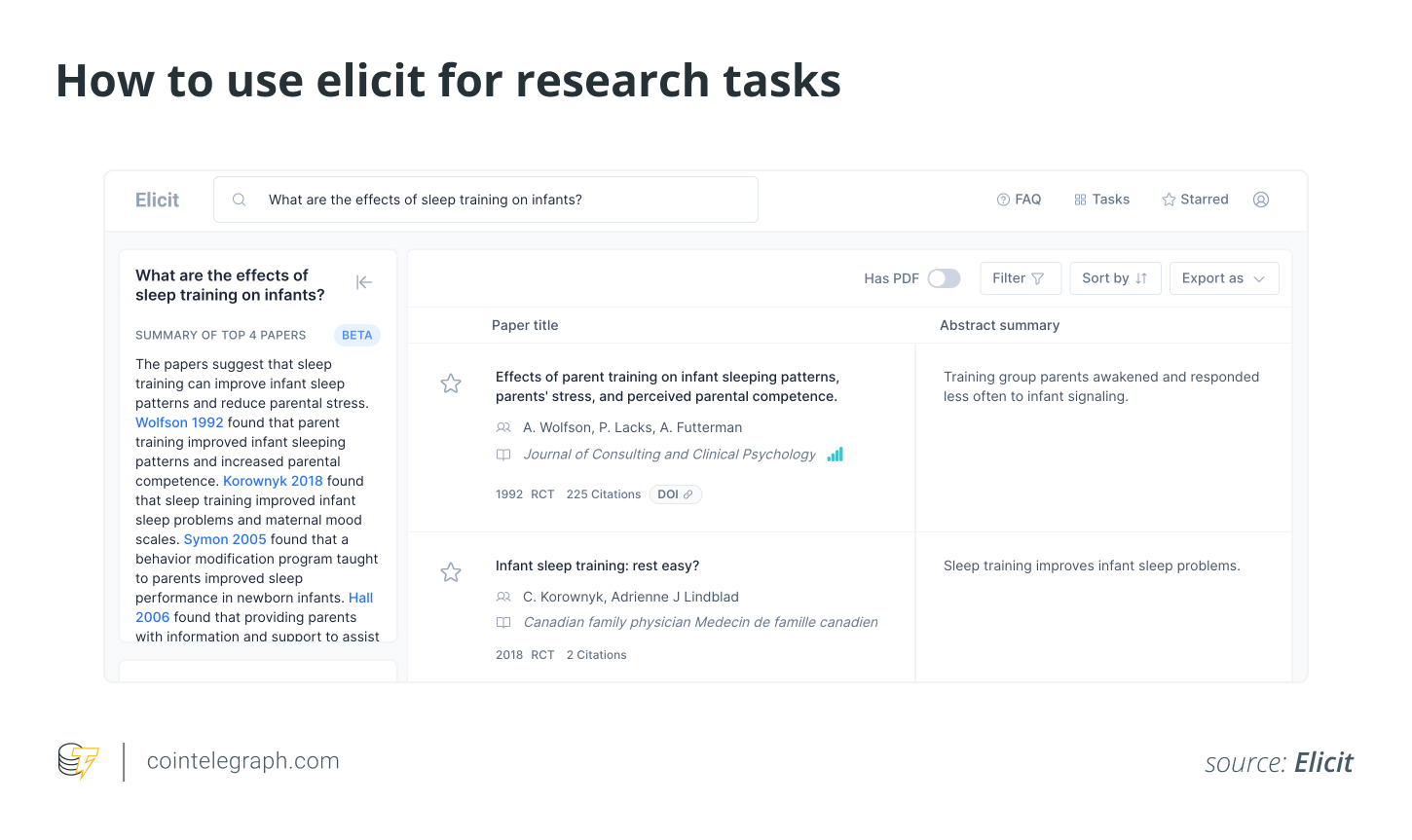
In order to help academics properly analyze and interpret data, Elicit also offers real-time analytics and visualizations. Elicit streamlines the research process, saves time and improves data collection for researchers in a variety of subjects thanks to its user-friendly design and powerful capabilities.
Semantic Scholar
Semantic Scholar is an AI-powered academic search engine that prioritizes scientific content. It analyzes research papers, extracts crucial information, and generates recommendations that are pertinent to the context using machine learning and NLP techniques.
Researchers can use Semantic Scholar to research related works, spot new research trends and keep up with the most recent advancements in their fields.
Related: 5 free artificial intelligence courses and certifications
Striking a balance: Harnessing AI in research responsibly
It’s crucial to keep moral standards in mind and prevent plagiarism when employing AI research tools. The use of another person’s words, ideas or works without giving due credit or permission is known as plagiarism. While using AI research tools, one may follow the guidelines below to prevent plagiarism and uphold ethical standards:
- Understand the purpose of the AI research tool.
- Attribute sources properly.
- Paraphrase and synthesize information.
- Cross-verify information from multiple sources.
- Check for copyright restrictions.
- Review and edit AI-generated content.
- Seek ethical AI tools.
Though AI research tools might be beneficial for improving your research and writing processes, it is important to uphold academic integrity and observe ethical standards. Always make an effort to give fair credit to others and make sure that your work accurately reflects your own thoughts and understanding.
Source link


The meteoric ascent of generative artificial intelligence has created a bonafide technology sensation thanks to user-focused products such as OpenAI’s ChatGPT, Dall-E and Lensa. But the boom in user-friendly AI has arrived in conjunction with users seemingly ignoring or being left in the dark about the privacy risks imposed by these projects.
In the midst of all this hype, however, international governments and major tech figures are starting to sound the alarm. Citing privacy and security concerns, Italy just placed a temporary ban on ChatGPT, potentially inspiring a similar block in Germany. In the private sector, hundreds of AI researchers and tech leaders, including Elon Musk and Steve Wozniak, signed an open letter urging a six-month moratorium on AI development beyond the scope of GPT-4.
The relatively swift action to try to rein in irresponsible AI development is commendable, but the wider landscape of threats that AI poses to data privacy and security goes beyond one model or developer. Although no one wants to rain on the parade of AI’s paradigm-shifting capabilities, tackling its shortcomings head-on now is necessary to avoid the consequences becoming catastrophic.
AI’s data privacy storm
While it would be easy to say that OpenAI and other Big Tech-fuelled AI projects are solely responsible for AI’s data privacy problem, the subject had been broached long before it entered the mainstream. Scandals surrounding data privacy in AI have happened prior to this crackdown on ChatGPT—they’ve just mostly occurred out of the public eye.
Just last year, Clearview AI, an AI-based facial recognition firm reportedly utilized by thousands of governments and law enforcement agencies with limited public knowledge, was banned from selling facial recognition technology to private businesses in the United States. Clearview also landed a fine of $9.4 million in the United Kingdom for its illegal facial recognition database. Who’s to say that consumer-focused visual AI projects such as Midjourney or others can’t be used for similar purposes?
Clearview AI, the facial recognition tech firm, has confirmed my face is in their database. I sent them a headshot and they replied with these pictures, along with links to where they got the pics, including a site called “Insta Stalker.” pic.twitter.com/ff5ajAFlg0
— Thomas Daigle (@thomasdaigle) June 9, 2020
The problem is they already have been. A slew of recent deepfake scandals involving pornography and fake news created through consumer-level AI products have only heightened the urgency to protect users from nefarious AI usage. It takes a hypothetical concept of digital mimicry and makes it a very real threat to everyday people and influential public figures.
Related: Elizabeth Warren wants the police at your door in 2024
Generative AI models fundamentally rely upon new and existing data to build and strengthen their capabilities and usability. It’s part of the reason why ChatGPT is so impressive. That being said, a model that relies on new data inputs needs somewhere to get that data from, and part of that will inevitably include the personal data of the people using it. And that amount of data can easily be misused if centralized entities, governments or hackers get ahold of it.
So, with a limited scope of comprehensive regulation and conflicting opinions around AI development, what can companies and users working with these products do now?
What companies and users can do
The fact that governments and other developers are raising flags around AI now actually indicates progress from the glacial pace of regulation for Web2 applications and crypto. But raising flags isn’t the same thing as oversight, so maintaining a sense of urgency without being alarmist is essential to create effective regulations before it’s too late.
Italy’s ChatGPT ban is not the first strike that governments have taken against AI. The EU and Brazil are all passing acts to sanction certain types of AI usage and development. Likewise, generative AI’s potential to conduct data breaches has sparked early legislative action from the Canadian government.
The issue of AI data breaches is quite severe, to the point where OpenAI even had to step in. If you opened ChatGPT a couple of weeks ago, you might have noticed that the chat history feature was turned off. OpenAI temporarily shut down the feature because of a severe privacy issue where strangers’ prompts were exposed and revealed payment information.
Related: Don’t be surprised if AI tries to sabotage your crypto
While OpenAI effectively extinguished this fire, it can be hard to trust programs spearheaded by Web2 giants slashing their AI ethics teams to preemptively do the right thing.
At an industrywide level, an AI development strategy that focuses more on federated machine learning would also boost data privacy. Federated learning is a collaborative AI technique that trains AI models without anyone having access to the data, utilizing multiple independent sources to train the algorithm with their own data sets instead.
On the user front, becoming an AI Luddite and forgoing using any of these programs altogether is unnecessary, and will likely be impossible quite soon. But there are ways to be smarter about what generative AI you grant access to in daily life. For companies and small businesses incorporating AI products into their operations, being vigilant about what data you feed the algorithm is even more vital.
The evergreen saying that when you use a free product, your personal data is the product still applies to AI. Keeping that in mind may cause you to reconsider what AI projects you spend your time on and what you actually use it for. If you’ve participated in every single social media trend that involves feeding photos of yourself to a shady AI-powered website, consider skipping out on it.
ChatGPT reached 100 million users just two months after its launch, a staggering figure that clearly indicates our digital future will utilize AI. But despite these numbers, AI isn’t ubiquitous quite yet. Regulators and companies should use that to their advantage to create frameworks for responsible and secure AI development proactively instead of chasing after projects once it gets too big to control. As it stands now, generative AI development is not balanced between protection and progress, but there is still time to find the right path to ensure user information and privacy remain at the forefront.
Ryan Paterson is the president of Unplugged. Prior to taking the reins at Unplugged, he served as the founder, president and CEO of IST Research from 2008 to 2020. He exited IST Research with a sale of the company in September 2020. He served two tours at the Defense Advanced Research Agency and 12 years in the United States Marine Corps.
Erik Prince is an entrepreneur, philanthropist and Navy SEAL veteran with business interests in Europe, Africa, the Middle East and North America. He served as the founder and chairman of Frontier Resource Group and as the founder of Blackwater USA — a provider of global security, training and logistics solutions to the U.S. government and other entities — before selling the company in 2010.
This article is for general information purposes and is not intended to be and should not be taken as legal or investment advice. The views, thoughts and opinions expressed here are the author’s alone and do not necessarily reflect or represent the views and opinions of Cointelegraph.
Source link

IMF Advances Global Central Bank Digital Currency Platform For International Transactions

IMF’s CBDC push gets feedback from the crypto community: ‘No one wants this’

Bitcoin Price Extends Recovery But Lack of Momentum Remains A Concern

Binance’s BNB Chain introduces layer-2 testnet powered by Optimism

Why Is The Bitcoin Price Up Today?

Binance UK office one of 2,403 companies sharing ‘utility closet’ in Suffolk

Ethereum Price Indicators Suggest Strengthening Case For More Upsides

31% of young Aussies hold crypto despite being ‘risk averse’ — ASX survey

XRP Price Could Regain Strength If It Clears This Resistance

Australia’s crypto laws risk being outpaced by emerging markets: Think tank

PEPE Down 78% From May Peaks But Holder Count Rising

Bitcoin reaches 50% market dominance for first time in 2 years

UK Registration Canceled, Exits Netherlands, Cyprus

Why Cathie Wood is bullish on Coinbase stock and believes Bitcoin will reach $1 million

Is It Lights Out For Litecoin As A Daily Death Cross Approaches?

Judge rules LBRY video platform’s token is a security in case brought by the US SEC

Silvergate Capital’s crypto-to-fiat transfers decrease by $50B compared to Q3 2021

Will the Bitcoin mining industry collapse? Analysts explain why crisis is really opportunity

Exchange Outflows Shows Bitcoin, Ethereum Accumulation Trend Continues

Bitcoin Dropped Below 2017 All-Time-High but Could Sellers be Getting Exhausted? – Blockchain News, Opinion, TV and Jobs
BNM DAO Token Airdrop

What does the Coinbase Premium Gap Tell us about Investor Activity? – Blockchain News, Opinion, TV and Jobs
Fed policy and crumbling market sentiment could send the total crypto market cap back under $1T
New Minting Services

Can Cardano’s July hard fork prevent ADA price from plunging 60%?

SEC’s Chairman Gensler Takes Aggressive Stance on Tokens – Blockchain News, Opinion, TV and Jobs

Friends or Enemies? – Blockchain News, Opinion, TV and Jobs

LUNA2 Recovers 70% In Nine Days From Historic Lows

Enjoy frictionless crypto purchases with Apple Pay and Google Pay | by Jim | @blockchain | Jun, 2022

A String of 200 ‘Sleeping Bitcoins’ From 2010 Worth $4.27 Million Moved on Friday
-
 SEC7 months ago
Judge rules LBRY video platform’s token is a security in case brought by the US SEC
-
 Banking8 months ago
Silvergate Capital’s crypto-to-fiat transfers decrease by $50B compared to Q3 2021
-
 Antminer11 months ago
Will the Bitcoin mining industry collapse? Analysts explain why crisis is really opportunity
-
 Bitcoin8 months ago
Exchange Outflows Shows Bitcoin, Ethereum Accumulation Trend Continues
-
 Altcoins12 months ago
Bitcoin Dropped Below 2017 All-Time-High but Could Sellers be Getting Exhausted? – Blockchain News, Opinion, TV and Jobs
-
Uncategorized1 year ago
BNM DAO Token Airdrop
-
 Binance11 months ago
What does the Coinbase Premium Gap Tell us about Investor Activity? – Blockchain News, Opinion, TV and Jobs
-
 Asia11 months ago
Fed policy and crumbling market sentiment could send the total crypto market cap back under $1T