
CBDC
Assessing Ripple-Colombia Central Bank Partnership


To improve the country’s high-value payment system, Colombia’s central bank is experimenting with Ripple’s new end-to-end central bank digital currency technology. How will this collaboration affect the price of XRP?
On Thursday, Ripple announced that the central bank of Colombia and the Ministry of Information and Communication Technologies (MinTIC) would be exploring the use of blockchain technology in the country’s high value electronic payment system with Ripple.
The central bank did not specifically state it will pilot test a central bank digital currency, even though it will employ Ripple’s CBDC platform, supported by a private version of the XRP Ledger.
Ripple and @Peersyst are partnering with Colombia’s @BancoRepublica in conjunction with @Ministerio_TIC to pilot use cases that will enhance Colombia’s high-value payment system.🇨🇴
Learn more about the partnership: https://t.co/X9jyJ3pvDa
— Ripple (@Ripple) June 15, 2023
Ripple has not let regulatory constraints prevent it from innovating and expanding its reach, notably in Colombia, despite the fact that the blockchain startup is still engaged in a highly publicized legal dispute with the US Securities and Exchange Commission.
A Technological Solution In The Offing For Colombia?
Blockchain technology was highlighted by Colombia’s minister of information and communication technology, Mauricio Lizcano, who claimed that it would offer a technological solution (Prototype) that would enable simulations of various use cases in the high-value payment system.
Peersyst Technology, a blockchain technology company based in the region, is MinTIC’s direct partner.
According to James Wallis, vice president of central bank engagements and CBDCs, Ripple:
“By harnessing the power of the CBDC Platform, based upon the XRPL, this project will pave the way for transformative advancements in the utilization of blockchain technology within the public sector.”
Ripple previously introduced its end-to-end XRPL-driven CBDC solution, which would enable central banks, financial service providers, and governments to establish their own digital currencies while also assisting them in resolving issues with CBDC deployments.
The Colombian government said in August 2022 that it was looking into introducing a CBDC to facilitate transactions and decrease tax evasion, and that it also planned to prohibit cash transactions for quantities more than 10 million Colombian pesos (about $2,390).
A digital asset custody technology provider, Metaco was bought by Ripple a few months ago, and its clientele includes several large, systemically significant institutions.
What The Latest Collaboration Means For XRP Price
Meanwhile, XRP is back in the red despite briefly rising above $0.55 earlier, adding more than $2 billion to its market capitalization in a 24-hour span, and the publication of the contentious papers pertinent to the Ripple lawsuit.
At the time of writing, and after news of the Ripple-Colombia central bank partnership broke out, the price of the XRP token looked it could use more energy to extricate itself out of negative territory.
According to the most recent data provided by cryptocurrency market tracker CoinMarketCap, XRP was down by almost a percent in the twenty-four hour time frame, down 8.56 percent in the last seven days, and threatening the 18 percent gain over the past month. XRP is currently trading at $0.47.
XRP market cap currently at $24.8 billion. Chart: TradingView.com
There are a number of possible explanations for the recent drop in the price of XRP following the announcement of the partnership between Ripple and the central bank of Colombia.

XRP price all in red. Source: CoinMarketCap
First, investors may not put much stock in the relationship because of the regulatory concerns that typically accompany partnerships between cryptocurrencies and traditional financial institutions.
The trend of XRP’s price could be affected by selling pressure due to this uncertainty. The general state of the market and the attitude of investors could also be factors in the drop of cryptocurrency prices.
XRP Price Trajectory: Factors To Consider
The price of XRP may fall regardless of specific news or collaborations if there is a lack of confidence in the crypto sector or a general slowdown in the broader economy.
Investor emotion, market conditions, and regulatory considerations all play a role in how much of an effect the Ripple-Colombia central bank agreement has on XRP’s price.
At the same time, the dispute between the SEC and Ripple is a major factor influencing the value of XRP. Although the release of the Hinman documents first boosted XRP since they appeared to support Ripple’s case, the altcoin’s price eventually fell as investors’ confusion and worry overcame their initial joy.
(This site’s content should not be construed as investment advice. Investing involves risk. When you invest, your capital is subject to risk).
Featured image from The Coin Republic
Source link








Privacy and the ability to transact anonymously should be considerations in the design of a digital dollar, a United States Treasury official has said.
On June 13 the Treasury Department’s Assistant Secretary for Financial Institutions Graham Steele spoke at a payments-focused conference in Texas about the Federal Reserve’s controversial FedNow system and central bank digital currencies (CBDCs).
Steele said one challenge of a retail CBDC is minimizing illegal transactions while maintaining user privacy. He said considerations should still be made about how to protect user anonymity:
“It is important that we consider the extent to which privacy and anonymity might be preserved and explore the technologies and methods available, including Privacy Enhancing Technologies, to enable such protections in the design of any potential retail CBDC.”
In his remarks, Steele weighed the benefits and risks of a possible CBDC saying it could promote a “competitive payment environment.”
On the other hand, a retail CBDC would be directly backed by the Fed and could provide a safer option for consumers during bank runs which could “destabilize private sector lending” according to Steele.
He pointed to the recent banking crisis and said the “access to non-deposit alternatives outside of the banking system may have changed the nature and speed of bank runs.”
He added the U.S. “has not yet determined whether it will pursue a CBDC” but a Treasury-led group is evaluating the implications of a potential CBDC in the country.
Steele said the evaluation includes looking over “policy objectives related to global financial leadership, national security, and privacy, illicit finance and financial inclusion.”
Related: 7 central banks and BIS continue examination of ongoing policy issues for retail CBDC
On the Fed’s FedNow instant payments system, Steele thinks having multiple options for payment operations “promotes choice and competition in payments” which he believes will encourage the “development of new payment services and features” along with enhancing payments system resilience.
FedNow has witnessed political pushback. Presidential hopefuls Robert F. Kennedy Jr. and Ron DeSantis are against the system claiming it would pave the way for a CBDC which both claim will hand the government too much control.
In April, Federal Reserve Board governor Michelle Bowman said it was “difficult to imagine” that a CBDC could be justified beyond use in “interbank and wholesale transactions.”
Magazine: Tornado Cash 2.0 — The race to build safe and legal coin mixers
Source link
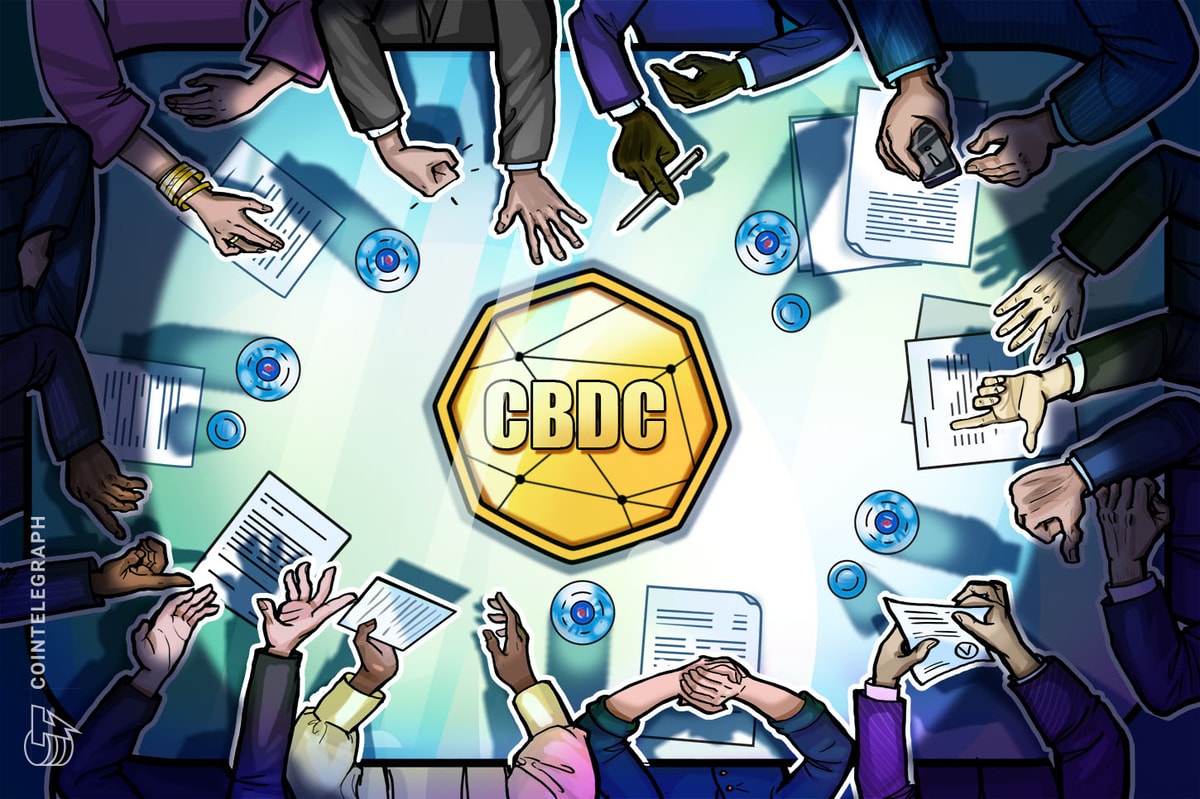

The Central Bank of Kenya received comments on a discussion paper on the potential issuance of a digital shilling and hasn’t reached a definitive conclusion.
In a June 2 announcement on Twitter, Kenya’s central bank said it received more than 100 comments from members of the public, commercial banks, tech firms and other participants across nine countries regarding the issuance of a central bank digital currency, or CBDC. The responses varied from highlighting potential benefits and risks, but the central bank said it would “continue to monitor developments” and take a “measured approach” to consider assessing the rollout of a digital shilling in the future.
“Implementation of a CBDC in Kenya may not be a compelling priority in the short to medium term,” said the central bank. “Significantly, Kenya’s pain points in payment could potentially continue to be addressed by other innovative solutions around the existing ecosystem.”
Press Release - Issuance of Discussion Paper on Central Bank Digital Currency: Comments from the Public pic.twitter.com/dMlrUj2eD6
— Central Bank of Kenya (@CBKKenya) June 2, 2023
The statement followed the discussion paper Kenya’s central bank released in February 2022. The bank added that it had been collaborating with other central banks behind proofs-of-concept for CBDCs but noted “the allure of CBDCs is fading” on the global stage.
Related: Kenya considers tax on crypto, NFT transfers and online influencers
As one of the largest economies in Africa by gross domestic product, Kenya has grown its adoption of crypto and blockchain significantly in the last few years. Peer-to-peer platform Paxful is widely used among crypto enthusiasts in the African nation, and there are Bitcoin mining projects helping to provide power to rural communities.
Magazine: Bitcoin in Senegal: Why is this African country using BTC?
Source link


British multinational bank Standard Chartered and PwC China have teamed up to produce a white paper on applications for central bank digital currency (CBDC) in the so-called Greater Bay Area of China – Guangdong Province, Hong Kong and Macao. Programmability will make all the difference, they concluded.
The Greater Bay Area (GBA) presented an interesting test case because of the multiple currencies used in multiple jurisdictions. Macao uses the pataca, whereas Hong Kong uses the Hong Kong dollar and China the yuan. About 3.8 trillion yuan (US$535 billion) of cross-border trade was carried out in the region in 2021, according to the report.
Programmable CBDC has been under investigation in Hong Kong. It offers a range of advantages, the report said:
“The successful launch of programmable use cases in the GBA could provide a foundational framework for how other CBDCs could interact in cross-border commercial scenarios.”
“Widespread commercial adoption hinges on collective efforts between industry participants to better serve their customers,” the report added. CBDC smart contracts could be launched in the implementation of cross-border trade, in the supply chain for invoice settlement and added currency flexibility, and by retailers for streamlining service and loyalty programs by using a single multicurrency wallet.
Related: Hong Kong unveils completed retail CBDC project that has a CBDC-backed stablecoin
The report looked at CBDC-based loyalty programs in detail. More user-friendly loyalty programs would benefit smaller retailers whose programs consumers would otherwise be less likely to enroll in. Payment service providers could also take advantage of smart contracts for Know Your Customer (KYC) processes, the report said.
#Shenzhen and #Guangzhou ranked third and fourth behind Beijing and Shanghai, while all 11 cities in the #Guangdong-Hong Kong-Macao Greater Bay Area made the 2022 Chinese Cities of Opportunity report released by world-leading consultancy @PwC. #GDupdates #GBAfocus [/IC] pic.twitter.com/6KF1fkOUcH
— Info Guangdong (@iGuangdong) September 6, 2022
The Hong Kong Monetary Authority recently launched an e-HKD CBDC pilot project that looks at a range of use cases, including tokenization.
Magazine: Ripple, Visa join HK CBDC pilot, Huobi accusations, GameFi token up 300%: Asia Express
Source link

Watch out Ordinals, 30,000 ‘Ethscriptions’ land on Ethereum

Twitter suspends memecoin-linked AI bot after Elon Musk’s ‘scam crypto’ claim

Apple to fix gaming? SEC hates Metaverse, Logan Paul trolled on Steam – Cointelegraph Magazine

Bitcoin bulls look to re-establish control — Will BNB, LTC, OKB and QNT follow?

Is the cryptocurrency market about to break its 10-week losing streak?

Shiba Inu (SHIB) Burn Rate Suffers 87% Decline In Single Week

Aptos Gains 18% In Last Week

Quant Soars 20% After Partnership With Bank Of England, BIS For CBDC Project

Bitcoin Retailers Buying The Dip As BTC Soars Above $26,000

How to write effective ChatGPT prompts for better results

Binance sends cease and desist notice to fraudulent Nigerian entity
Grayscale Bitcoin Trust nears 2023 highs on BlackRock ETF filing as buyers step up

Bitcoin Price Rebounds $1,000 From $25,000 Support Level – What Are Whales Up To?

Binance CEO CZ deems SEC’s request for emergency relief unwarranted

Floki Inu Dull, Motionless Following Binance Metaverse Integration

Judge rules LBRY video platform’s token is a security in case brought by the US SEC

Silvergate Capital’s crypto-to-fiat transfers decrease by $50B compared to Q3 2021

Will the Bitcoin mining industry collapse? Analysts explain why crisis is really opportunity

Exchange Outflows Shows Bitcoin, Ethereum Accumulation Trend Continues

Bitcoin Dropped Below 2017 All-Time-High but Could Sellers be Getting Exhausted? – Blockchain News, Opinion, TV and Jobs
BNM DAO Token Airdrop

What does the Coinbase Premium Gap Tell us about Investor Activity? – Blockchain News, Opinion, TV and Jobs
Fed policy and crumbling market sentiment could send the total crypto market cap back under $1T
New Minting Services

Can Cardano’s July hard fork prevent ADA price from plunging 60%?

SEC’s Chairman Gensler Takes Aggressive Stance on Tokens – Blockchain News, Opinion, TV and Jobs

Friends or Enemies? – Blockchain News, Opinion, TV and Jobs

LUNA2 Recovers 70% In Nine Days From Historic Lows

Enjoy frictionless crypto purchases with Apple Pay and Google Pay | by Jim | @blockchain | Jun, 2022

A String of 200 ‘Sleeping Bitcoins’ From 2010 Worth $4.27 Million Moved on Friday
-
 SEC7 months ago
Judge rules LBRY video platform’s token is a security in case brought by the US SEC
-
 Banking8 months ago
Silvergate Capital’s crypto-to-fiat transfers decrease by $50B compared to Q3 2021
-
 Antminer11 months ago
Will the Bitcoin mining industry collapse? Analysts explain why crisis is really opportunity
-
 Bitcoin8 months ago
Exchange Outflows Shows Bitcoin, Ethereum Accumulation Trend Continues
-
 Altcoins12 months ago
Bitcoin Dropped Below 2017 All-Time-High but Could Sellers be Getting Exhausted? – Blockchain News, Opinion, TV and Jobs
-
Uncategorized1 year ago
BNM DAO Token Airdrop
-
 Binance11 months ago
What does the Coinbase Premium Gap Tell us about Investor Activity? – Blockchain News, Opinion, TV and Jobs
-
 Asia11 months ago
Fed policy and crumbling market sentiment could send the total crypto market cap back under $1T