Arbitrum
GRT Soars 13% As The Graph Prepares To Integrate Arbitrum








Arbitrum
Ethereum network upgrade and uptick in Arbitrum active users could trigger an ARB price reversal
While the Arbitrum governance token ARB has been in a consistent downturn since the airdrop in late March, its ecosystem shows healthy growth.
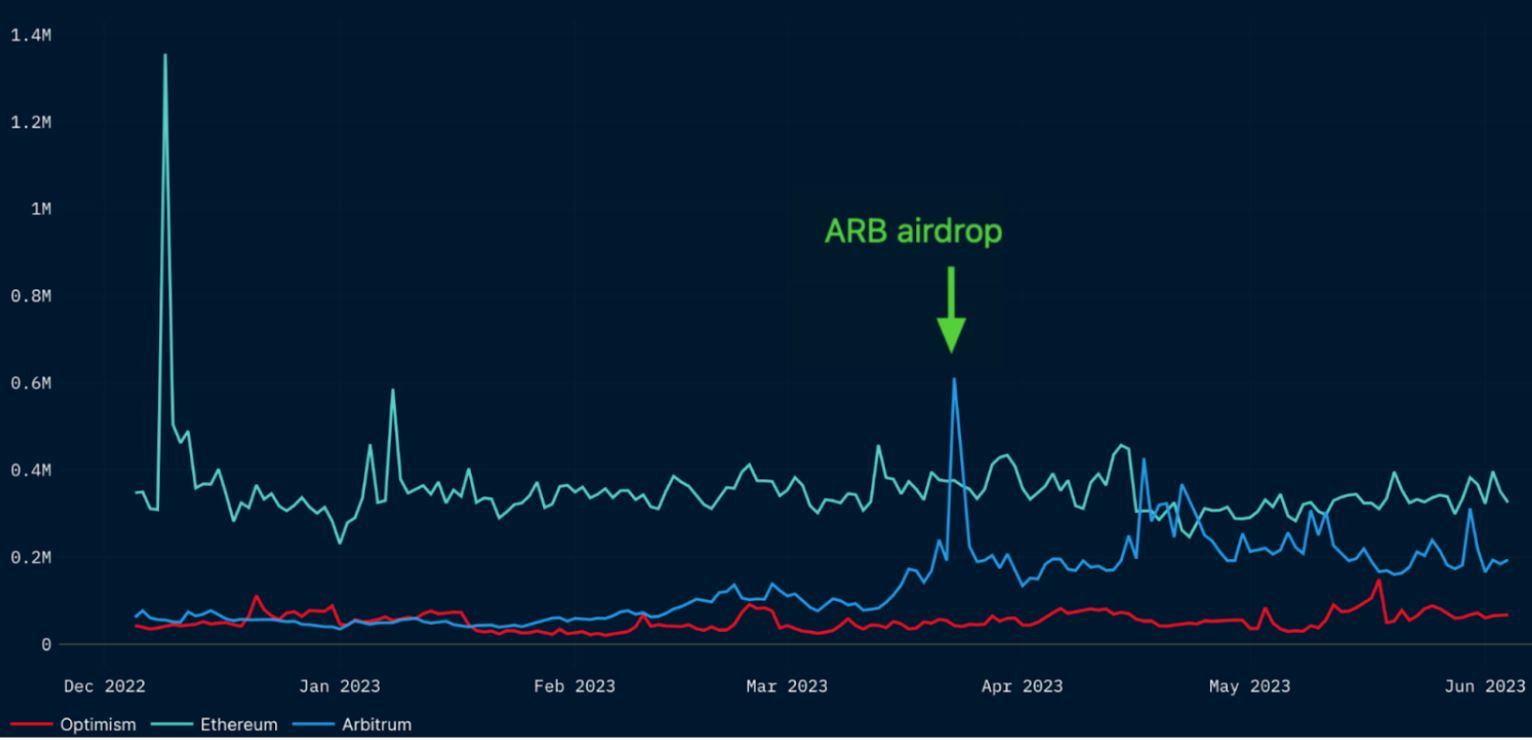
A recent Nansen report shows that Arbitrum’s activity improved after the airdrop, stabilizing “at a level higher” than before the airdrop. The daily active users, gas fees and transaction count have maintained consistently higher levels since April 2023.
The gap between the number of active users on Arbitrum and Optimism widened after the Aribtrum airdrop, closing in on Ethereum.
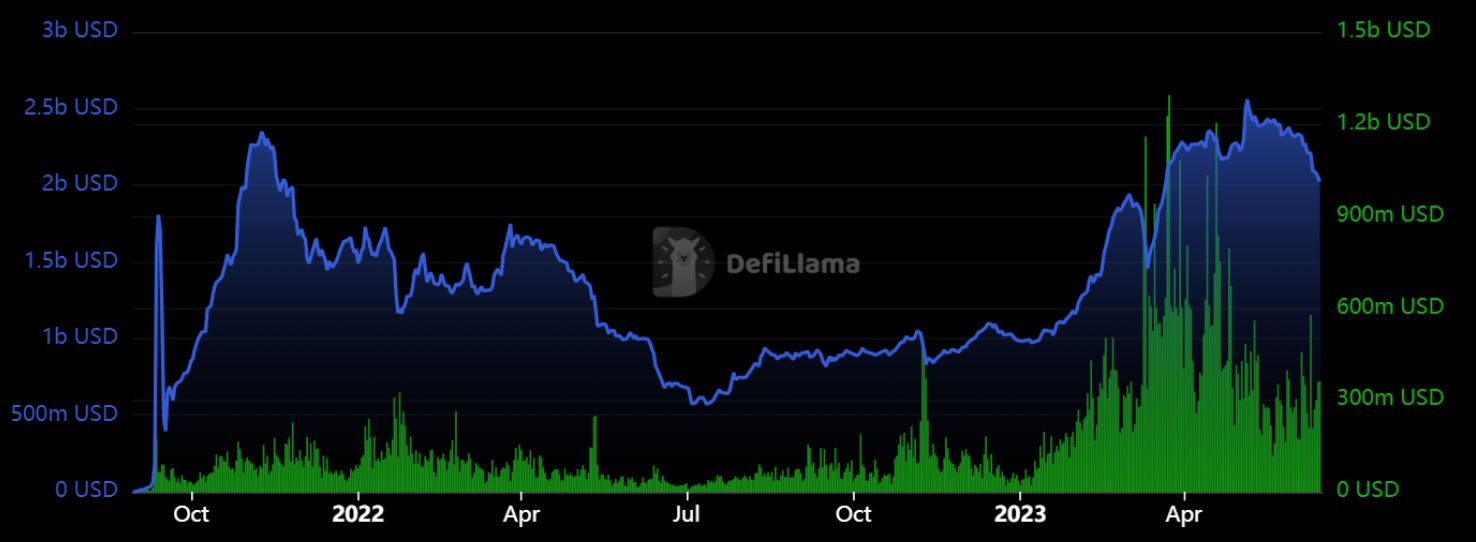
The trading volume on Arbitrum-based decentralized exchanges paints a similar picture, showing an evident rise in volume after the airdrop.
Moreover, Nansen’s report shows that ARB airdrop recipients only accounted for around 5% of the activity on the blockchain and that Arbitrum has attracted considerably more new users after the airdrop.
Potential catalysts for ARB upside
Moreover, an upcoming update on Ethereum in the second half of 2023, dubbed as Cancun-Deneb (Dencun), will include EIP-4844 (proto-Danksharding), which will reduce the transaction fees on Arbitrum, increasing the blockchain’s value proposition.
Additionally, the Arbitrum Foundation recently revealed accumulated data from its sequencer, a part of the layer-2 fees paid by users for posting the data onto Ethereum.
The foundation has decided to pass on the sequencer’s earnings, totaling 3,352 Ether (ETH), or $5.4 million, to the Arbitrum DAO, and the ETH will be managed by ARB holders.
In total:
The Arbitrum DAO has accumulated ~3,352 ETH in revenue,
The Sequencer will be refunded ~5,954 ETH which is the cost for posting all data to the Ethereum network.How exciting is that?
— Arbitrum (,) (@arbitrum) May 10, 2023
A revenue source for the DAO — a decentralized autonomous organization — can potentially create yields for ARB holders if the community votes to direct the rewards to holders. It remains to be seen how the funds will be managed by the foundation and the DAO.
“Smart money” is holding ARB
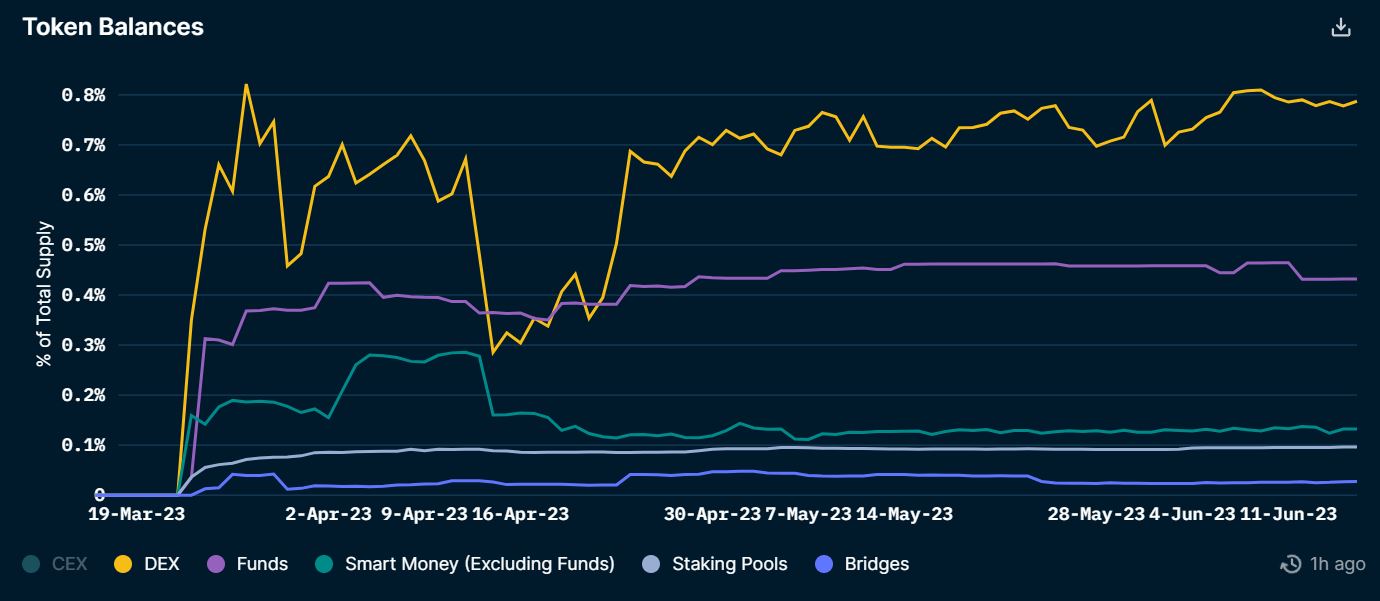
Nansen’s data shows that the “smart money” and funds that accumulated ARB after the airdrop still haven’t sold, which is encouraging. The on-chain analytics firm tags Ethereum addresses of high-volume and profitable traders as “smart money.”
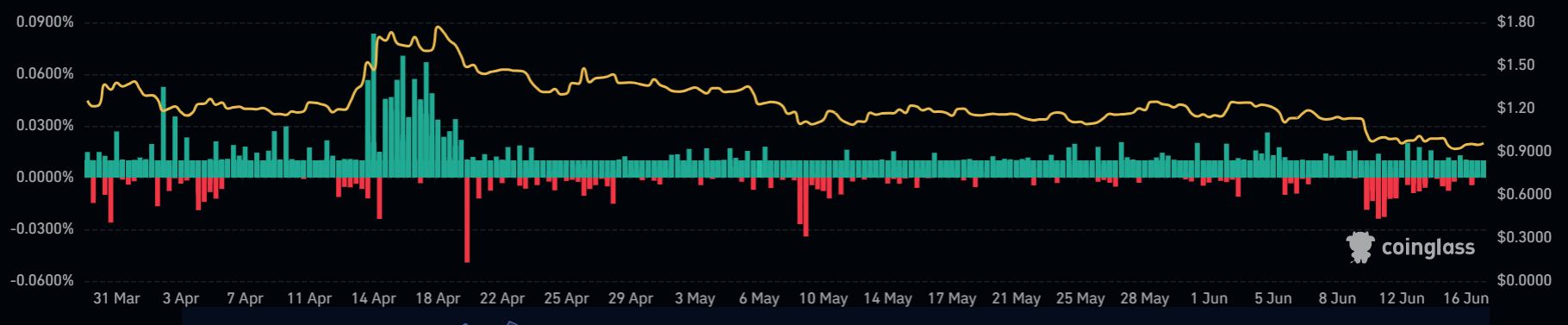
The funding rate for ARB perpetual swap contracts turned negative like the rest of the crypto market after the Securities and Exchange Commission (SEC) brought lawsuits against the industry’s largest exchanges, Binance and Coinbase, per CoinGlass data.
Related: Deposits to zkSync surpass $110M as its DeFi ecosystem explodes
Funding rates are paid by perpetual swap traders for shorting or longing an asset depending on its demand. If the demand for short orders is higher, it is deemed more expensive, so traders on the short side pay longs.
Currently, the funding rates are near zero, suggesting that futures traders are neutral on ARB.
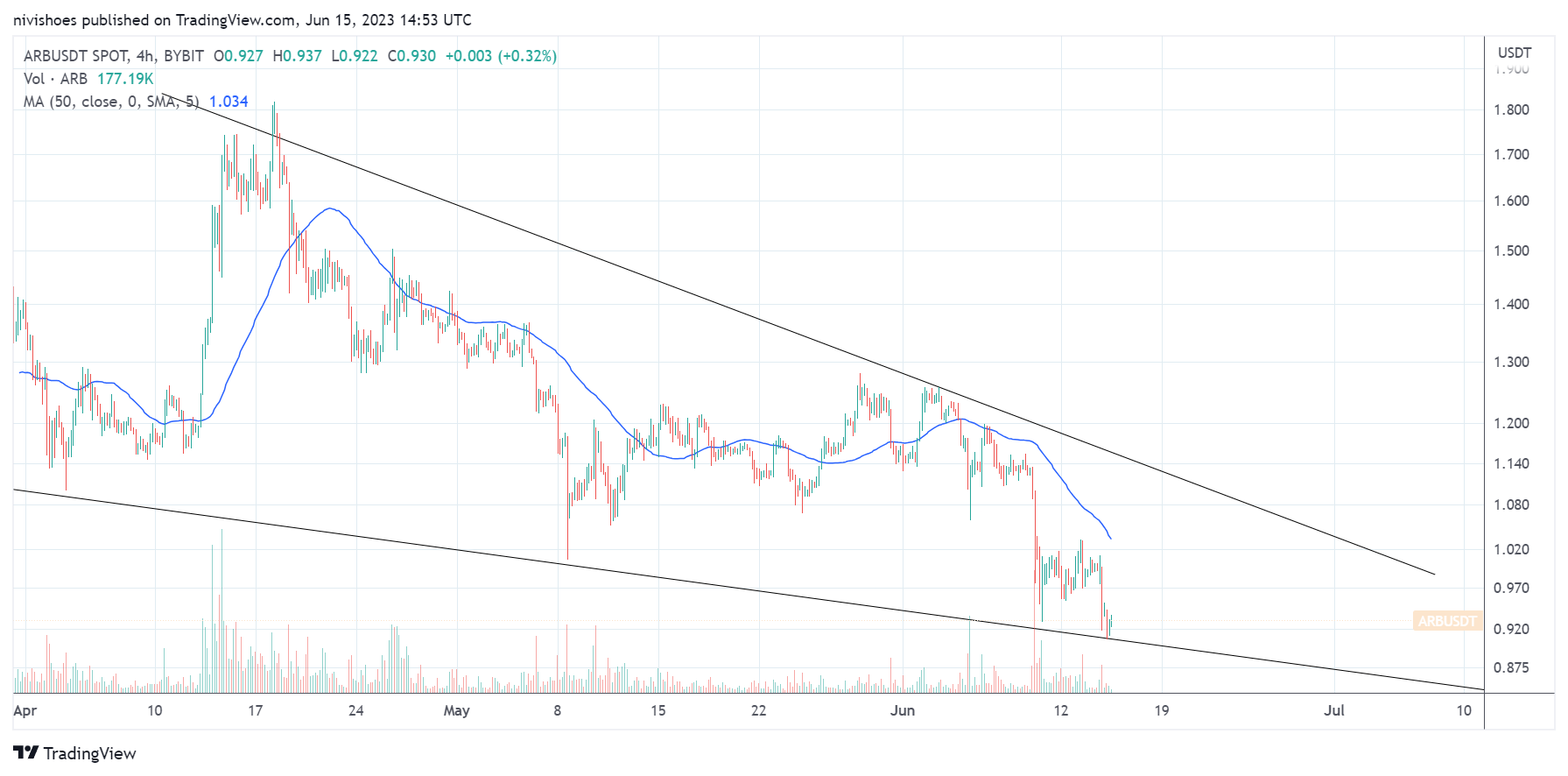
The ARB/USD pair has observed a downward trend since the token’s launch in March. The compression of the channel shows the possibility of a descending wedge pattern, which has a tendency to break to the upside.
However, if ARB breaks below the support line of the wedge pattern around $0.90, the move to the downside can amplify quickly.
On the ETH scale, ARB broke below May’s low of 0.00057 ETH after the SEC’s lawsuits. At the time of publication, the token was trading at 0.00056 ETH.
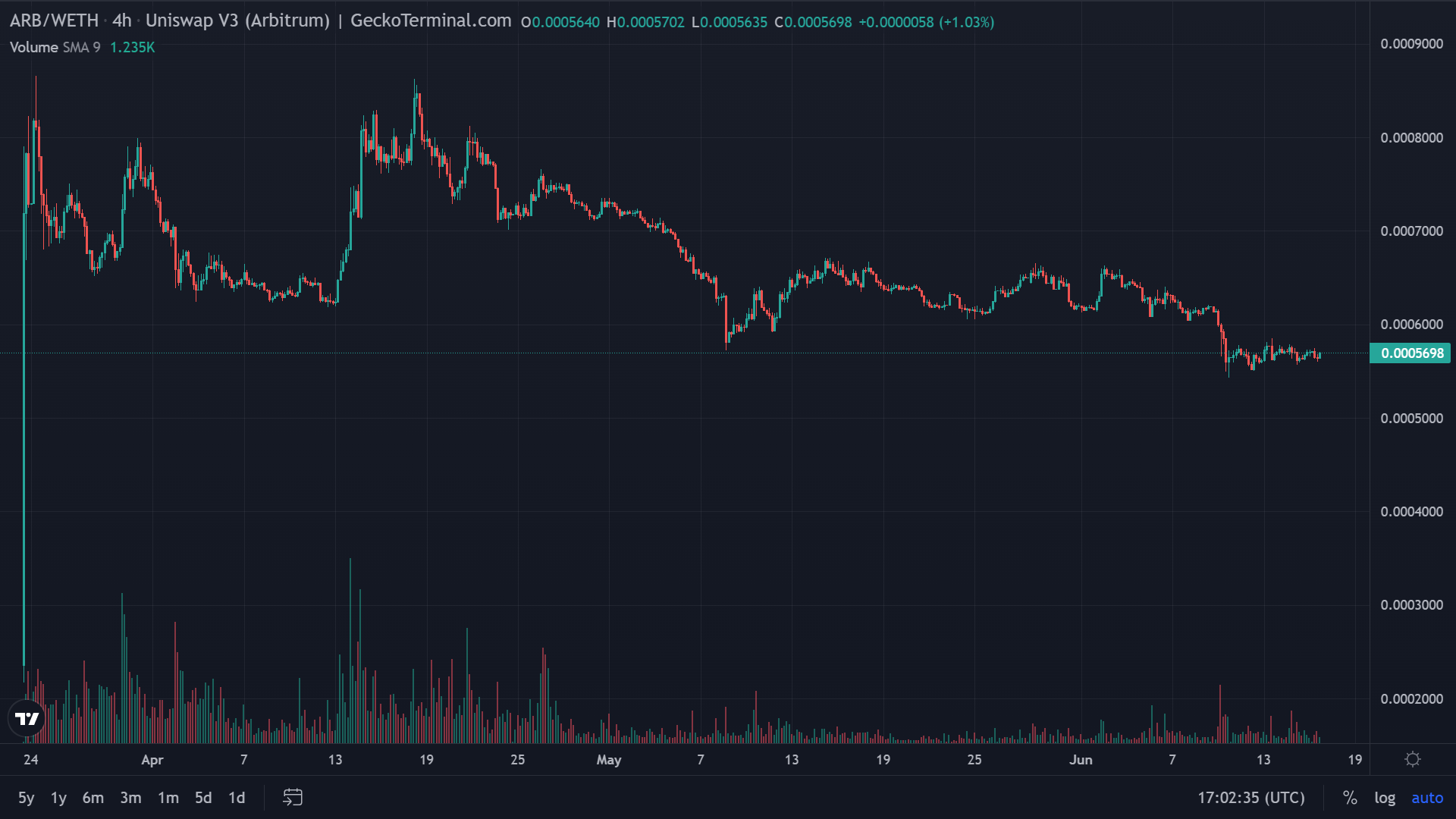
Technically, ARB shows the possibility of a negative trend reversal. Nevertheless, the upcoming Dencun update on Ethereum and decisions taken by the Arbitrum Foundation in directing revenue from the L2 rollup will ultimately dictate ARB’s price action.
This article does not contain investment advice or recommendations. Every investment and trading move involves risk, and readers should conduct their own research when making a decision.
This article is for general information purposes and is not intended to be and should not be taken as legal or investment advice. The views, thoughts, and opinions expressed here are the author’s alone and do not necessarily reflect or represent the views and opinions of Cointelegraph.
Source link

Arbitrum, a popular blockchain platform, has shown promising results after its airdrop in March 2023. According to a report by Nansen, a blockchain analytics platform, every activity metric on Arbitrum has gone up compared to pre-airdrop days.
Arbitrum’s Airdrop Bucks Trend
The report notes that since the airdrop, the daily count of transactions and users has remained consistently higher than the chain’s historical averages. On top of that, the value of transactions, transfers, and trades in United States Dollars (USD) has followed a similar pattern.
Despite the initial surge in new wallets after the airdrop, the number of new wallets initiating their first transaction on Arbitrum has slowly declined over the two months.
However, gas spending on Arbitrum has been on the rise, consistently maintaining higher levels than pre-airdrop. Nansen’s report notes that approximately 71% of the total 17,000 Ethereum (ETH) utilized for transaction fees on Arbitrum in the past 6 months was attributed to Layer 1.
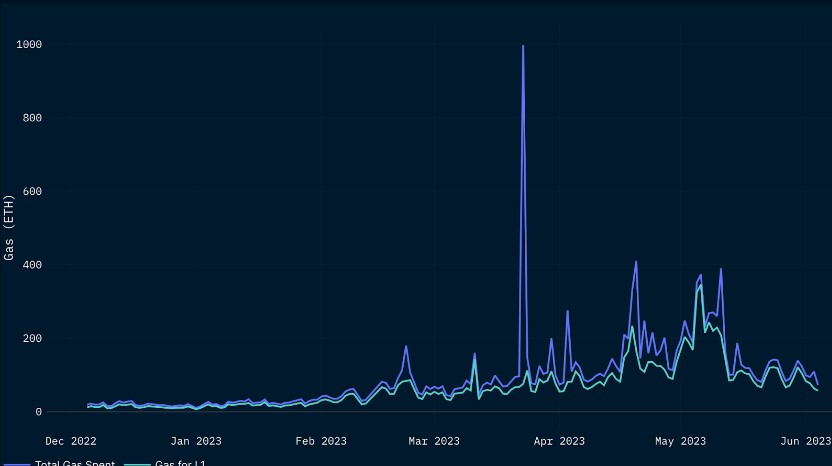
This indicates that Arbitrum maintains a significant share of bridging volume from Ethereum. At the same time, smaller entities such as Starkware, zkSync, PulseChain, and Across have gained a noticeable market share from March to May.
The report also highlights the number of wallets initiating their first-ever transactions on Arbitrum, a proxy for the rate at which new users enter the ecosystem. The number of new users has consistently remained at higher levels after the airdrop, surpassing Optimism and closely approaching Ethereum.
In addition, The report shows that 200,000 distinct wallets have chosen to delegate their voting rights to another 16,000 distinct wallets. The five largest wallets in terms of voting power belong to Treasure, delegate.l2beat.eth, olimpio.eth, PlutusDAO, and Griff Green collectively hold 49.7% of the Arbitrum voting Quorum.
The report also tracks the on-chain activity of airdrop recipients on Arbitrum, noting that the proportion of transactions originating from airdrop recipients has decreased after the airdrop. It accounts for approximately 5% to 6% of transactions on both Arbitrum and Optimism.
Despite this decline, the report shows that the number of daily active users, transaction count, and on-chain value on Arbitrum has stabilized at a level higher than before the airdrop. The upward trends in gas fee spending and the creation of new wallets also indicate a growing use of the platform.
Arbitrum Enables Exclusive Access To Snoop Dogg’s Tour With NFT Pass
Variety Magazine has reported that the famous rapper Snoop Dogg is launching an NFT pass on the Ethereum scaling network Arbitrum, allowing fans to join him virtually on his upcoming concert tour. The Snoop Dogg Passport NFT pass is priced at 0.025 ETH or $43.
The Snoop Dogg Passport NFT pass promises exclusive access to updates from the rapper’s life on tour, including behind-the-scenes videos and images uploaded by Snoop and his team.
In addition, fans who buy the NFT pass will also receive free drops of curated works from select NFT artists and access to future Snoop Dogg drops, playlists, and the ability to buy merchandise and tickets to events.
This move by Snoop Dogg highlights the increasing adoption of blockchain technology in the music industry and the potential for NFTs to revolutionize how artists engage with their fans.
Overall, the Snoop Dogg Passport NFT pass is an exciting new development in NFTs and blockchain technology, providing fans with unique and exclusive access to their favorite artists. As more musicians and artists explore the potential of blockchain technology, further innovation and development in this space can be expected.
Featured image from Unsplash, chart from TradingView.com
Source link

Arbitrum (ARB), a prominent governance token in the decentralized finance (DeFi) ecosystem, recently witnessed a decent surge in price following renewed buying activity from a well-known DeFi whale address.
Large-scale investors often influence market sentiment and can significantly impact the price of a given asset. However, as the rally unfolds, questions arise about the sustainability of this upward momentum and its implications for the future of Arbitrum.
Whale’s Unusual Buying Activity Coincides With ARB’s Rally
Arbitrum’s (ARB) current price of $1.24 on CoinMarketCap highlights its remarkable performance, with a noteworthy 3.4% rally witnessed within the past 24 hours, followed by an impressive seven-day climb of 7%. Interestingly, this surge in value coincided with unusual buying activity associated with renowned trader Andrew Kang’s crypto addresses.

Source: CoinMarketCap
Particularly noteworthy is the fact that Andrew Kang, co-founder of Mechanism Capital, has been making some interesting movements within the Arbitrum ecosystem.
Kang put $1 million worth of stablecoins into Arbitrum pools and allocated nearly a quarter of the funds to the purchase of RDNT tokens. RDNT is the native token of the DeFi lending platform Radiant Capital.
BTCUSD currently trading at $27,150 on the weekend chart: TradingView.com
After filling his bags with RDNT, Kang subsequently exchanged his newly acquired tokens and existing RDNT reserves for $867,000 worth of ARB.
These transactions were further followed by Kang depositing the proceeds into Radiant Capital, where he borrowed Circle’s USD Coin. These details have been revealed through data obtained from Lookonchain, a reliable data resource.
Seems like Andrew Kang is using leverage to go long $ARB on @RDNTCapital.
Buy $ARB → Deposit $ARB → Borrow $USDC → Buy $ARBhttps://t.co/PQwi0Zj9TT pic.twitter.com/afXjeRtTpv
— Lookonchain (@lookonchain) June 2, 2023
Multiple Whales Seize Opportunity As ARB Price Improves
In addition to Kang’s intriguing buying activity, another significant player, known by the address “0xf59b,” has also recognized the potential in ARB’s upward trajectory. This whale made a strategic move by depositing 1.2 million ARB tokens, equivalent to $1.5 million, into the popular cryptocurrency exchange OKX.
Whale”0xf59b” finally waited for the rise of $ARB and deposited 1.2M $ARB ($1.5M) into #OKX 30 minutes ago.
He withdrew 1.2M $ARB from #OKX on May 8th, and the buying price may be around $1.2.https://t.co/cJReZfg007 pic.twitter.com/jFwBRtPUpK
— Lookonchain (@lookonchain) June 2, 2023
This whale’s decision to pull the tokens out from OKX on May 8 and potentially purchase them at around the $1.2 mark suggests a deliberate strategy of waiting for a price increase before taking advantage of their holdings. By carefully timing their actions, this entity sought to maximize their potential gains as ARB’s value climbed.
These recent large-scale investments signify a growing optimism surrounding Arbitrum’s Layer 2 solution, despite the challenges it has faced in the market recently. The renewed interest from both Kang and the whale behind the address “0xf59b” reflects a belief in the long-term viability and potential profitability of ARB.
Furthermore, these strategic moves by multiple whales indicate a broader sentiment within the crypto market. As the Ethereum network gradually recovers from the recent drop, there is a growing expectation of increased activity on Layer 2 networks. This anticipation sets the stage for a potentially bullish cycle for these networks, including Arbitrum.
(This site’s content should not be construed as investment advice. Investing involves risk. When you invest, your capital is subject to risk)
-Featured image from The Conversation
Source link

ZachXBT Legal Fight Turns Into Funding Success

Binance cancels registration in the UK amid regulatory scrutiny

PEPE Sustains Steady Ascent, Fueling Speculation of Profits

‘Britcoin’ launch inches closer after Project Rosalind CBDC tests

Binance Coin Defies Regulatory Pressure, Holds $220 Support

Do Kwon denies forging passport, blames ‘Chinese’ agency: Report

Fresh Increase Possible Above 100 SMA

Coinbase blasts SEC for ‘no straight answers’ following court order

Ethereum Price Prints Bullish Technical Pattern, Why Close Above $1,780 Is Critical

Watch out Ordinals, 30,000 ‘Ethscriptions’ land on Ethereum

Twitter suspends memecoin-linked AI bot after Elon Musk’s ‘scam crypto’ claim

Apple to fix gaming? SEC hates Metaverse, Logan Paul trolled on Steam – Cointelegraph Magazine

Bitcoin bulls look to re-establish control — Will BNB, LTC, OKB and QNT follow?

Is the cryptocurrency market about to break its 10-week losing streak?

Shiba Inu (SHIB) Burn Rate Suffers 87% Decline In Single Week

Judge rules LBRY video platform’s token is a security in case brought by the US SEC

Silvergate Capital’s crypto-to-fiat transfers decrease by $50B compared to Q3 2021

Will the Bitcoin mining industry collapse? Analysts explain why crisis is really opportunity

Exchange Outflows Shows Bitcoin, Ethereum Accumulation Trend Continues

Bitcoin Dropped Below 2017 All-Time-High but Could Sellers be Getting Exhausted? – Blockchain News, Opinion, TV and Jobs
BNM DAO Token Airdrop

What does the Coinbase Premium Gap Tell us about Investor Activity? – Blockchain News, Opinion, TV and Jobs
Fed policy and crumbling market sentiment could send the total crypto market cap back under $1T
New Minting Services

Can Cardano’s July hard fork prevent ADA price from plunging 60%?

SEC’s Chairman Gensler Takes Aggressive Stance on Tokens – Blockchain News, Opinion, TV and Jobs

Friends or Enemies? – Blockchain News, Opinion, TV and Jobs

LUNA2 Recovers 70% In Nine Days From Historic Lows

Enjoy frictionless crypto purchases with Apple Pay and Google Pay | by Jim | @blockchain | Jun, 2022

A String of 200 ‘Sleeping Bitcoins’ From 2010 Worth $4.27 Million Moved on Friday
-
 SEC7 months ago
Judge rules LBRY video platform’s token is a security in case brought by the US SEC
-
 Banking8 months ago
Silvergate Capital’s crypto-to-fiat transfers decrease by $50B compared to Q3 2021
-
 Antminer11 months ago
Will the Bitcoin mining industry collapse? Analysts explain why crisis is really opportunity
-
 Bitcoin8 months ago
Exchange Outflows Shows Bitcoin, Ethereum Accumulation Trend Continues
-
 Altcoins12 months ago
Bitcoin Dropped Below 2017 All-Time-High but Could Sellers be Getting Exhausted? – Blockchain News, Opinion, TV and Jobs
-
Uncategorized1 year ago
BNM DAO Token Airdrop
-
 Binance11 months ago
What does the Coinbase Premium Gap Tell us about Investor Activity? – Blockchain News, Opinion, TV and Jobs
-
 Asia11 months ago
Fed policy and crumbling market sentiment could send the total crypto market cap back under $1T