Altcoin Watch
Which altcoins will survive the SEC crackdown? Bitcoin OG explains



Proof-of-work coins that had a fair distribution at their launch are the most likely to avoid being labeled as securities by the U.S. SEC, according to Bitcoin OG and educator Dan Held.
Last week, the SEC sued Binance and Coinbase, accusing them of offering a number of altcoins as unregistered securities. As a result, many of the tokens mentioned in the lawsuit were delisted by major trading platforms which made their price tank.
According to Held, Tokens that “had fair or transparent launches”, such as Litecoin, Dogecoin and Monero, do not match the definition of a security that the SEC is following and therefore are likely to avoid the current crackdown.
Related: SEC charges against Binance and Coinbase are terrible for DeFi
“It definitely seems like the SEC has carved that out as something that they won’t be going after”, he said in an exclusive interview with Cointelegraph.
According to Held, the vast majority of the tokens classified as securities by the SEC in its lawsuit against Coinbase and Binance were proof-of-stake coins, or tokens who had a pre-mined distribution, which means they have a more centralized ownership.
As Held also pointed out, the current crackdown is mainly carried out by a single government entity, the SEC, which means the level of pressure on the industry is still far from reaching the maximum level.
Held also stated that only Bitcoin and a few other cryptocurrencies that are decentralized enough will survive in the long run, as they are the only ones that can survive an all-out government attack.
To find out more about which cryptos can resist the ongoing SEC crackdown, watch the full video on our YouTube channel, and don’t forget to subscribe!
Source link




In this week’s episode of Market Talks, Cointelegraph welcomes Adrian Zduńczyk, or as he is known on Twitter, CryptoBirb. He is the founder and CEO of The Birb Nest, a trading community platform. He is also a chartered market technician, chemical engineer, entrepreneur, mentor and influencer with over 655,000 followers on Twitter.
We start things off with a simple question: What is Zduńczyk’s general approach or set of procedures that he goes through when he begins to connect with the markets in the mornings? How does he begin to decide if he should trade on any given day or stay away altogether? What are some comprehensive metrics that he looks at to gauge the overall market direction and sentiment, especially when studying altcoins?
There was a lot of excitement at the start of 2023 with Bitcoin (BTC) finally breaking out of its sideways action and making a move toward the upside. Now that things have settled down a bit and the price of Bitcoin is lingering around the $23,000 range, we ask Zduńczyk how he feels about the market and if there are any coins that stand out to him during this time.
The next Bitcoin halving is still about a year and a month away, yet people are already starting to talk about it and formulate strategies for it. We get Zduńczyk’s insights into how he thinks this cycle might be developing.
It’s already March, and it seems that Zduńczyk thinks that it might not be as kind as February was for Bitcoin — we ask him for his reasoning behind this claim. Bitcoin seems to be touching the $25,000 mark and coming back down to hover around $23,000. What needs to happen for Bitcoin to flip $25,000 to support and move past it?
We cover all this and more, so make sure to stay tuned until the end because Cointelegraph Markets & Research will also be taking your questions and comments throughout the show, so be sure to have them ready to go.
Market Talks streams live every Thursday at 12:00 pm ET (5:00 pm UTC). Each week, it features interviews with some of the most influential and inspiring people from the crypto and blockchain industry. So, head on over to Cointelegraph Markets & Research’s YouTube page and smash those Like and Subscribe buttons for all our future videos and updates.
Source link
Altcoin Watch
How Fantom and Optimism’s DeFi and DApp development directly affects FTM and OP price action

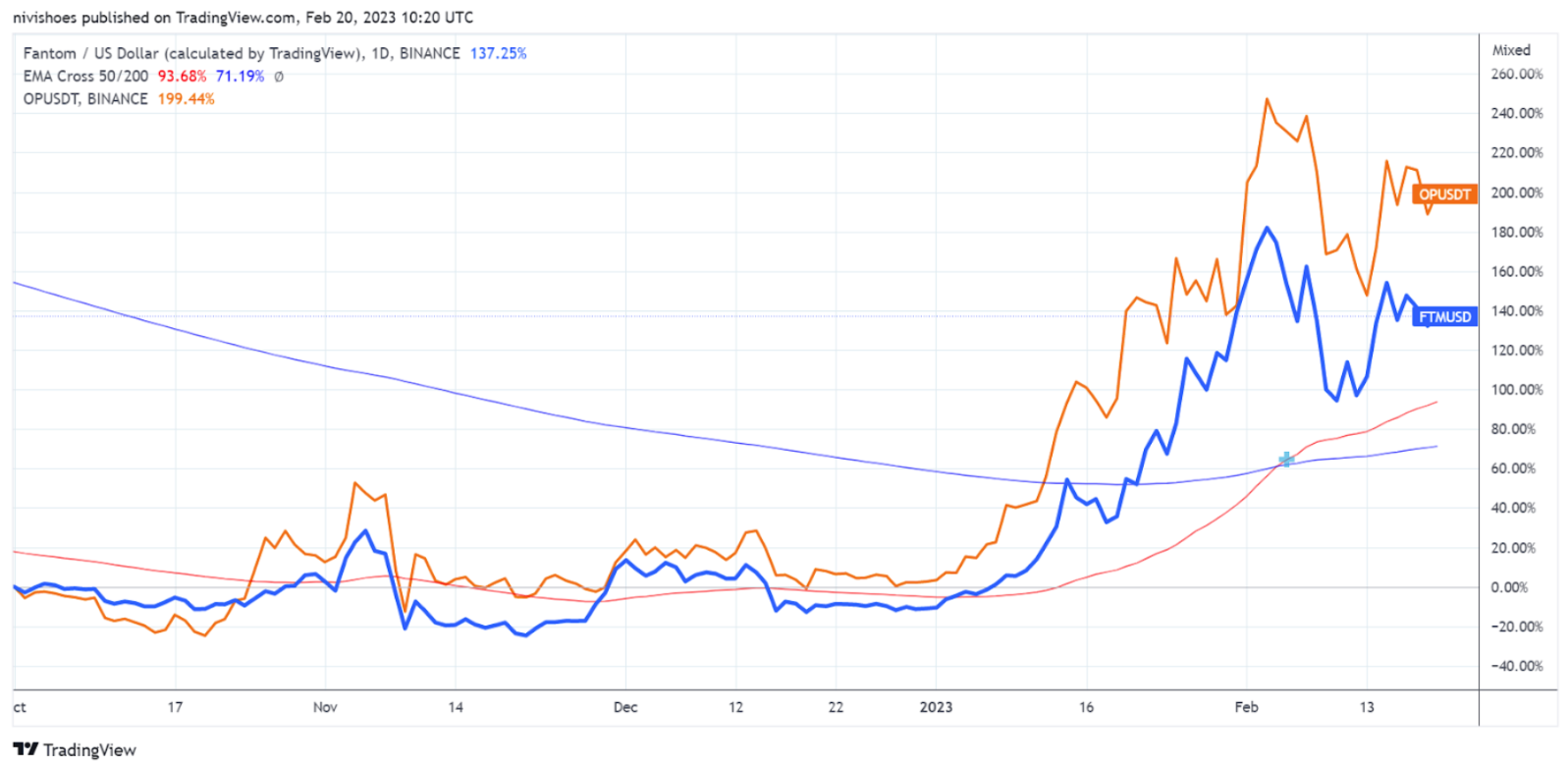
The price action of Optimism (OP) and Fantom (FTM) tokens have been quite identical since the last quarter of 2022. The difference is, volatility is slightly higher for OP, which surged 240% year-to-date, compared to the 180% gains seen in FTM.
The Fantom Foundation has made several improvements since Q4 2022, which have catalyzed an uptrend in the token’s price. However, Fantom’s ecosystem remains primitive while its competitors expanded to support new use cases.
On the other hand, Optimism has shown robust community and decentralized application (dApp) development thanks to the loyalty of Ethereum developers and the Optimism Foundation’s effective strategy in aligning token incentives with governance.
Fantom’s ecosystem development stalls
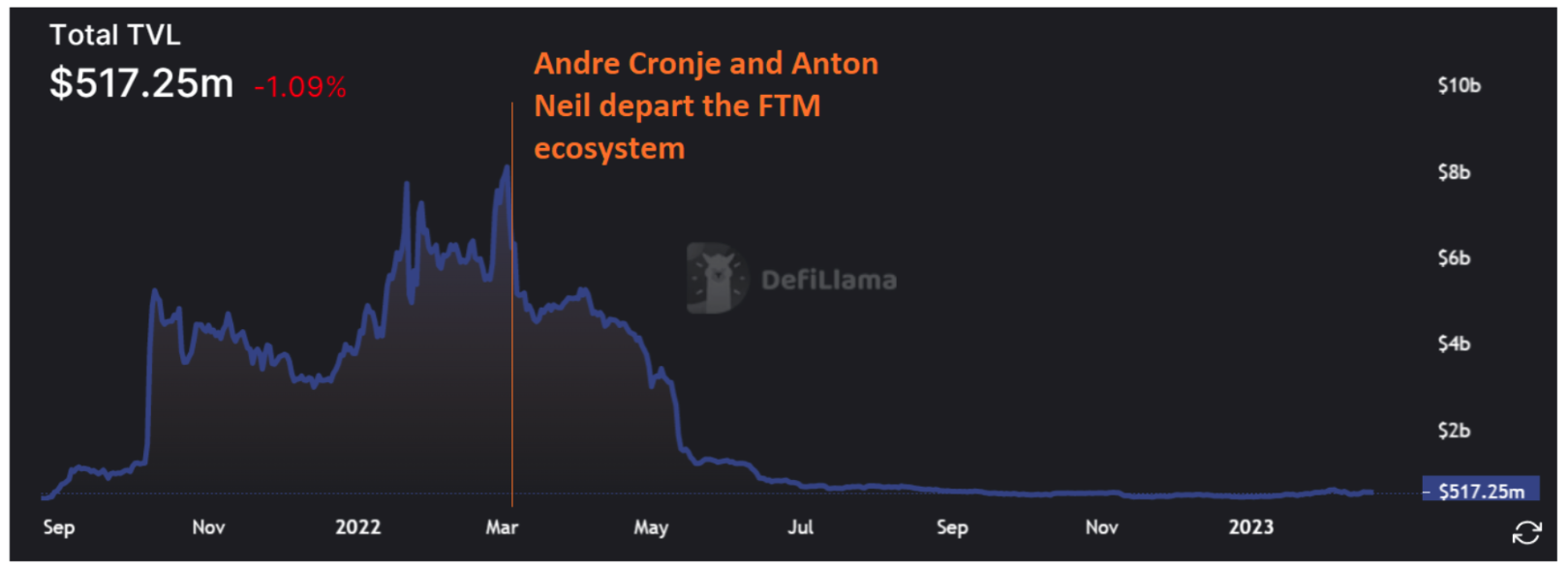
The Fantom ecosystem received an adverse blow in early 2022 due to the departure of leading DeFi architect Andre Cronje. The blockchain’s ecosystem development stalled after Cronje’s departure. At the same time, Fantom’s competitors, like Polygon (ATOM), Arbitrum and Optimism continued to host various popular applications.
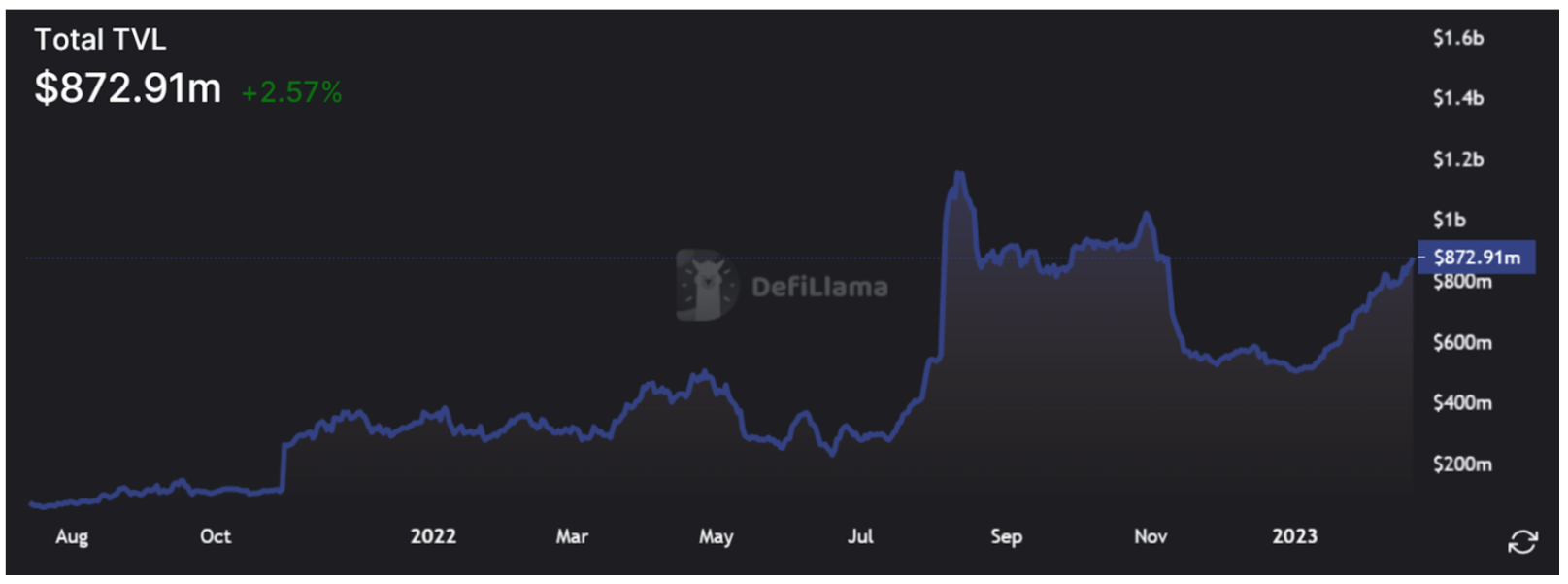
Cronje rejoined Fantom development efforts in November 2022, however, it appears it was too late by then. The lack of sustainable yields in a bear market has restricted liquidity inflows to Fantom.
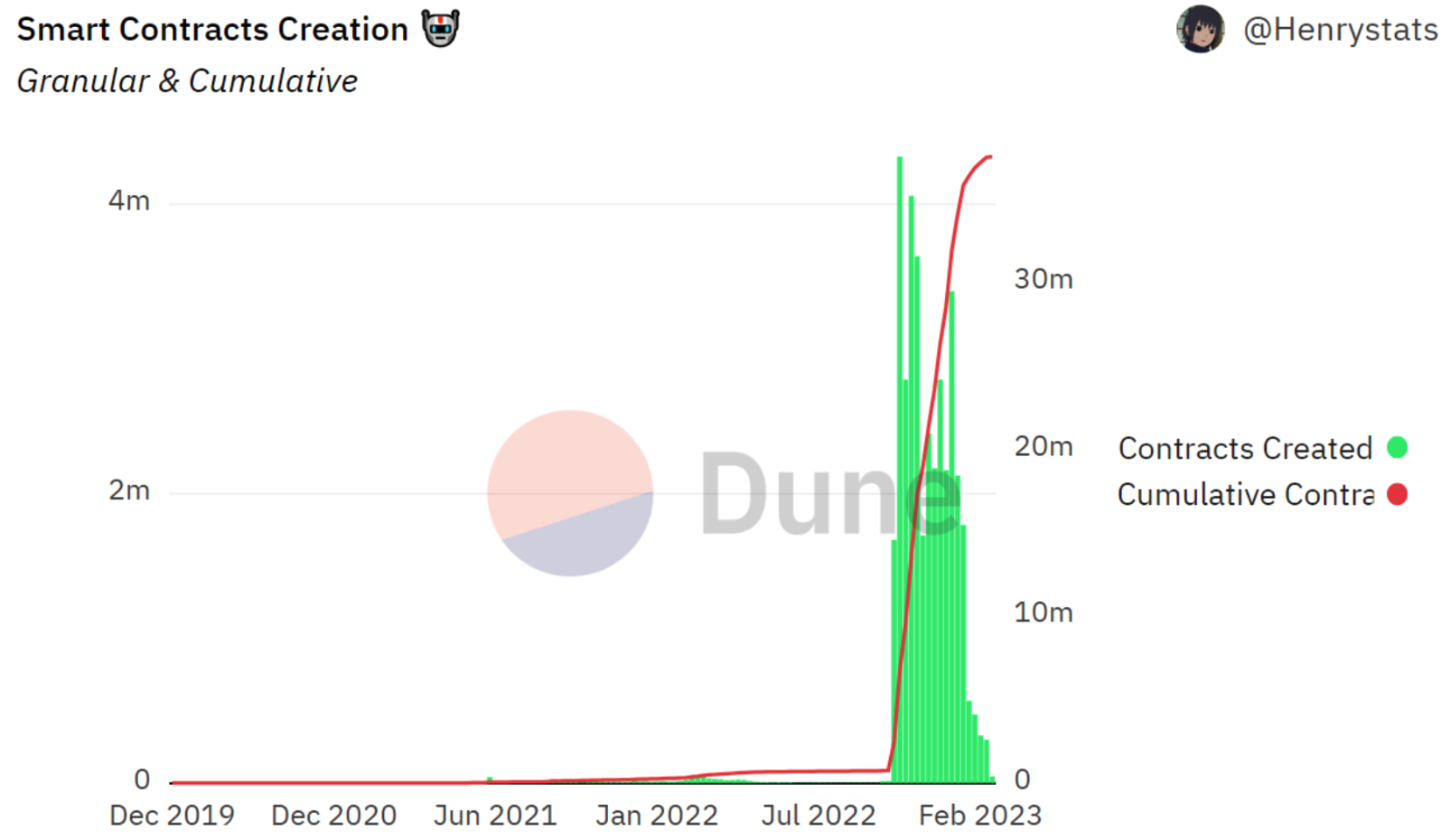
The Fantom community also aimed to improve the quality of decentralized applications on the blockchain through an ecosystem development fund built by reducing the portion of burnt fees from 20% to 5% in December. While the number of smart contracts created on Fantom has spiked significantly since Q3 2022, the quality of dApps still needs to improve compared to its competitors.
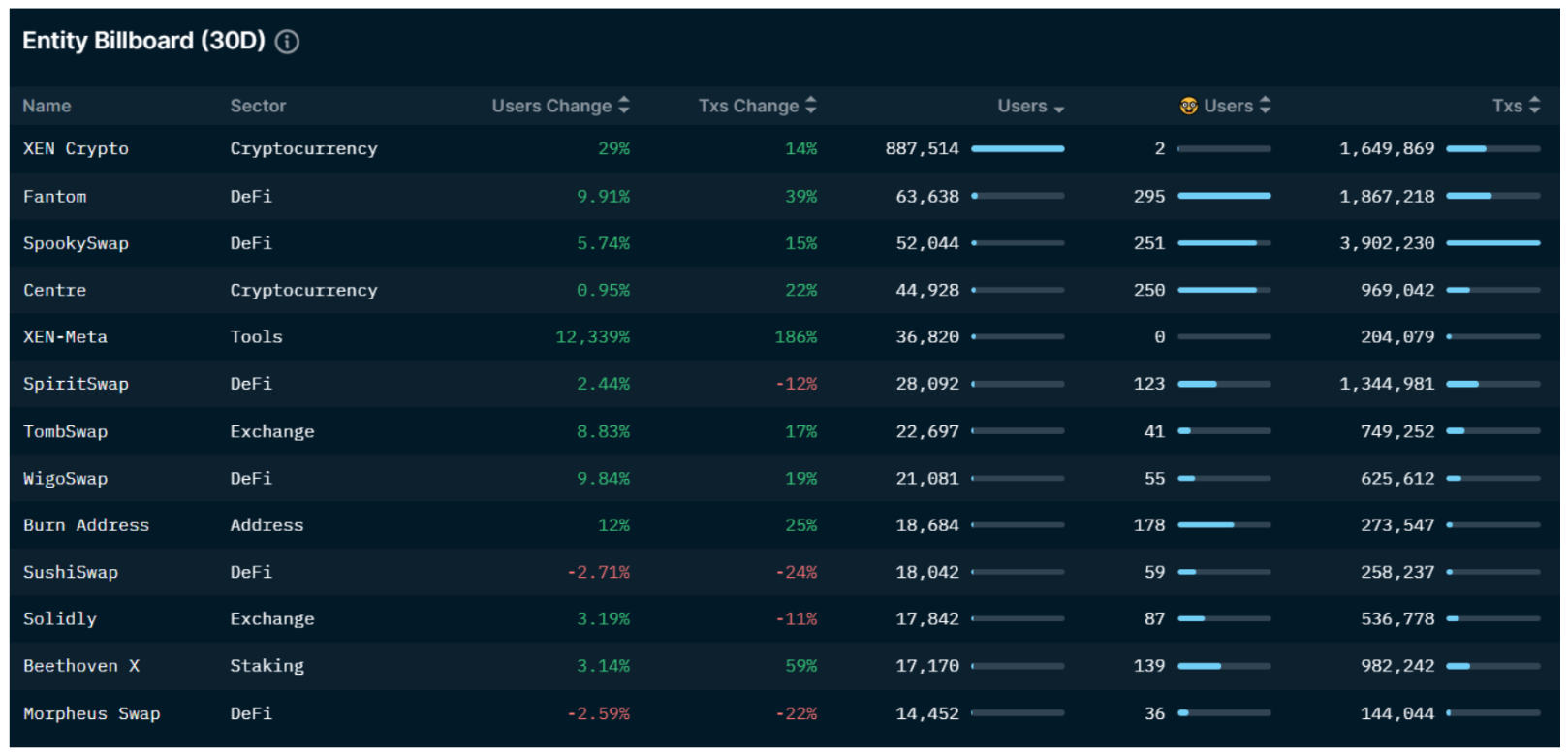
The 30-day activity billboard from Nansen shows that top dApp activity on Fantom was limited to simple swaps, which is discouraging as other activities like derivatives trading, social media platforms and NFT trading are prospering on competing chains like Arbitrum, Polygon, and Optimism.
The most used dApps on Fantom between Jan. 20, 2023, and Feb. 20, 2023, is XEN Crypto, a free mint Ponzi scheme-like application. The application first appeared on Ethereum in October 2022 with a lot of excitement in the first few days of launch. However, the hype subsided after the mint became unprofitable as many users crowded the platform.
Optimism developers find success with new use cases
At the same time, Optimism has successfully attracted liquidity and activity to its ecosystem after launching the Optimism token and accompanying airdrop campaigns. In April 2022, the Optimism team stated there would be a “season of airdrops,” and launched an Optimism Quest campaign.
The layer-2 network saw increased usage from users for collecting its non-fungible tokens (NFTs), which would likely make them eligible for the airdrop. The Quests ended in January 2023, following which there was a steep decline in activity. However, the DeFi liquidity remained sticky.
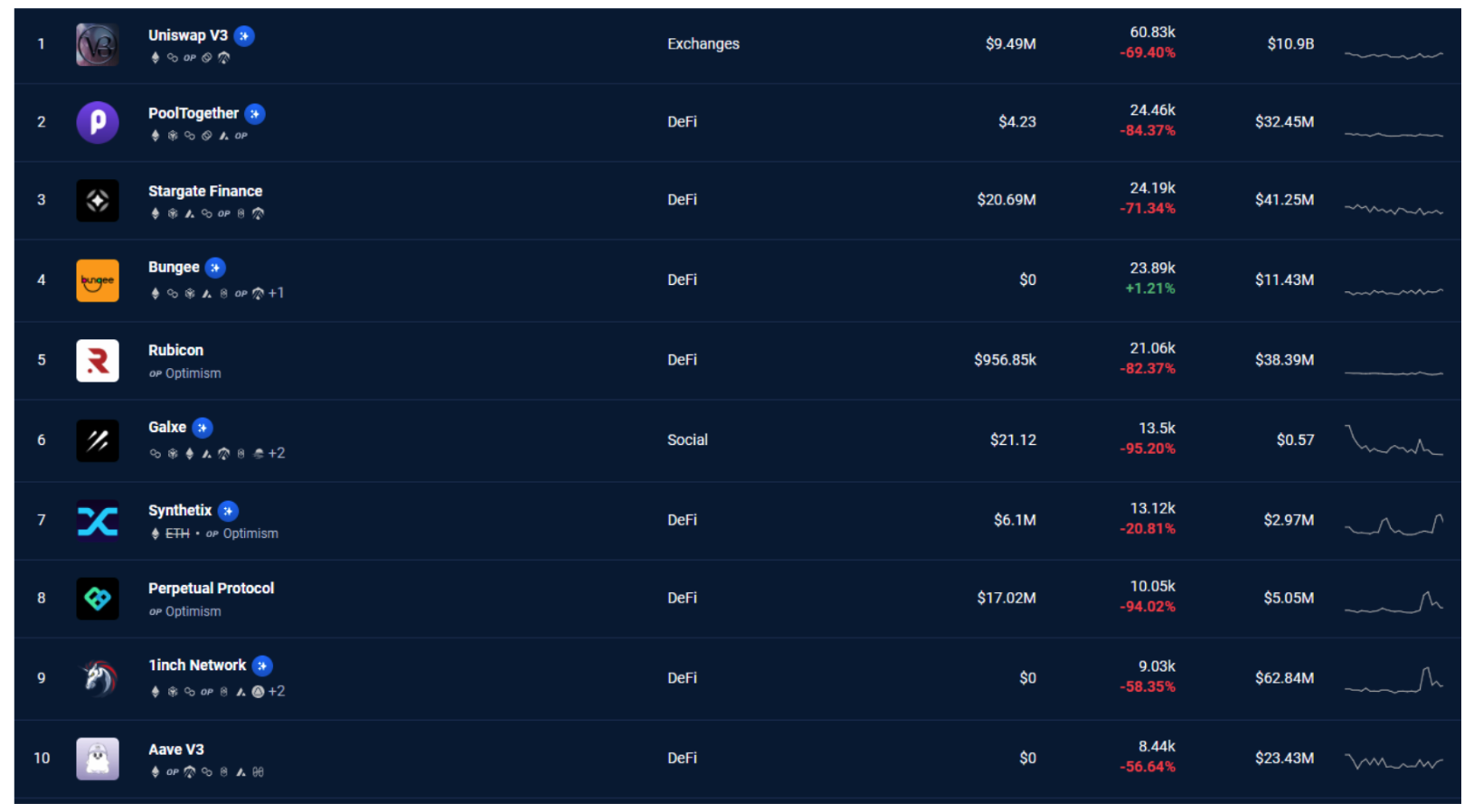
Moreover, the list of most used decentralized applications on Optimism includes yield platform Pool Together, derivatives platforms Synthetix and Perpetual Protocol and leading lending platform Aave.
Optimism also hosts a decentralized blogging platform, Mirror, which allows content writers to issue their articles as NFTs. The platform has gained significant usage, with 2.7 million hits on its website.
Comparing the tokenomics of FTM and OP
One drawback of the Optimism token is that it is only a governance token and doesn’t entitle users to real yields in gas fees. The OP tokens’ supply will inflate at 2% per year, along with investor and team unlocks, starting April 2023.
However, the Optimism team has incentivized participation in governance, which improves the protocol’s governance and also aligns incentives with its intended use, i.e., higher voter participation.
Optimism’s governance has proved more efficient than competitors like Uniswap (UNI) and Compound (COMP) in promoting decentralization. The layer-2 network’s ecosystem is also expanding by supporting diverse applications. Optimism also stands to benefit from Arbitrum’s native token launch, which can likely add fuel to the layer-2 token narrative, pushing the OP token’s price higher.
Related: Vitalik shows support for Optimism’s governance structure and OP gas proposal
For Fantom, despite implementing a burn feature in its protocol, the real yield of the platform is still negative, around -0.93%. The blockchain’s fees and liquidity must improve considerably to enhance the value of FTM. Otherwise, it risks becoming irrelevant alongside many other layer-1 protocols in the market.
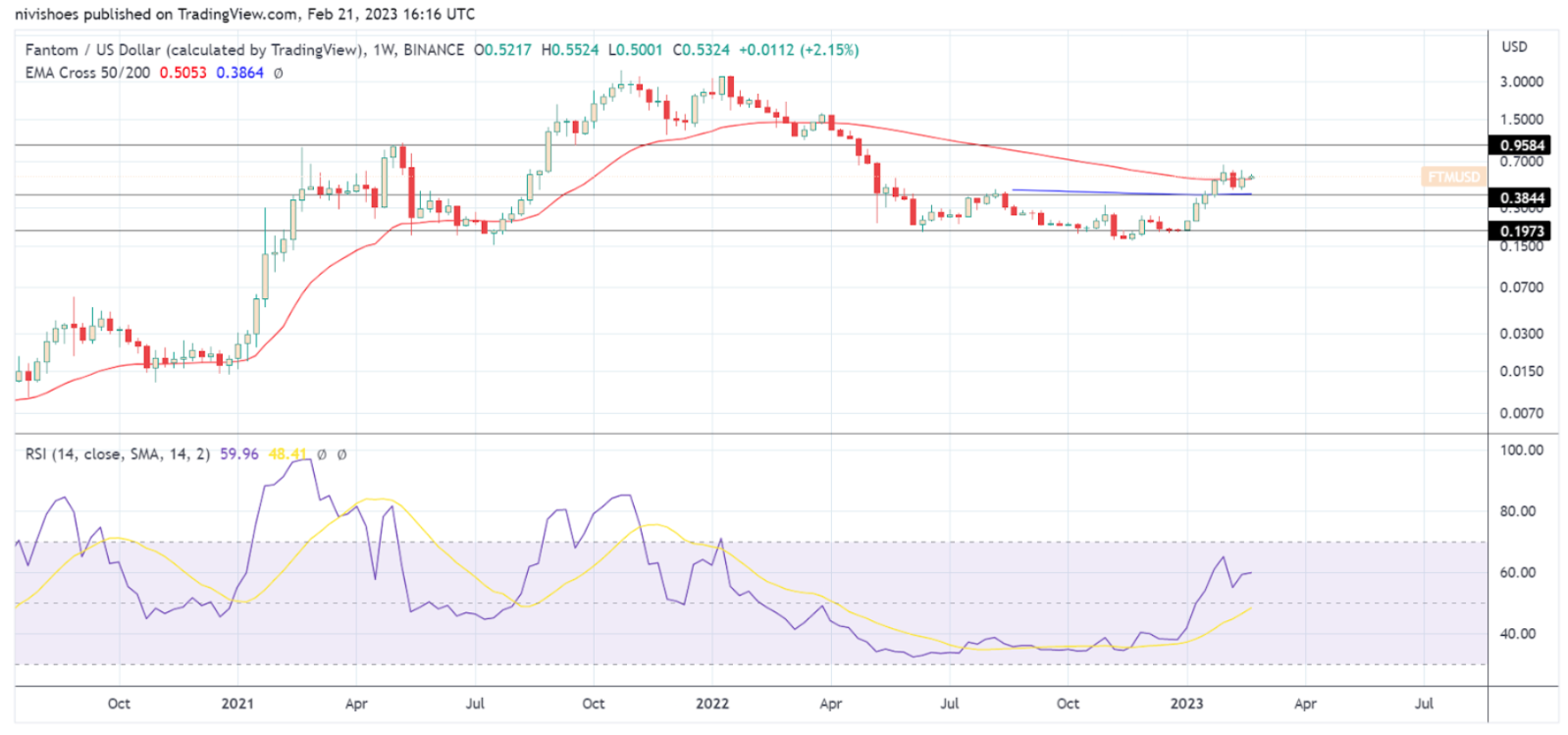
Technically, FTM can see more upside while it holds support above $0.38 and target the $0.95 support and resistance area. A breakdown below $0.38 could see it dropping toward $0.19.
For OP, its price surged above its previous peak of $2.30, which will now act as a support for further upside as it experiences a price discovery. On the flipside, a breakdown below this level could see the token’s price drop toward $1.30.
The views, thoughts and opinions expressed here are the authors’ alone and do not necessarily reflect or represent the views and opinions of Cointelegraph.
This article does not contain investment advice or recommendations. Every investment and trading move involves risk, and readers should conduct their own research when making a decision.
Source link
Altcoin Watch
AI altcoins are pumping — Is this the beginning of the next bull market? The Market Report
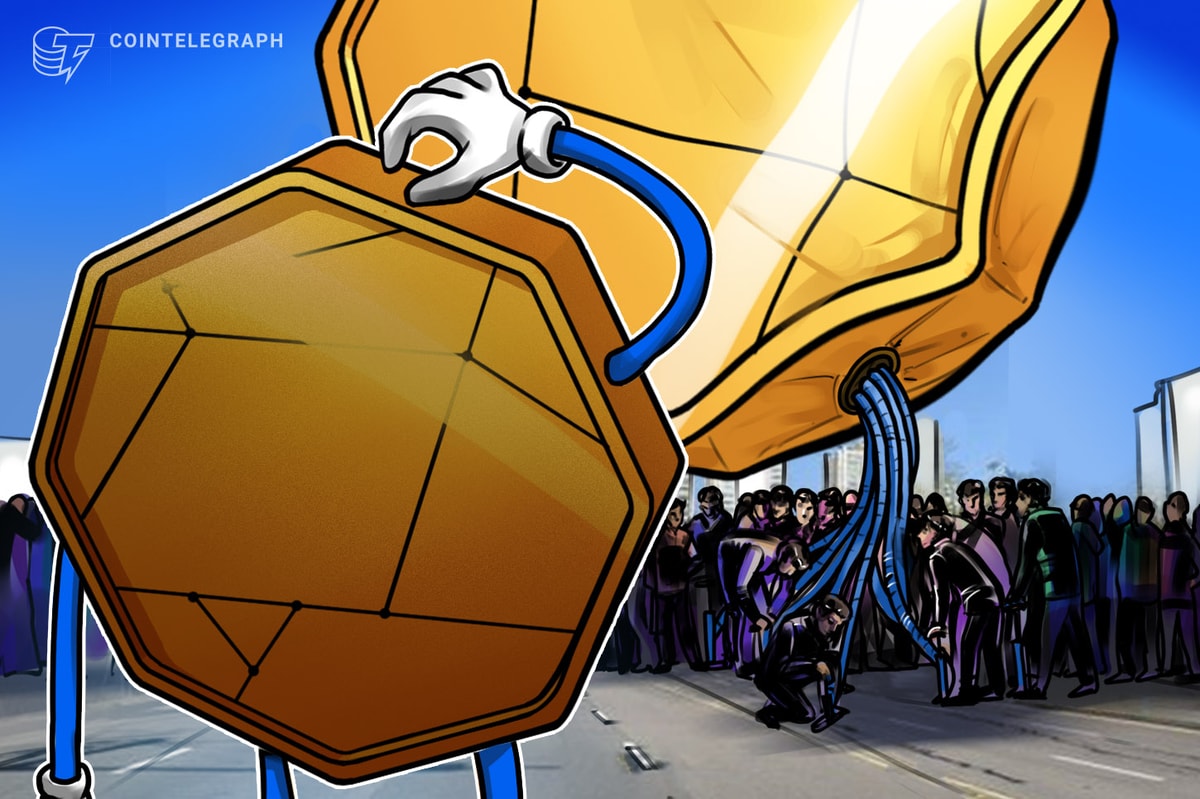
This week on The Market Report, the resident experts at Cointelegraph discuss what artificial intelligence (AI) altcoins are, what their potential benefits are, how they work, and whether they can be a catalyst for a 2023 bull market.
We start off this week’s show with the latest news in the markets:
BTC price 3-week highs greet US CPI — 5 things to know in Bitcoin this week
Bitcoin (BTC) starts a new week on a promising footing, with BTC price action near one-month highs — but can it last? The move precedes a conspicuous macroeconomic week for crypto markets, with the December 2022 Consumer Price Index (CPI) print due from the United States. Jerome Powell, chair of the Federal Reserve, will also deliver a speech on the economy, with inflation on everyone’s radar. Inside the crypto sphere, FTX contagion continues, with Digital Currency Group (DCG) at odds with institutional clients over its handling of solvency problems at subsidiary Genesis Trading. Our resident experts take a look at these factors and more as the second trading week of January gets underway.
Digital Currency Group under investigation by US authorities: Report
Crypto conglomerate Digital Currency Group, or DCG, is under investigation by the U.S. Department of Justice’s Eastern District of New York and the Securities and Exchange Commission, according to a Bloomberg report.
The authorities are digging into internal transfers between DCG and its subsidiary crypto lending firm, Genesis Global Capital, according to the report, which cited people familiar with the matter. Prosecutors have already requested interviews and documents from both companies, while the SEC is running a similar early-stage inquiry.
We discuss what impact this could have on the crypto market. Could this put a damper on the current positive trend in the crypto space, which is finally starting to see some green?
5 sneaky tricks crypto phishing scammers used last year: SlowMist
We take a look at some of the most common phishing techniques crypto scammers used on victims in 2022 to help you be more aware and cautious when dealing in the space and hopefully save you from any possible scams or rug pulls in 2023.
Our experts cover these and other developing stories, so make sure you tune in to stay up-to-date on the latest in the world of crypto.
Next up is a segment called “Quick Crypto Tips,” which aims to give newcomers to the crypto industry quick and easy tips to get the most out of their experience. This week’s tip: Chasing the whale.
Market expert Marcel Pechman then carefully examines the Bitcoin and Ether (ETH) markets. Are the current market conditions bullish or bearish? What is the outlook for the next few months? Pechman is here to break it down.
Lastly, we’ve got insights from Cointelegraph Markets Pro, a platform for crypto traders who want to stay one step ahead of the market. Our analysts use Cointelegraph Markets Pro to identify two altcoins that stood out this week, so make sure to tune in to find out which ones made the cut.
Do you have a question about a coin or topic not covered here? Don’t worry — join the YouTube chat room and write your questions there. The person with the most interesting comment or question will have a chance to win a one-month subscription to Markets pro worth $100.
The Market Report streams live every Tuesday at 12:00 pm ET (5:00 pm UTC), so be sure to head on over to Cointelegraph’s YouTube page and smash those Like and Subscribe buttons for all our future videos and updates.
Source link

Implications for XRP, SEC credibility and more

USDT issuer Tether responds to Chinese securities exposure reports

Ripple case is concluding, but the fight for clarity must ‘continue’ – Brad Garlinghouse

Self-custody Bitcoin amount unmeasurable so far — Santiment exec

Mango Markets exploiter behind alleged $116M theft will stand trial in December

Bitcoin price eyes $26K ‘acceleration’ zone as Binance fears fade

Price analysis 6/16: BTC, ETH, BNB, XRP, ADA, DOGE, SOL, MATIC, LTC, DOT

Gary Gensler’s job at risk, BlackRock’s first spot Bitcoin ETF…

BUSD falls to fourth position among stablecoins

Crypto outflows surge, a16z’s UK office, and the silent altcoins ban

Bitcoin Recovers Above Critical Level, Why Bulls Could Be Ready To Charge

The Great Battle of Asset Classification – Blockchain News, Opinion, TV and Jobs

3 key Ether price metrics point to growing resistance at the $1,750 level

Binance Coin (BNB) Faces Sideways Movement, Bears Threaten Further Sell-Off

US court approves SEC-Binance.US agreement

Judge rules LBRY video platform’s token is a security in case brought by the US SEC

Silvergate Capital’s crypto-to-fiat transfers decrease by $50B compared to Q3 2021

Will the Bitcoin mining industry collapse? Analysts explain why crisis is really opportunity

Exchange Outflows Shows Bitcoin, Ethereum Accumulation Trend Continues

Bitcoin Dropped Below 2017 All-Time-High but Could Sellers be Getting Exhausted? – Blockchain News, Opinion, TV and Jobs
BNM DAO Token Airdrop

What does the Coinbase Premium Gap Tell us about Investor Activity? – Blockchain News, Opinion, TV and Jobs
Fed policy and crumbling market sentiment could send the total crypto market cap back under $1T
New Minting Services

Can Cardano’s July hard fork prevent ADA price from plunging 60%?

Friends or Enemies? – Blockchain News, Opinion, TV and Jobs
SEC’s Chairman Gensler Takes Aggressive Stance on Tokens – Blockchain News, Opinion, TV and Jobs

LUNA2 Recovers 70% In Nine Days From Historic Lows

Enjoy frictionless crypto purchases with Apple Pay and Google Pay | by Jim | @blockchain | Jun, 2022

A String of 200 ‘Sleeping Bitcoins’ From 2010 Worth $4.27 Million Moved on Friday
-
 SEC7 months ago
Judge rules LBRY video platform’s token is a security in case brought by the US SEC
-
 Banking8 months ago
Silvergate Capital’s crypto-to-fiat transfers decrease by $50B compared to Q3 2021
-
 Antminer11 months ago
Will the Bitcoin mining industry collapse? Analysts explain why crisis is really opportunity
-
 Bitcoin8 months ago
Exchange Outflows Shows Bitcoin, Ethereum Accumulation Trend Continues
-
 Altcoins12 months ago
Bitcoin Dropped Below 2017 All-Time-High but Could Sellers be Getting Exhausted? – Blockchain News, Opinion, TV and Jobs
-
Uncategorized1 year ago
BNM DAO Token Airdrop
-
 Binance11 months ago
What does the Coinbase Premium Gap Tell us about Investor Activity? – Blockchain News, Opinion, TV and Jobs
-
 Asia11 months ago
Fed policy and crumbling market sentiment could send the total crypto market cap back under $1T