Cryptocurrencies
SEC argues against Dentons’ motion to dismiss Terraform and Do Kwon’s lawsuit

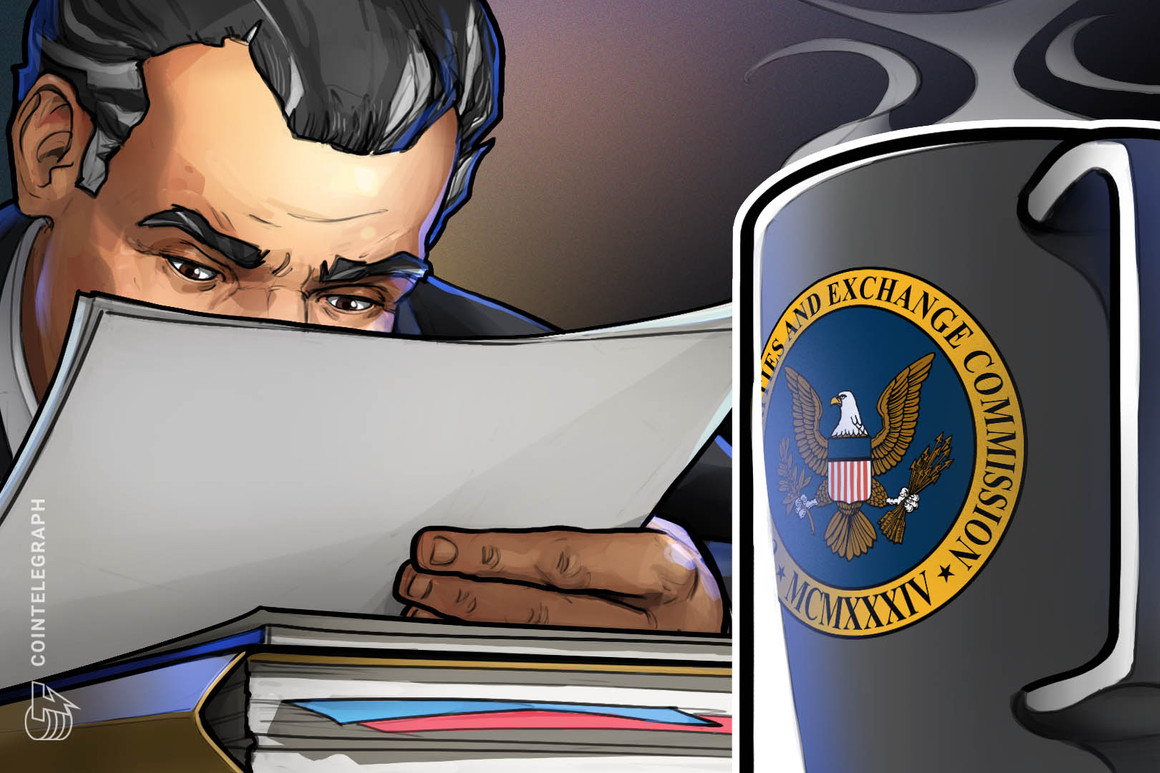

The lawyers representing the United States Securities and Exchange Commission (SEC) have contended that the additional documents submitted by Dentons, the legal counsel for Terraform and Do Kwon, in support of their motion to dismiss the lawsuit, lack adequate support for dismissing the case.
The SEC’s counsel asserts that the Binance.US transcript and internal SEC emails, presented by the defense, hold no relevance to the current case. They argue that the Howey Test clearly defines the parameters of an “investment contract” and contend that UST should be classified as a security.
In a court hearing on June 15, Dentons submitted supplementary documents to bolster their motion to dismiss the lawsuit filed by the U.S. SEC. The focus of the hearing was to determine if the digital assets developed by Terraform Labs should be classified as securities under the criteria of an “investment contract.”
The legal team from Dentons asserts with conviction that the algorithmic stablecoin UST (now USTC) is not classified as a security, emphasizing its practical purpose rather than being an investment contract. In support of their motion to dismiss the lawsuit, they submitted supplementary documents, which encompass the U.S. House Financial Services Committee hearing on digital asset regulation and stablecoin issuance, the SEC’s request for a restraining order against Binance.US, and the Hinman emails from the SEC v. Ripple lawsuit.
The defense lawyers highlighted the existence of a “regulatory gap” regarding the classification of crypto assets as securities, particularly as the U.S. Congress engages in discussions about regulatory frameworks for digital assets and stablecoin issuance. Additionally, they argued that the SEC is exceeding the scope of securities laws and relying on internal emails related to “investment contracts” to determine the security status.
Judge Jed Rakoff who is presiding over the case has announced that a decision on the motion to dismiss the case will be rendered by July 14th.
Dentons represented Do Kwon earlier to challenge the US SEC subpoena in its investigation of Mirror Protocol in 2021 and a class action lawsuit in the Singapore High Court in 2022. The law firm also represents Terra in other lawsuits.
Related: Do Kwon could serve prison in both US and South Korea, prosecutor says
Meanwhile, Montenegro High Court has approved the bail of Do Kwon and former CTO Han Chang-joon. Also, Do Kwon has been taken into extradition custody in Montenegro while the court decides on South Korea’s extradition request for him.
Magazine: Do Kwon kicked in the assets
Source link





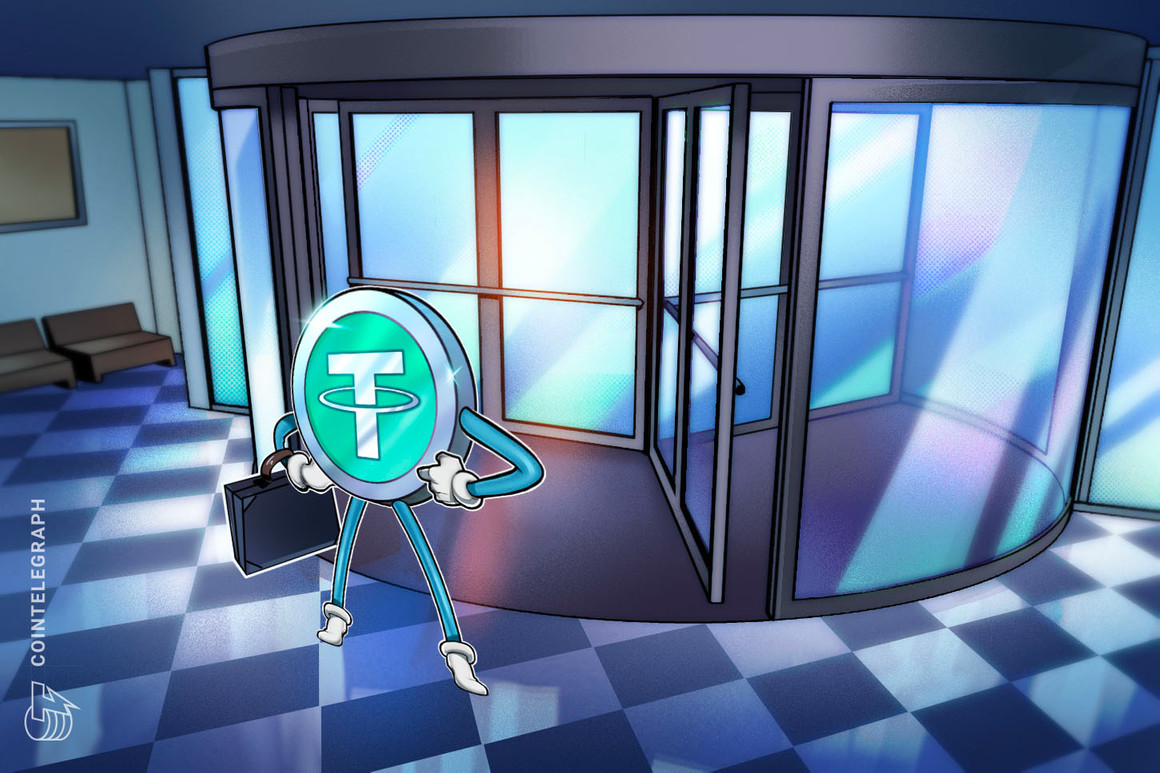

Tether, the company behind market-leading stablecoin Tether (USDT), has addressed concerns regarding its operational decisions.
According to documents released by the New York Attorney General (NYAG), Tether reportedly deactivated approximately 29 accounts belonging to prominent cryptocurrency players in 2021. It appears that most individuals on the list had their accounts terminated for different reasons.
While the reasons for the account terminations were not disclosed, Tether responded by indicating that it is unwilling to comment on individual relationships. However, the company clarified that all individuals had undergone rigorous compliance checks during onboarding, as well as ongoing monitoring, as mandated by Tether’s compliance policies.
Among the deactivated accounts were MoonPay, BlockFi, CMS Holdings and Galois Capital.
Although the NYAG investigation concluded as early as February 2021, it has come to light that certain documents in the investigation extend until around June of the same year. User codes within these documents have already been redacted.
The NYAG gathered these documents while investigating Tether and its sister company Bitfinex for misappropriating $850 million in funds. During this time, iFinex — the parent company of both entities — requested a 30-day extension to produce the critical financial documents before the expiration of the previously scheduled date.
Related: USDT issuer Tether responds to Chinese securities exposure reports
Ultimately, the involved parties reached a settlement in which Tether agreed to pay a penalty of $18.5 million and halt trading activities in New York. Subsequently, media outlets and Coinbase requested the NYAG to publicly disclose Tether’s initial quarterly report under the Freedom of Information Act. However, Tether objected to this request, citing the need to safeguard its customers’ confidential information from potential exploitation by malicious individuals.
Despite Tether’s objection, the NYAG allowed media outlets access to the documents, revealing the deactivation of numerous company accounts.
Magazine: Unstablecoins: Depegging, bank runs and other risks loom
Source link
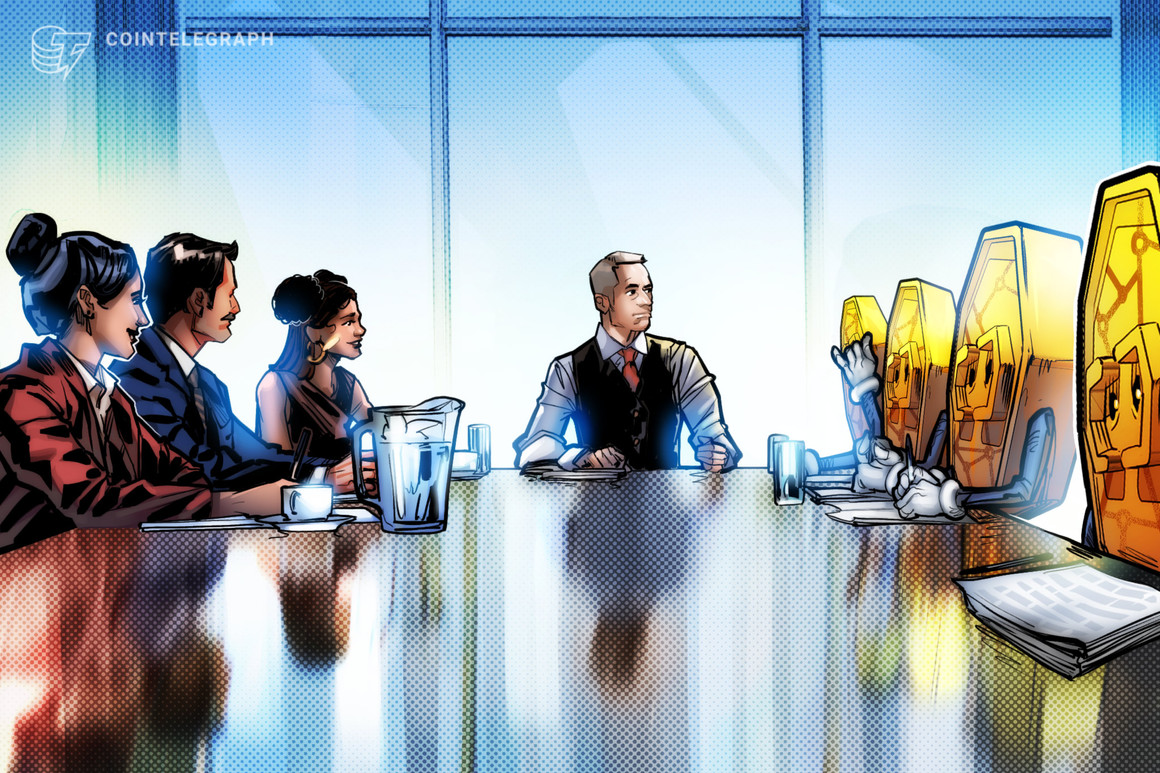

Binance, Binance.US, and the Securities and Exchange Commission (SEC) reportedly revealed an agreement, late Friday, June 16, temporarily limiting access to customer funds exclusively to Binance.US employees.
According to reports, the proposed agreement, pending approval from the overseeing federal judge, outlines measures for Binance.US to prevent any access by Binance Holdings officials to private keys of wallets, hardware wallets, or root access to Binance.US’s Amazon Web Services tools. Additionally, the U.S.-based crypto trading platform will disclose comprehensive information on business expenses, including estimated costs, in the upcoming weeks.
The proposed agreement has emerged as a direct response to a motion filed by the SEC aiming to freeze the entirety of Binance.US’s assets during the ongoing legal proceedings related to securities-related charges. The regulatory body expressed apprehension that without a granted TRO, there might be a risk of funds being transferred offshore or crucial records being deliberately destroyed.
However, Binance.US’s legal representatives strongly opposed this notion, contending that imposing a complete freeze on all assets would essentially be equivalent to administering an excessively severe “death penalty” upon the company.
During a hearing earlier this week, Judge Amy Berman Jackson, presiding over the District Court for the District of Columbia, advised the involved parties that it would be more advantageous for them to reach an agreement on a proposed stipulation rather than relying on her to formulate a restraining order. The judge emphasized that a temporary restraining order carries a limited duration of two weeks, which might prove inadequate for a comprehensive and thorough hearing. This is particularly true considering the substantial volume of exhibits already submitted, amounting to over 4,000 pages.
Related: Binance under investigation in France since February 2022: Report
The proposed agreement includes additional provisions such as the creation of new crypto wallets by Binance.US, which will be inaccessible to employees of the global exchange. Furthermore, Binance.US commits to providing additional information to the SEC and agreeing to an accelerated discovery schedule. Notably, customers based in the United States will retain the ability to withdraw funds throughout this period.
If accepted, the proposed agreement will partially address the SEC’s concerns while the broader lawsuit progresses. The SEC recently sued Binance and Binance.US for trading unregistered securities and alleged commingling of funds and poor practices. However, the proposed agreement does not encompass the broader lawsuit.
Magazine: Binance humiliated, HK needs 100K crypto workers, China’s AI unicorn
Source link


Proof-of-work coins that had a fair distribution at their launch are the most likely to avoid being labeled as securities by the U.S. SEC, according to Bitcoin OG and educator Dan Held.
Last week, the SEC sued Binance and Coinbase, accusing them of offering a number of altcoins as unregistered securities. As a result, many of the tokens mentioned in the lawsuit were delisted by major trading platforms which made their price tank.
According to Held, Tokens that “had fair or transparent launches”, such as Litecoin, Dogecoin and Monero, do not match the definition of a security that the SEC is following and therefore are likely to avoid the current crackdown.
Related: SEC charges against Binance and Coinbase are terrible for DeFi
“It definitely seems like the SEC has carved that out as something that they won’t be going after”, he said in an exclusive interview with Cointelegraph.
According to Held, the vast majority of the tokens classified as securities by the SEC in its lawsuit against Coinbase and Binance were proof-of-stake coins, or tokens who had a pre-mined distribution, which means they have a more centralized ownership.
As Held also pointed out, the current crackdown is mainly carried out by a single government entity, the SEC, which means the level of pressure on the industry is still far from reaching the maximum level.
Held also stated that only Bitcoin and a few other cryptocurrencies that are decentralized enough will survive in the long run, as they are the only ones that can survive an all-out government attack.
To find out more about which cryptos can resist the ongoing SEC crackdown, watch the full video on our YouTube channel, and don’t forget to subscribe!
Source link

Bitcoin price eyes $26K ‘acceleration’ zone as Binance fears fade

Price analysis 6/16: BTC, ETH, BNB, XRP, ADA, DOGE, SOL, MATIC, LTC, DOT

Gary Gensler’s job at risk, BlackRock’s first spot Bitcoin ETF…

BUSD falls to fourth position among stablecoins

Crypto outflows surge, a16z’s UK office, and the silent altcoins ban

Bitcoin Recovers Above Critical Level, Why Bulls Could Be Ready To Charge

The Great Battle of Asset Classification – Blockchain News, Opinion, TV and Jobs

3 key Ether price metrics point to growing resistance at the $1,750 level

Binance Coin (BNB) Faces Sideways Movement, Bears Threaten Further Sell-Off

US court approves SEC-Binance.US agreement

Polygon (MATIC) Witnesses High Volatility Amid Positive Developments

Meta’s new ‘Voicebox’ AI is a text-to-speech tool that learns like ChatGPT

ZachXBT Slapped With Defamation Lawsuit For MachiBigBrother Exposé

Tether responds to account deactivation controversy, raises compliance checks

Shiba Inu Positive Social Sentiment Sparks Bullish Speculation

Judge rules LBRY video platform’s token is a security in case brought by the US SEC

Silvergate Capital’s crypto-to-fiat transfers decrease by $50B compared to Q3 2021

Will the Bitcoin mining industry collapse? Analysts explain why crisis is really opportunity

Exchange Outflows Shows Bitcoin, Ethereum Accumulation Trend Continues

Bitcoin Dropped Below 2017 All-Time-High but Could Sellers be Getting Exhausted? – Blockchain News, Opinion, TV and Jobs
BNM DAO Token Airdrop

What does the Coinbase Premium Gap Tell us about Investor Activity? – Blockchain News, Opinion, TV and Jobs
Fed policy and crumbling market sentiment could send the total crypto market cap back under $1T
New Minting Services

Can Cardano’s July hard fork prevent ADA price from plunging 60%?

Friends or Enemies? – Blockchain News, Opinion, TV and Jobs
SEC’s Chairman Gensler Takes Aggressive Stance on Tokens – Blockchain News, Opinion, TV and Jobs

LUNA2 Recovers 70% In Nine Days From Historic Lows

Enjoy frictionless crypto purchases with Apple Pay and Google Pay | by Jim | @blockchain | Jun, 2022

A String of 200 ‘Sleeping Bitcoins’ From 2010 Worth $4.27 Million Moved on Friday
-
 SEC7 months ago
Judge rules LBRY video platform’s token is a security in case brought by the US SEC
-
 Banking8 months ago
Silvergate Capital’s crypto-to-fiat transfers decrease by $50B compared to Q3 2021
-
 Antminer11 months ago
Will the Bitcoin mining industry collapse? Analysts explain why crisis is really opportunity
-
 Bitcoin8 months ago
Exchange Outflows Shows Bitcoin, Ethereum Accumulation Trend Continues
-
 Altcoins12 months ago
Bitcoin Dropped Below 2017 All-Time-High but Could Sellers be Getting Exhausted? – Blockchain News, Opinion, TV and Jobs
-
Uncategorized1 year ago
BNM DAO Token Airdrop
-
 Binance11 months ago
What does the Coinbase Premium Gap Tell us about Investor Activity? – Blockchain News, Opinion, TV and Jobs
-
 Asia11 months ago
Fed policy and crumbling market sentiment could send the total crypto market cap back under $1T